PNNL

  • About
  • News & Media
  • Careers
  • Events
  • Research
    • Scientific Discovery
      • Biology
        • Chemical Biology
        • Computational Biology
        • Ecosystem Science
        • Human Health
          • Cancer Biology
          • Exposure Science & Pathogen Biology
        • Integrative Omics
          • Advanced Metabolomics
          • Chemical Biology
          • Mass Spectrometry-Based Measurement Technologies
          • Spatial and Single-Cell Proteomics
          • Structural Biology
        • Microbiome Science
          • Biofuels & Bioproducts
          • Human Microbiome
          • Soil Microbiome
          • Synthetic Biology
        • Predictive Phenomics
      • Chemistry
        • Computational Chemistry
        • Chemical Separations
        • Chemical Physics
        • Catalysis
      • Earth & Coastal Sciences
        • Global Change
        • Atmospheric Science
          • Atmospheric Aerosols
          • Human-Earth System Interactions
          • Modeling Earth Systems
        • Coastal Science
        • Ecosystem Science
        • Subsurface Science
        • Terrestrial Aquatics
      • Materials Sciences
        • Materials in Extreme Environments
        • Nondestructive Examination
        • Precision Materials by Design
        • Science of Interfaces
        • Smart Advanced Manufacturing
          • Cold Spray
          • Friction Stir Welding & Processing
          • ShAPE
      • Nuclear & Particle Physics
        • Dark Matter
        • Fusion Energy Science
        • Neutrino Physics
      • Quantum Information Sciences
    • Energy Resiliency
      • Electric Grid Modernization
        • Emergency Response
        • Grid Analytics
          • AGM Program
          • Tools and Capabilities
        • Grid Architecture
        • Grid Cybersecurity
        • Grid Energy Storage
        • Transmission
        • Distribution
      • Energy Efficiency
        • Appliance and Equipment Standards
        • Building Energy Codes
        • Building Technologies
          • Advanced Building Controls
          • Advanced Lighting
          • Building-Grid Integration
        • Commercial Buildings
        • Federal Buildings
          • Federal Performance Optimization
          • Resilience and Security
        • Residential Buildings
          • Building America Solution Center
          • Energy Efficient Technology Integration
          • Home Energy Score
        • Energy Efficient Technology Integration
      • Energy Storage
        • Electrochemical Energy Storage
        • Flexible Loads and Generation
        • Grid Integration, Controls, and Architecture
        • Regulation, Policy, and Valuation
        • Science Supporting Energy Storage
        • Chemical Energy Storage
      • Environmental Management
        • Waste Processing
        • Radiation Measurement
        • Environmental Remediation
      • Fossil Energy
        • Subsurface Energy Systems
        • Advanced Hydrocarbon Conversion
      • Nuclear Energy
        • Fuel Cycle Research
        • Advanced Reactors
        • Reactor Operations
        • Reactor Licensing
        • Nondestructive Examination
      • Renewable Energy
        • Solar Energy
        • Wind Energy
          • Wind Resource Characterization
          • Wildlife and Wind
          • Wind Systems Integration
          • Wind Data Management
          • Distributed Wind
        • Marine Energy
          • Environmental Monitoring for Marine Energy
          • Marine Biofouling and Corrosion
          • Marine Energy Resource Characterization
          • Testing for Marine Energy
          • The Blue Economy
        • Hydropower
          • Environmental Performance of Hydropower
          • Hydropower Cybersecurity and Digitalization
          • Hydropower and the Electric Grid
          • Materials Science for Hydropower
          • Pumped Storage Hydropower
          • Water + Hydropower Planning
        • Grid Integration of Renewable Energy
        • Geothermal Energy
      • Transportation
        • Bioenergy Technologies
          • Algal Biofuels
          • Aviation Biofuels
          • Waste-to-Energy and Products
        • Hydrogen & Fuel Cells
        • Vehicle Technologies
          • Emission Control
          • Energy-Efficient Mobility Systems
          • Lightweight Materials
          • Vehicle Electrification
          • Vehicle Grid Integration
    • National Security
      • Chemical & Biothreat Signatures
        • Contraband Detection
        • Pathogen Science & Detection
        • Explosives Detection
        • Threat-Agnostic Biodefense
      • Cybersecurity
        • Discovery and Insight
        • Proactive Defense
        • Trusted Systems
      • Nuclear Material Science
      • Nuclear Nonproliferation
        • Radiological & Nuclear Detection
        • Nuclear Forensics
        • Ultra-Sensitive Nuclear Measurements
        • Nuclear Explosion Monitoring
        • Global Nuclear & Radiological Security
      • Stakeholder Engagement
        • Disaster Recovery
        • Global Collaborations
        • Legislative and Regulatory Analysis
        • Technical Training
      • Systems Integration & Deployment
        • Additive Manufacturing
        • Deployed Technologies
        • Rapid Prototyping
        • Systems Engineering
      • Threat Analysis
        • Advanced Wireless Security
          • 5G Security
          • RF Signal Detection & Exploitation
        • Border Security
        • Internet of Things
        • Maritime Security
        • Millimeter Wave
        • Mission Risk and Resilience
    • Data Science & Computing
      • Artificial Intelligence
      • Graph and Data Analytics
      • Software Engineering
      • Computational Mathematics & Statistics
      • Future Computing Technologies
        • Adaptive Autonomous Systems
    • Lab Objectives
    • Publications & Reports
    • Featured Research
  • People
    • Inventors
    • Lab Leadership
    • Lab Fellows
    • Staff Accomplishments
  • Partner with PNNL
    • Education
      • Undergraduate Students
      • Graduate Students
      • Post-graduate Students
      • University Faculty
      • University Partnerships
      • K-12 Educators and Students
      • STEM Education
        • STEM Workforce Development
        • STEM Outreach
      • Internships
    • Community
      • Regional Impact
      • Philanthropy
      • Volunteering
    • Industry
      • Why Partner with PNNL
      • Explore Types of Engagement
      • How to Partner with Us
      • Available Technologies
      • Procurement
  • Facilities & Centers
    • All Facilities
      • Atmospheric Radiation Measurement User Facility
      • Electricity Infrastructure Operations Center
      • Energy Sciences Center
      • Environmental Molecular Sciences Laboratory
      • Grid Storage Launchpad
      • Institute for Integrated Catalysis
      • Interdiction Technology and Integration Laboratory
      • PNNL Portland Research Center
      • PNNL-Seattle
      • PNNL-Sequim (Marine and Coastal Research)
      • Radiochemical Processing Laboratory
      • Shallow Underground Laboratory

Biological
Sciences
Division

  • About
  • Staff
  • Research
  • Projects
  • News

The Biological Sciences Division has 16 collaborative, interdisciplinary teams working to understand how plants, microbes, and algae function in a way that helps predict their response to environmental change and their potential for energy production. Insights into the workings of human tissues reveal how toxins and pathogens could influence human health. Our research inspires biology-based advances to tackle some of the biggest challenges our world faces in ecosystem sustainability and human health. Learn more about how PNNL teams explore these areas using instrumentation that provides large-scale, molecular-level information and computational tools to efficiently process vast amounts of data.

Biological Systems Science
Computational Biology
Integrative Omics


Featured News & Highlights

Graphic representation of microbes in a soil environment.
DECEMBER 4, 2025
Research Highlight

Microbial Residues Last Longer in Soil When Bound to Noncrystalline Minerals

In a recent study, PNNL researchers found that noncrystalline mineral surfaces can bind microbial residues to build soil organic matter.
( Read More )
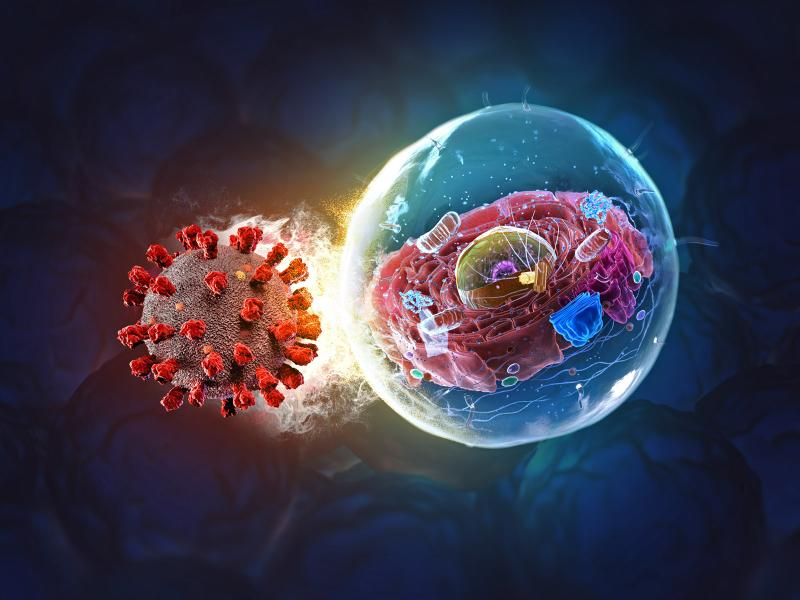
Illustration of a cold virus particle on the left attacking a cell on the right.
NOVEMBER 17, 2025
News Release

Scientists Identify Two Key Targets of Common Cold Virus

PNNL researchers are opening up a new front in the fight to stop viral pathogens, protecting people against multiple viruses.
( Read More )
A graphic of cartoon people and the Earth.
NOVEMBER 17, 2025
Article

Beyond “Science as Usual”

Distributed science is thriving at PNNL, where scientists share data and collaborate with researchers around the world to increase the impact of the work.
( Read More )
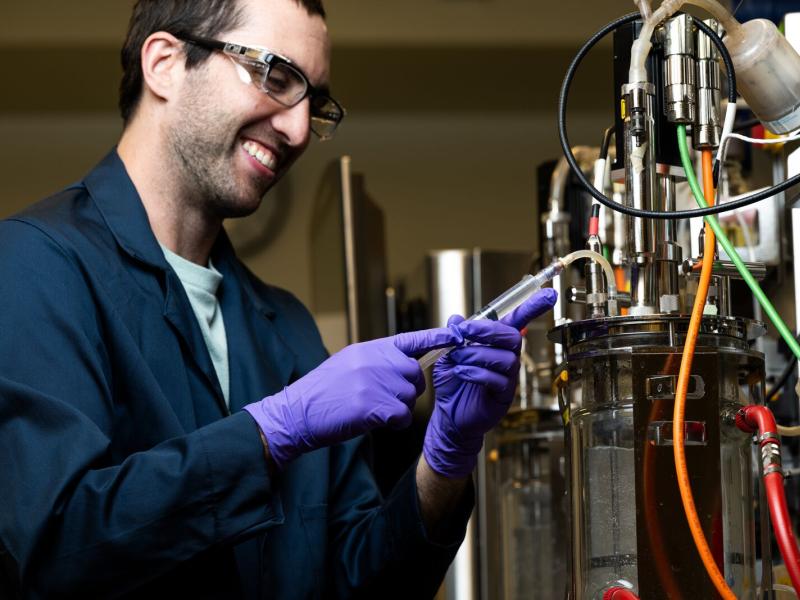
Jeff Czajka in his laboratory space at PNNL.
SEPTEMBER 23, 2025
Feature

At PNNL, AI Is Accelerating the U.S. Bioeconomy

Predicting how organisms’ characteristics respond to not only their genes, but also their environments (a nascent field called predictive phenomics), is extraordinarily challenging. Researchers at PNNL are using AI to tackle that challenge.
( Read More )
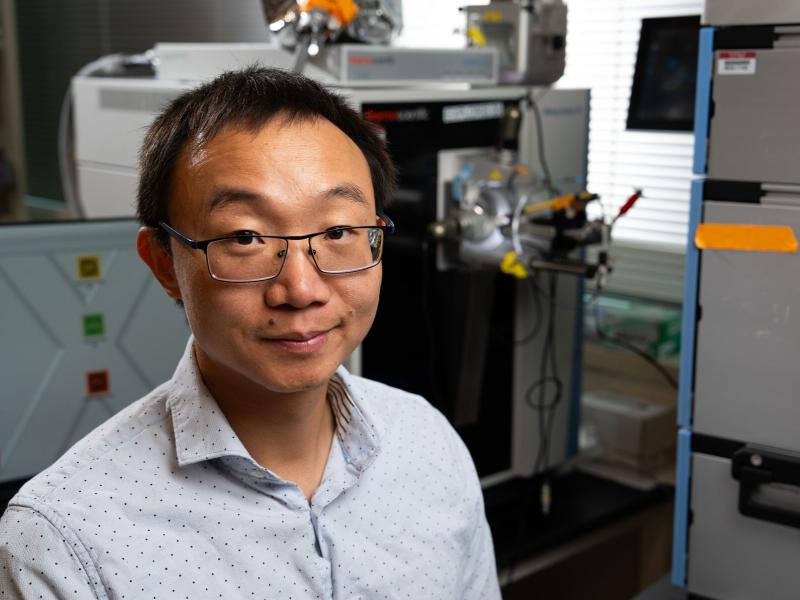
Photograph shows Tong Zhang on the left, looking into the camera, with laboratory equipment behind him and to the right.
SEPTEMBER 3, 2025
News Release

Scientists Probe Powerful Molecular Messaging System That Goes Beyond DNA

Researchers are uncovering the secrets of a fast-acting molecular messaging network that helps determine how the genetic code plays out.
( Read More )
rendering of a microscopic bacteriophage
MARCH 26, 2025
Feature

Advancing Human Health by Exploring Viral Dark Matter

Over the next four years, PNNL and University of Arizona will develop open-source computational tools to better identify and characterize the viruses associated with the human microbiome.
( Read More )
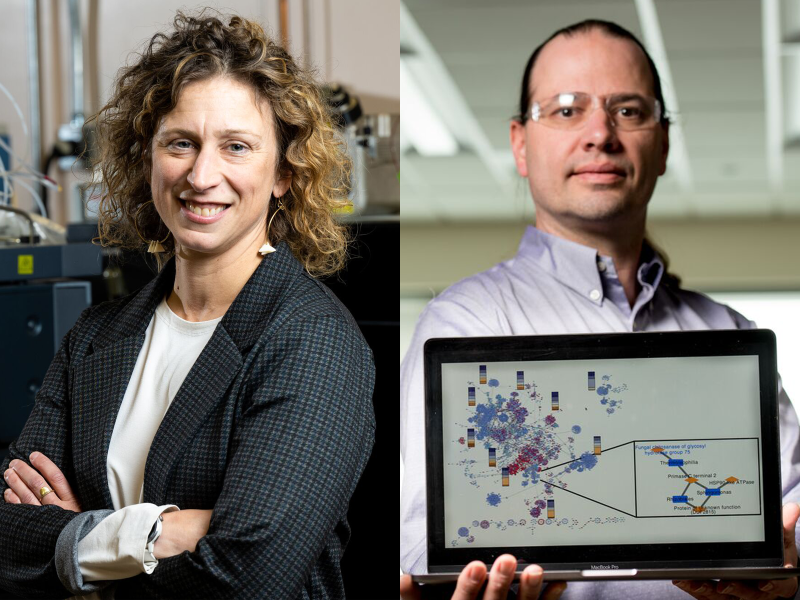
Composite image of Sara Gosline (left) and Jason McDermott (right)
MARCH 25, 2025
Feature

Unseen Forces: How Scientists Map the Invisible Interactions of Life

Armed with some of the world’s most advanced instrumentation, researchers at PNNL are working to analyze huge amounts of data and uncover hidden biological connections.
( Read More )
Illustration shows blue hydrangeas on the left and pink hydrangeas on the right,. The colors are the result of the pH of the soil.
FEBRUARY 13, 2025
News Release

Beyond DNA: How Environments Influence Biology to Make Things Happen

This week at AAAS, PNNL scientists discuss phenomics and the factors that influence DNA instructions to bring about the world around us.
( Read More )
An image of someone doing lab work.
DECEMBER 9, 2024
Article

NASA Funds Pacific Northwest Consortium to Advance Life Sciences Research in Space

NASA has awarded $2.5 million to the BioS-ENDURES consortium, led by the University of Washington and including WSU and PNNL, to advance space life sciences research supporting human health in space and Earth-based applications.
( Read More )
Kenton Rod and Regan McDearis hold custom stakes for soil research
OCTOBER 31, 2024
Article

High Stakes in Soil Microbiology

PNNL's McDearis and Rod designed a new device—a porous soil stake—that, once installed, enables repeated sampling of a specific soil site at multiple depths, without further disrupting the soil.
( Read More )

The Biological Sciences Division has 16 collaborative, interdisciplinary teams that inspire biology-based advances to tackle some of the biggest challenges our world faces in ecosystem sustainability, bioenergy, human health and national security. 
Browse Jobs

PNNL

  • Get in Touch
    • Contact
    • Careers
    • Doing Business
    • Environmental Reports
    • Security & Privacy
    • Vulnerability Disclosure Policy
    • Notice to Applicants
  • Research
    • Scientific Discovery
    • Energy Resiliency
    • National Security
Subscribe to PNNL News
Department of Energy Logo Battelle Logo
Pacific Northwest National Laboratory (PNNL) is managed and operated by Battelle for the Department of Energy
  • YouTube
  • Facebook
  • X (formerly Twitter)
  • Instagram
  • LinkedIn