RemPlex Summit Technical Sessions

Emerging Contaminants of Concern
Nov. 12, 2021, 9:00 am - 10:30 am
Organizer(s): Sae Yun Kwon, Pohang University of Science and Technology (POSTECH), Republic of Korea; Guohui Wang and Katie Muller, Pacific Northwest National Laboratory, Richland, Washington
While many new contaminants are being detected throughout the environment, there is a limited understanding of their properties, behavior, and potential adverse effects. This technical session will highlight research surrounding emerging contaminants. Topics include detection, environmental fate and transport behavior, human and environmental concerns, current policy, and other challenges surrounding emerging contaminants.
Nov. 12 Technical Session Recording Now Available |
|
|
Theme: PFAS
Speaker #1
John Anderson
Arcadis, Portland, Maine
A Comprehensive Approach to Characterizing and Cleaning Infrastructure Impacted with Residual PFAS
Co-authors: John Anderson, Erika Houtz, Corey Theriault, Johnsie Lang, and Peter Storch, Arcadis
Abstract
Since the mid-1960s, firefighting foams containing per and polyfluoroalkyl substances (PFAS) have been used at airports, refineries, military installations, and other industrial facilities in fire suppressant applications and during fire training events. Aqueous film forming foam (AFFF), and other film forming fluoroprotein foams, are known to have historically contained high concentrations of long chain PFAS. Managing PFAS-containing AFFF remains a top priority for governmental and corporate entities worldwide. PFAS are known to aggregate at phase interfaces. Over time, self-assembled PFAS can create a waterproof coating within the wetted surfaces of conveyance and storage infrastructure. Therefore, it can be difficult to fully remove PFAS from surfaces using water as the primary solvent. Replacement of PFAS-containing AFFF without proper infrastructure cleaning and residuals management can result in dissolution/desorption of PFAS into the newly installed liquids (i.e., fluorine-free foams [F3] or other process liquids). Our work to develop methods for characterizing and effectively removing aggregated PFAS from surfaces within fire suppression infrastructure balances infrastructure replacement costs with an appropriate level of effort to reuse existing infrastructure.
Characterization of PFAS on the surfaces of piping historically in contact with AFFF and a comparison of cleaning agents to remove PFAS from infrastructure will be presented. Characterization techniques include scanning electron microscopy, total organofluorine, liquid chromatography with tandem mass spectrometry, the total oxidizable precursor (TOP) assay, pipe roughness, and X-ray photoelectron spectroscopy. To guide strategy development for future PFAS cleaning projects, a succinct summary of PFAS cleaning case studies will be discussed highlighting the real and relevant benefits of proper PFAS cleaning.
With evolving regulatory criteria and multiple authorities transitioning away from PFAS in the coming years, achieving performance metrics associated with comprehensive PFAS removal from infrastructure is critical to avoid wasted efforts. Integral to those metrics is the understanding of what analytical tools are available and effective to evaluate the completeness of the associated cleaning. For example, analytical results from a facility where two water rinses were used to remove residual AFFF from conveyance infrastructure show approximately 1.6 grams per liter of total PFAS in the subsequently installed F3. Bench- and field-scale results demonstrate the capability of optimized cleaning agents to greatly enhanced PFAS removal from impacted infrastructure in comparison to water, as confirmed by TOP Assay. In one instance, Cleaning Agent A and Cleaning Agent B were observed to remove 64% and 20% more PFAS than water, respectively. This work presents the importance of the appropriate characterization tools to understand the true baseline and a strategy that is equal parts appropriate method and chemistry. To reduce the risk of reusing infrastructure presently impacted with PFAS residuals, our work will summarize lessons learned from PFAS cleaning case studies and the optimized versions of cleaning agents and characterization extraction techniques.
Speaker #2
Ruba Mohamed
New Mexico State University, Las Cruces, New Mexico
Modeling Back-Diffusion Impacts on Perfluorooctane Sulfonic Acid (PFOS) Contaminant Transport
Co-authors: Michael Hitzelberger and Kenneth C. Carroll, New Mexico State University; Naima A. Khan, New Mexico Environment Department; Mark L. Brusseau, University of Arizona
Abstract
Transport and fate of perfluorooctane sulfonic acid (PFOS), one of the most widely present per- and polyfluorinated alkyl substances in soil and groundwater, has been under investigation for several years. The results of these studies have demonstrated that transport of PFOS in the subsurface is controlled by multiple mass-transport processes including retention and retardation in the soil. Heterogeneity of the subsurface media adds another level of complexity to the transport where preferential flow and back-diffusion can be significant. The two-dimensional numerical model “Hydrus-2D” was used to simulate the transport of PFOS and nonreactive tracers with comparison to observations from flow-cell experiments with two different types of sand media with different hydraulic properties under water-saturated conditions. A four-day, no-flow period (flow interruption) after solute injection allowed for diffusion into the lower permeability zone before clean water injection was used to observe elution of the injected solutes. The results suggested that transport in the higher permeability sand was generally controlled by advection and adsorption while the transport in the low permeability zone during no flow time was controlled by diffusion. Varying the area of the lower permeability zone in the model by 10%, 17.5%, and 26.7% of the flow-cell area through a model sensitivity analysis resulted in differences in the time of elution and the peak height of the breakthrough curve as well as differences in the mass flux as a function of mass removal for the three different areas. These results have implications in PFOS subsurface transport and potential efficiency of remediation methods.
Speaker #3
Peter Grathwohl
University of Tübingen, Tübingen, Baden-Württemberg, Germany
Long-term Behavior of PFAS in a Contaminated Agricultural Soil in Germany
Co-authors: Alexander Haluska, University of Tübingen
Abstract
PFAS contaminated compost material has been applied over the last few decades to agricultural fields in Germany, resulting in large-scale diffuse PFAS plumes. The leaching behavior of PFAS from one of the first identified contaminated agricultural sites in Germany was investigated, e.g., the Brilon-Scharfenberg, North Rhine-Westphalia (BS-NRW) site. The specific objectives of this study were to assess the longevity of the PFAS agricultural sources and compare standardized column percolation tests to long-term leaching of PFAS from contaminated sites. Column leaching tests conducted with PFOS and PFOA contaminated soil simulated the initial rapid decline but did not predict the long-term behavior (tailing) observed at the field site over 12 years. Trends elucidated from analysis of the PFAS field data from the BS-NRW showed a slow decrease as well as distinct seasonal fluctuations; the latter is likely due to ongoing transformation of precursors and a seasonal influence on production rates of mobile PFAS.
Theme: Metal
Speaker #1
Jorge Gonzalez Estrella
Oklahoma State University, Stillwater, Oklahoma
Surface Interactions of Heavy Metals with Commercial Microplastics
Co-authors: Jasmine Quiambao, Achraf Noureddine, Adrian Brearly, Jose M. Cerrato, Kerry Howe, University of New Mexico; Kendra Hess, Oklahoma State University
Our study investigated the occurrence of microplastics in water sources contaminated with heavy metals on Native American land and the interaction of arsenic (As) and uranium (U) with commercial microplastics in laboratory-controlled conditions. Freshwater systems containing a mixture of elevated concentrations of heavy metals and microplastics can facilitate the transport of these contaminants through various trophic levels. We sampled water sources in various water bodies nearby the Jackpile Mine of Laguna Pueblo, NM, and the Rio Grande to determine the occurrence of microplastics and the accumulation of heavy metals on their surface. Water samples were filtered, digested, and subsequently analyzed with a stereomicroscope, Fourier Transformed Infrared Spectroscopy (FTIR), scanning electron microscopy/energy dispersive X- ray spectroscopy (SEM/EDS), and transmission electron microscope (TEM) to determine morphological and chemical features of microplastics. Additionally, we carried out sorption batch experiments at pH 3 and 7 to evaluate the chemical surface interactions of As and U with polyethylene (PE), polystyrene (PS), and poly (methylmetacrylate) (PMMA) microplastics. Our results showed occurrence of microplastics in the freshwater bodies sampled, particularly, in bodies of water used for recreational activities. Experiments carried out at pH 3 and pH 7 showed no sorption of As in any type of commercial microplastics. On the other hand, SEM/EDS and TEM analyses of the experiments supplied with U at pH 7 revealed that U precipitates deposit onto the PMMA microplastic surface. Our initial results suggest that microplastics may serve as a nucleation site for U complexes. Our current work is focused on understanding the chemical interactions of U and polyethylene and polystyrene microplastics.
Speaker #2
Nur Shahidah Abdul Rashid
POSTECH, Republic of Korea
Acute Oral Toxicity of Uranium and Thorium in Concrete Dust (Hematoxicity)
Co-authors: Wooyong Um, POSTECH
Abstract
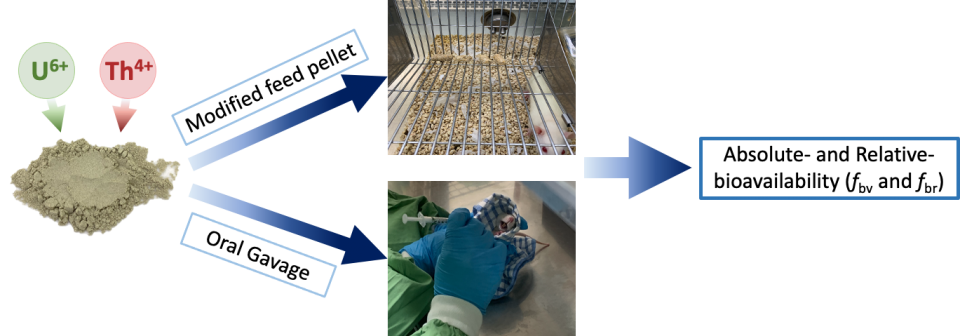
Destructive health risks are often associated with concrete dust ingestion. The concrete dust comprising uranium (238U) and thorium (232Th) could significantly affect occupational and residents’ health. On a global scale, multiple studies have focused on the exposure of 238U and 232Th in soil ingestion, but there was no complete research on the bioavailability of concrete dust. In this study, we conducted absolute- and relative-bioavailability fractions (-fbv and -fbr) of 238U and 232Th in concrete dust. The in vivo Sprague-Dawley (SD) rats’ model was used in both bioavailability studies. This is an original attempt to assess human exposure via ingestion and the health risk associated with 238U and 232Th in concrete dust using SD rats. Consequently, concrete dust ingestion could be associated with alterations in SD rat blood. Overall, the health risks from 238U and 232Th depend majorly on the route of exposure, particle size, solubility/chemical form, and the internalized isotope amount. An extremely complex system was established when combining the variability of 238U and 232Th geochemical forms in contaminated concrete, soil, or solid wastes with dissolution chemistry and absorption process in the gastrointestinal tract. Our study enables fresh perspectives for future investigations focusing on the health implications from environmental exposure of 238U and 232Th in concrete dust.
Speaker #3
Juan Morales
Florida International University, University Park, Florida
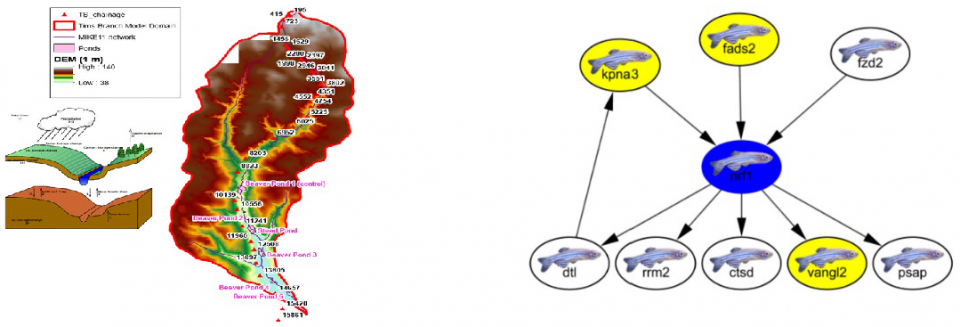
Modeling Episodic Heavy Metal Transport and Toxicity for the Assessment of Remediated Surface Waters
Co-authors: Hamid Bazgirkhoob, Muhammad Alam, Leonel Lagos, Alok Deoraj, Quentin Felty, Changwon Yoo, and Deodutta Roy, Florida International University; Brian Looney, Savannah River National Laboratory
Abstract
Tims Branch watershed at Savannah River Site (SRS) faces challenges in understanding controlling and toxicological variables associated to the remediation of its surface waters. Episodic rain events mobilize heavy metal contaminated soils affecting the water chemistry and their elevated concentrations can adversely impact human and environmental health. Remobilization of metal-bound sediment is highly dependent on the intensity of a rain event and parameters such as pH and organic carbon content in sediments can affect their mobility. To tackle this problem, MIKE 11 ECO Lab, a water quality model, has been created, calibrated, and validated to quantify the transport of heavy metals during episodes of intense rainfall. The profile of the river was analyzed, and uranium flux was modeled for (1-500 year) ARI rain events in the key locations of the stream. To assess the toxicity of the remediated levels of U in a biological model, we analyzed gene expression levels in response to heavy metal exposures, using transcriptomic databases in zebrafish. Normalization and pre-processing of the gene expressions were done using R-Studio software. Nuclear respiratory factor 1 (nrf1), an important transcription factor of various toxicity pathways was selected to identify its target genes. The nrf1 target genes were then ranked, and discretized according to the sex, organ specificity and exposure doses. Using Banjo, a machine learning (ML) method, the ranked nrf1 target genes were then modeled and validated using GeNIe sensitivity analysis. The results of the study provide information necessary for the understanding of controlling variables in heavy metal transport resulting from episodic rain events and highlights novel dose response toxicity mechanisms modeled by nrf1 -gene surrogate markers. Such assessment models are necessary for informed decision-making and for identifying key areas of heavy metal deposition during extreme rainfall in Tims Branch. Additionally, these estimations can be used to support site-specific environmental health risk assessment, planning, and decision-making for the Tims Branch watershed at SRS.