PNNL Chief Scientist for Computing Jim Ang will be part of a DOE Office of Science virtual discussion regarding industry collaborations on AI hardware.
Working on puzzles with her grandpa helped instill Emilie Purvine’s interest in math from an early age. That interest later turned to being co-captain for her high school math team, a degree in mathematics, and eventually a career at PNNL.
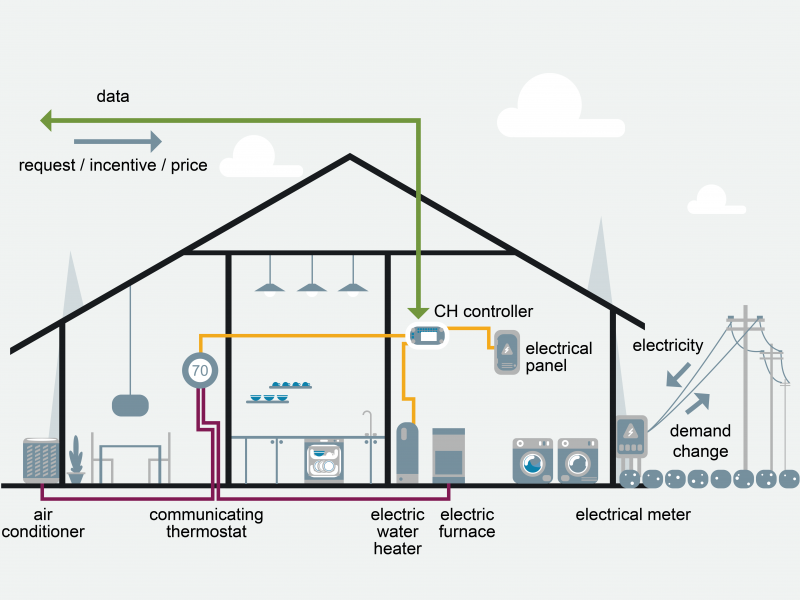
Next generation triple-pane windows provide builders with lower cost options and help homeowners conserve energy, reduce noise, and lower home energy bills.
A paper co-authored by Courtney Corley was recently selected as the most influential paper for the Twenty-First National Conference on Artificial Intelligence.
Anika Halappanavar’s research into COVID-19 misinformation earned her recognition by the Washington State Academy of Sciences as one of the state’s top high school researchers.
Four research staff from PNNL are part of an international team that earned top honors for a journal paper focused on a new algorithm-evaluation approach for buildings.
Three staff selected for leadership program that brings together representatives from all 17 Department of Energy national laboratories to build the national lab leaders of tomorrow.
Sam Rosenberg, a data research scientist in the Energy and Environment Directorate at PNNL, has been appointed voting member of the Regional Technical Forum for the Northwest Power Conservation Council.
PNNL is highlighting scientific and technical experts in the national security domain who were recently promoted to scientist and engineer level 5, one of PNNL’s most senior research roles.
New building energy codes could reduce utility bills by $138 billion and prevent 900 million metric tons of CO2 emissions coming from buildings. Now, they will be easier to adopt.