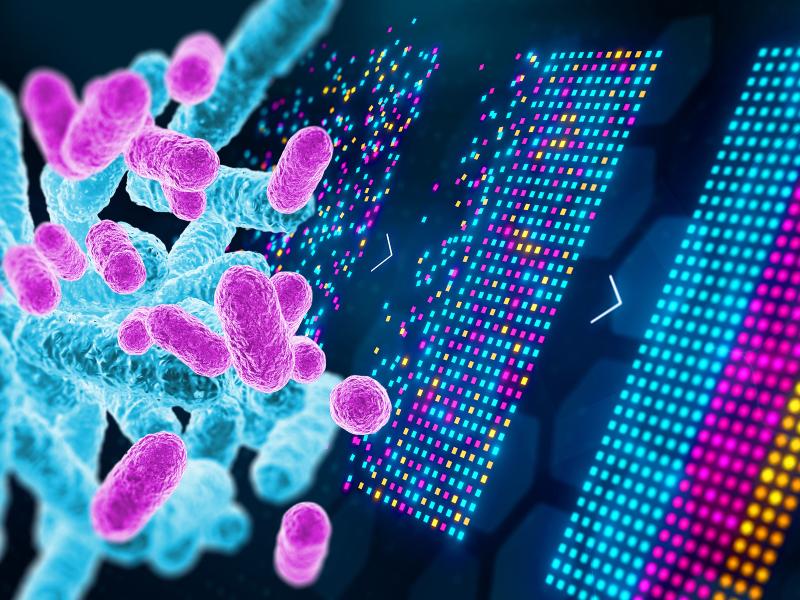
PNNL scientists developed a new method to map exactly how a fungus works with leafcutter ants in a complex microbial community to degrade plant material at the molecular level. The team’s insights are important for biofuels development.
Spatial proteomics enables researchers to link protein measurements to features in the image of a tissue sample, which are lost using standard approaches.
At the GovAI Summit 2023, Ryan Eddy joined the Department of Homeland Security Science and Technology Directorate on a panel highlighting artificial intelligence impacts and opportunities in the field of emergency management.
The 50th anniversary of the Finnish Institute for Verification of the Chemical Weapons Convention was recently celebrated in Helsinki, Finland. PNNL's Jonathan Forman and Raul Aranzazu attended this international event.
An initiative from Washington State University and Snohomish County leaders is aiming to make Paine Field a nexus for testing and improving sustainable aviation fuels made from non-petroleum materials.
A team of researchers received an award for their contributions to improving the operational readiness and safety posture of the firefighter community by conducting a rigorous evaluation of commercially available equipment.
Scientists at PNNL have published a new article that focuses on understanding the composition, dynamics, and deployment of beneficial soil microbiomes to get the most out of soil.
Making it on CrystEngComm’s HOT list, the article, “Designing scintillating coordination polymers using a dual-ligand synthetic approach,” highlights research on existing materials that are non-traditional scintillators.
PNNL has joined Gender Champions in Nuclear Policy, a leadership network that brings together leaders of organizations working in nuclear policy who are committed to breaking down gender barriers.