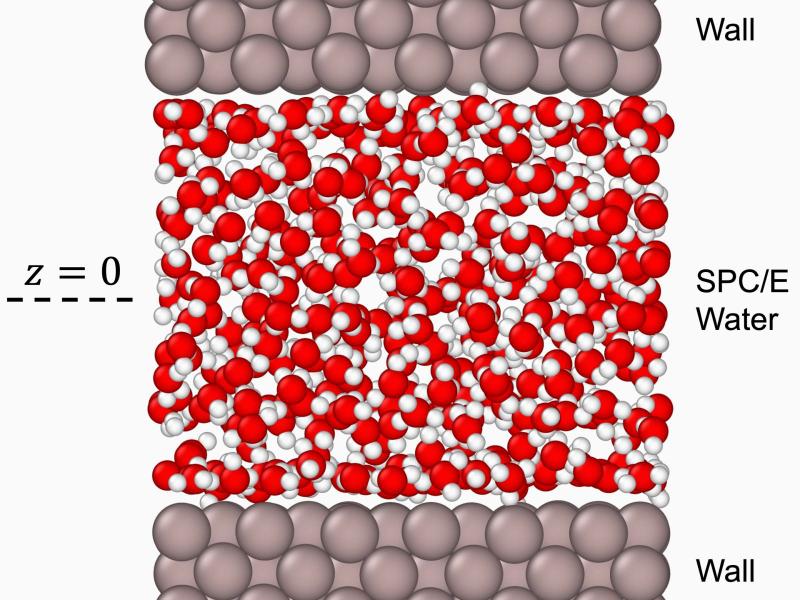
The Department of Energy, Basic Energy Sciences and Advanced Scientific Computing Research programs will support the partnership’s work on nuclear quantum behavior.
From developing new energy storage materials to revealing patterns of Earth’s complex systems, studies led by PNNL researchers are recognized for their innovation and influence.
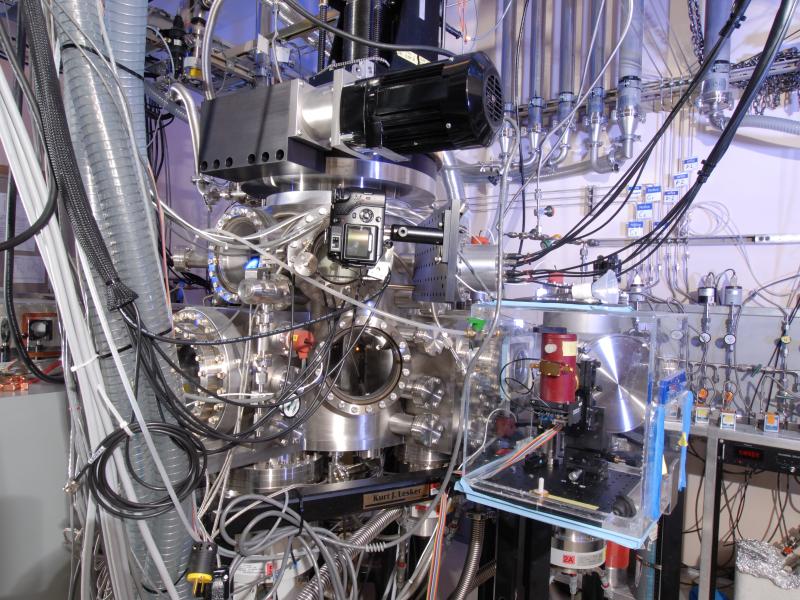
Delivering an integrated quantum-mechanical and experimental perspective on the effects of both intrinsic and externally applied electric fields at atomic-scale interfaces.
PNNL's E-COMP initiative is helping unleash American energy innovation with advanced theories, models, and software tools to better operate power systems that rely heavily on high-speed power electronic control.
The first measurement of the proton diffusion constant at cryogenic temperatures provides insights into the mechanism of proton movement in supercooled water.
Chemist Wendy Shaw, a nationally recognized scientific leader, has been chosen to serve as the associate laboratory director for PNNL's Physical and Computational Sciences Directorate.
PNNL Earth scientist Alison Delgado will serve as an author for the “Science of Response Management” chapter of the Sixth National Climate Assessment (NCA6.)
Researchers found that in a future where the Great Plains are 4 to 6 degrees Celsius (°C) warmer as projected in a high-emission scenario, these storms could bring three times more intense rainfall.
Once thought to cover too little of the Earth’s surface to affect climate at larger scales, new work finds that city sprawl does add to global warming—over land, at least.
Data scientist at PNNL receives the Environmental and Engineering Geophysical Society and Geonics Limited Early Career Award for work with geophysical modeling and subsurface inversion codes.
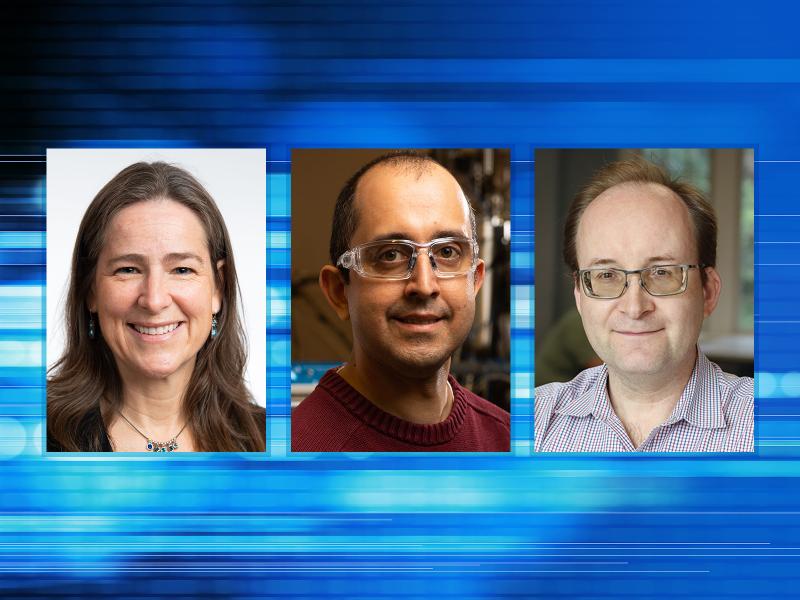
Three PNNL-affiliated researchers have been named fellows of the American Association for the Advancement of Science, the world’s largest multidisciplinary scientific society.