February 20, 2026
News Release

Six PNNL Researchers Win DOE Early Career Research Awards

From exploring the development of transformative materials to strengthening biotechnology, six up-and-coming PNNL scientists were recognized for their scientific vision and prowess.

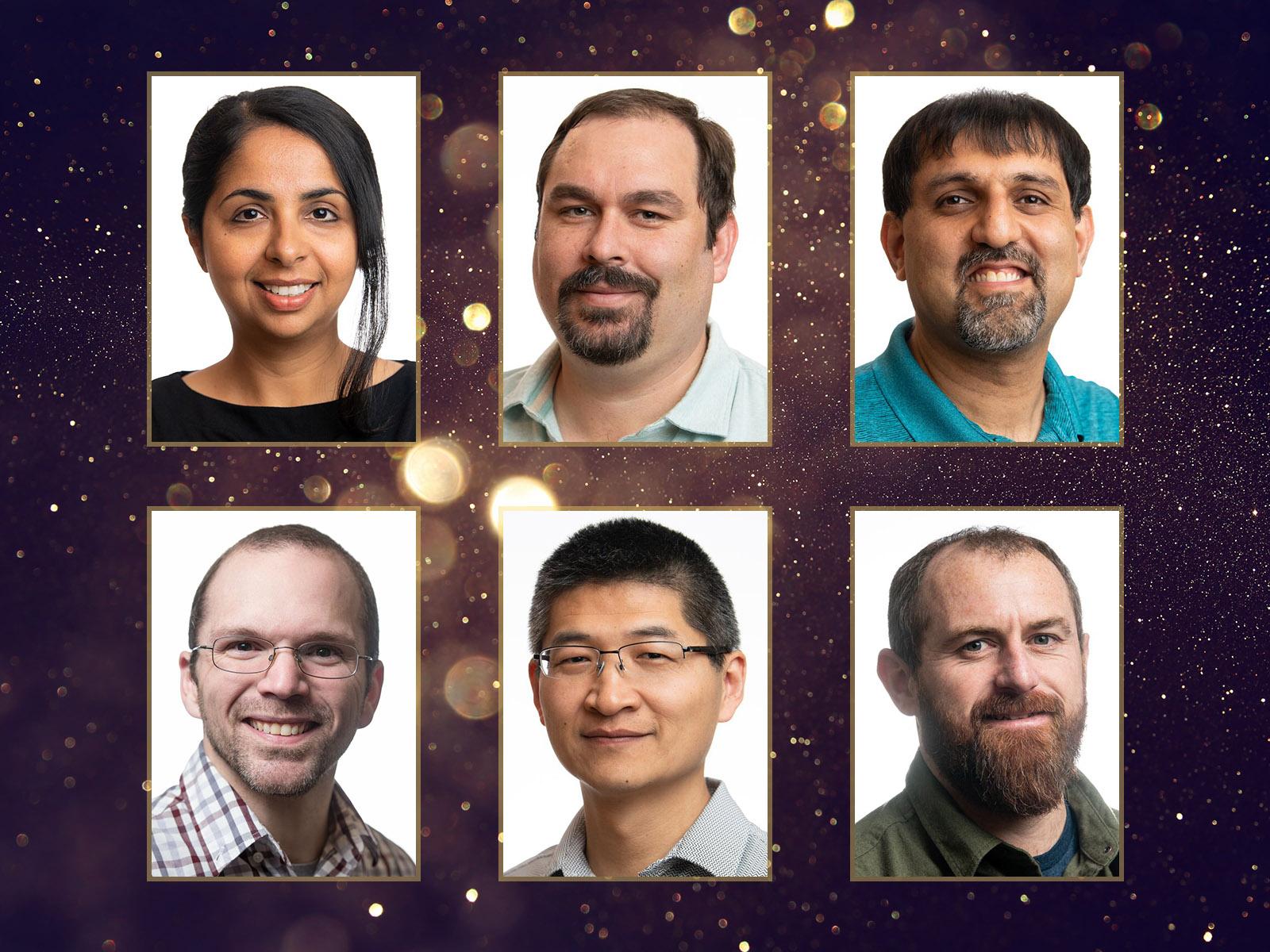
Composite image of six portrait photos of PNNL researchers

From top left to bottom right, PNNL's 2025 Early Career Research Award recipients are Avni Malhotra, Richard Cox, Hadi Dinpajooh, Josh Elmore, Le Wang, and Nick Ward.

(Composite image by Shannon Colson | Pacific Northwest National Laboratory)

RICHLAND, Wash.—The Department of Energy granted early career awards to six researchers at Pacific Northwest National Laboratory—a record number of recipients for PNNL in a single year. The prestigious award is designated for outstanding scientists early in their research careers. It delivers generous support—$2,750,000 for each of the 2025 recipients over a period of five years—allowing researchers to delve into questions that are key to DOE missions. 

“This is the first time six PNNL researchers have received Early Career Research Awards in the same year. This recognition is a testament to their promising research and the impact they stand to make in a variety of fields over the course of their careers,” said Deb Gracio, PNNL director.

PNNL recipients of the awards include chemist Richard Cox, chemical engineer Josh Elmore, computational scientist Hadi Dinpajooh, materials scientist Le Wang, and Earth scientists Avni Malhotra and Nick Ward. Their work focuses on basic science, ranging in focus from the chemistry of heavy elements like plutonium and uranium to plant and microbiological processes that could boost the development of the U.S. bioeconomy. The awards are given to scientists at DOE national laboratories, Office of Science user facilities and U.S. academic institutions. 

“The Department of Energy’s Office of Science is dedicated to supporting these promising investigators, and the Early Career Research Program provides an incredible opportunity,” said Harriet Kung, DOE’s Deputy Director of Science Programs for the Office of Science. “These awards allow them to pursue new ideas and harness the resources of the user facilities to increase the potential for breakthrough new discoveries.” 

For some, like Malhotra, the funding presents a rare opportunity to lead a new research program. “It’s an incredible opportunity to build a program from scratch that can lead to long-term discoveries and new research capabilities,” said Malhotra. Her work will shed light on biological processes that occur in soil near plant roots, which are difficult to capture and have long gone understudied. 

Similarly, Nick Ward’s research could uncover important details about a large, lingering question in the Earth science community: just how much methane and nitrous oxide could flow into or out of the world’s trees, and how might the scientific community better capture the process of forest-based trace gas exchange in their models?

Le Wang
Photo by Andrea Starr | Pacific Northwest National Laboratory

For other recipients, like Wang, the funding makes possible new investigations within an established research team. Wang’s work flows out of the lab’s research in thin oxide films: materials that are an essential component of many modern electronics. Scientists like Wang grow these films in extremely thin layers, atom by atom, and study them to glean details about materials that can give rise to new, promising energy and information-processing technologies. 

“I’ve proposed to focus on a new material system known as high-entropy oxides,” said Wang. “Exploring how these multicomponent materials behave at the atomic level could bring about new functional properties,” he added. 

Dinpajooh’s work developing new AI methodologies could accelerate discovery in basic energy sciences by helping researchers better understand chemical and physical processes in electrolyte solutions. Electrolyte solutions are central to energy storage technologies, separation of critical materials, and many other applications. These AI-enabled approaches could improve prediction of key phenomena such as speciation, nucleation, and electron transfer—helping scientists tailor electrolyte performance and guide the design of next-generation materials and processes.

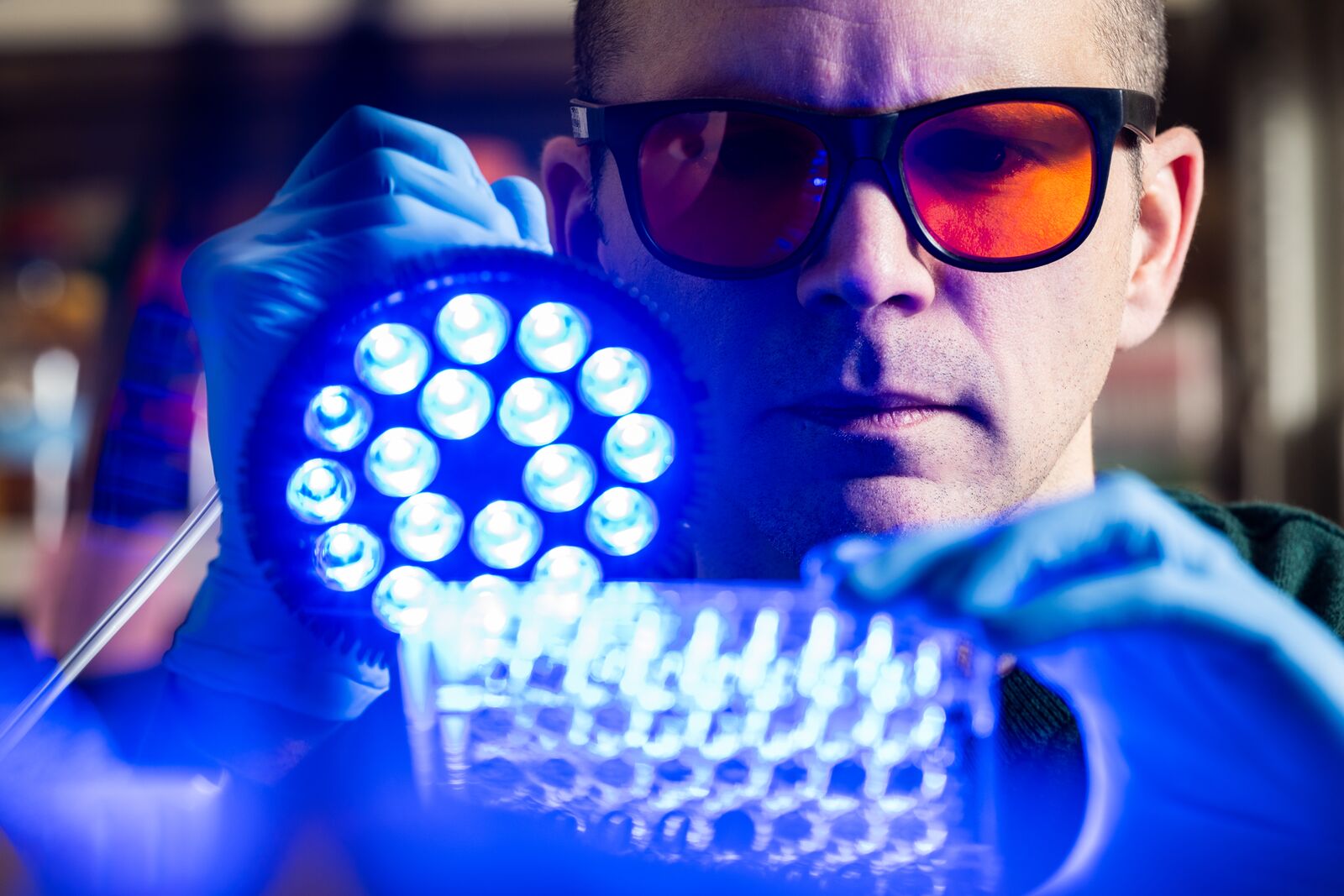
PNNL Researcher Joshua Elmore holding up a light to a tray while wearing safety gloves and glasses.
Photo by Andrea Starr | Pacific Northwest National Laboratory

Other funded work, like Elmore’s research on bacterial bioproduction, could ultimately harness the power of microorganisms to produce valuable chemicals. But before those chemicals and other critical materials can be produced, researchers must work toward a predictive understanding of how microbes regulate energy use. 

By exploring how certain proteins are modified within bacterial cells, Elmore’s research could help to realize that understanding. The proposed work builds upon the project he led within PNNL’s Predictive Phenomics Initiative, which focuses largely on unraveling the mysteries of molecular function in complex biological systems.

Much of the work from this year’s recipients could deliver wide-ranging implications in diverse fields—Cox’s research into nuclear chemistry being a prime example. Cox plans to study the basic chemical behavior of a subset of heavy elements known as actinides. With key roles in nuclear energy, environmental cleanup, energy storage, and even nuclear non-proliferation, a better understanding of why actinides behave the way they do could benefit many. 

“It takes a special place like PNNL that has the access and the ability to handle these unique elements safely,” said Cox, who has pursued this line of research for roughly half a decade. “It was very exciting to find out that my proposed research was chosen, and I’m even more excited to venture out into a new scientific direction,” he added.

###

About PNNL

Pacific Northwest National Laboratory draws on its distinguishing strengths in chemistry, Earth sciences, biology and data science to advance scientific knowledge and address challenges in energy resiliency and national security. Founded in 1965, PNNL is operated by Battelle and supported by the Office of Science of the U.S. Department of Energy. The Office of Science is the single largest supporter of basic research in the physical sciences in the United States and is working to address some of the most pressing challenges of our time. For more information, visit the DOE Office of Science website. For more information on PNNL, visit PNNL's News Center. Follow us on Twitter, Facebook, LinkedIn and Instagram.