March 26, 2026
News Release

PNNL Computational Scientist Named AAAS Fellow

Margaret Cheung elected to premier scientific society

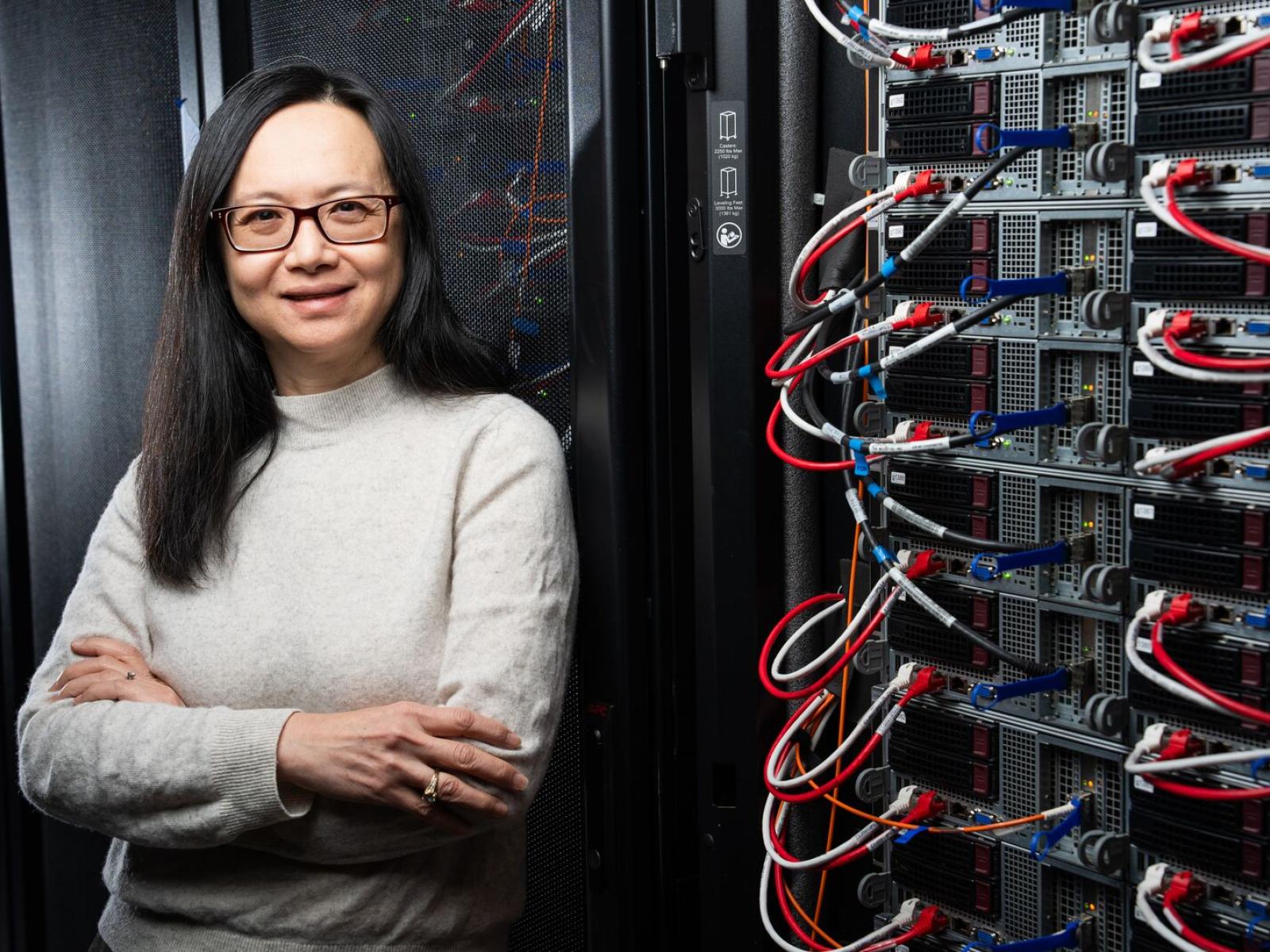
Margaret Cheung stands next to a wall of scientific instruments.

Computational scientist Margaret Cheung.

(Photo by Andrea Starr | Pacific Northwest National Laboratory)

RICHLAND, Wash.—Pacific Northwest National Laboratory computational scientist and biological physicist Margaret Cheung has been named a fellow of the American Association for the Advancement of Science. AAAS is the world’s largest multidisciplinary scientific society, and being elected as a fellow is the organization’s highest honor.

Fellows are elected annually by AAAS for significant contributions and achievements across a variety of scientific disciplines, spanning research to public communications. As noted by the society, those eligible for AAAS fellowship are members “whose efforts on behalf of the advancement of science or its applications are scientifically or socially distinguished.”

Cheung joined PNNL and the Environmental Molecular Sciences Laboratory—a Department of Energy Office of Science user facility located at PNNL-Richland—in 2021 and holds a joint appointment in the Department of Physics at the University of Washington. She focuses her research on an approach that integrates physics and data to study how certain proteins interact and control living matter.

She is also the lead principal investigator of the DOE-funded Northwest Biopreparedness Research Virtual Environment (NW-BRaVE) Initiative, with a mission to design and lead new approaches for characterizing host-pathogen interactions for detection and prediction. The project integrates a wide range of molecular and cellular structure and advanced omics measurements, with the aid of artificial intelligence applications, to systematically and spatially map out the molecular footprints inside a microbial host upon viral infection.

After obtaining her doctorate in physics from the University of California, San Diego in 2003, Cheung worked at the University of Maryland under a Sloan Postdoctoral Research Fellowship, later going on to start her own laboratory at the University of Houston in 2006 and becoming a tenured and endowed Moores Professor. She has also served as a senior scientist and outreach director at the Center for Theoretical Biological Physics at Rice University.

###

About PNNL

Pacific Northwest National Laboratory draws on its distinguishing strengths in chemistry, Earth sciences, biology and data science to advance scientific knowledge and address challenges in energy resiliency and national security. Founded in 1965, PNNL is operated by Battelle and supported by the Office of Science of the U.S. Department of Energy. The Office of Science is the single largest supporter of basic research in the physical sciences in the United States and is working to address some of the most pressing challenges of our time. For more information, visit the DOE Office of Science website. For more information on PNNL, visit PNNL's News Center. Follow us on Twitter, Facebook, LinkedIn and Instagram.