
PNNL

  • About
  • News & Media
  • Careers
  • Events
  • Research
    • Scientific Discovery
      • Biology
        • Chemical Biology
        • Computational Biology
        • Ecosystem Science
        • Human Health
          • Cancer Biology
          • Exposure Science & Pathogen Biology
        • Integrative Omics
          • Advanced Metabolomics
          • Chemical Biology
          • Mass Spectrometry-Based Measurement Technologies
          • Spatial and Single-Cell Proteomics
          • Structural Biology
        • Microbiome Science
          • Biofuels & Bioproducts
          • Human Microbiome
          • Soil Microbiome
          • Synthetic Biology
        • Predictive Phenomics
      • Chemistry
        • Computational Chemistry
        • Chemical Separations
        • Chemical Physics
        • Catalysis
      • Earth & Coastal Sciences
        • Global Change
        • Atmospheric Science
          • Atmospheric Aerosols
          • Human-Earth System Interactions
          • Modeling Earth Systems
        • Coastal Science
        • Ecosystem Science
        • Subsurface Science
        • Terrestrial Aquatics
      • Materials Sciences
        • Materials in Extreme Environments
        • Nondestructive Examination
        • Precision Materials by Design
        • Science of Interfaces
        • Smart Advanced Manufacturing
          • Cold Spray
          • Friction Stir Welding & Processing
          • ShAPE
      • Nuclear & Particle Physics
        • Dark Matter
        • Fusion Energy Science
        • Neutrino Physics
      • Quantum Information Sciences
    • Energy Resiliency
      • Electric Grid Modernization
        • Emergency Response
        • Grid Analytics
          • AGM Program
          • Tools and Capabilities
        • Grid Architecture
        • Grid Cybersecurity
        • Grid Energy Storage
        • Transmission
        • Distribution
      • Energy Efficiency
        • Appliance and Equipment Standards
        • Building Energy Codes
        • Building Technologies
          • Advanced Building Controls
          • Advanced Lighting
          • Building-Grid Integration
        • Commercial Buildings
        • Federal Buildings
          • Federal Performance Optimization
          • Resilience and Security
        • Residential Buildings
          • Building America Solution Center
          • Energy Efficient Technology Integration
          • Home Energy Score
        • Energy Efficient Technology Integration
      • Energy Storage
        • Electrochemical Energy Storage
        • Flexible Loads and Generation
        • Grid Integration, Controls, and Architecture
        • Regulation, Policy, and Valuation
        • Science Supporting Energy Storage
        • Chemical Energy Storage
      • Environmental Management
        • Waste Processing
        • Radiation Measurement
        • Environmental Remediation
      • Fossil Energy
        • Subsurface Energy Systems
        • Advanced Hydrocarbon Conversion
      • Nuclear Energy
        • Fuel Cycle Research
        • Advanced Reactors
        • Reactor Operations
        • Reactor Licensing
        • Nondestructive Examination
      • Renewable Energy
        • Solar Energy
        • Wind Energy
          • Wind Resource Characterization
          • Wildlife and Wind
          • Wind Systems Integration
          • Wind Data Management
          • Distributed Wind
        • Marine Energy
          • Environmental Monitoring for Marine Energy
          • Marine Biofouling and Corrosion
          • Marine Energy Resource Characterization
          • Testing for Marine Energy
          • The Blue Economy
        • Hydropower
          • Environmental Performance of Hydropower
          • Hydropower Cybersecurity and Digitalization
          • Hydropower and the Electric Grid
          • Materials Science for Hydropower
          • Pumped Storage Hydropower
          • Water + Hydropower Planning
        • Grid Integration of Renewable Energy
        • Geothermal Energy
      • Transportation
        • Bioenergy Technologies
          • Algal Biofuels
          • Aviation Biofuels
          • Waste-to-Energy and Products
        • Hydrogen & Fuel Cells
        • Vehicle Technologies
          • Emission Control
          • Energy-Efficient Mobility Systems
          • Lightweight Materials
          • Vehicle Electrification
          • Vehicle Grid Integration
    • National Security
      • Chemical & Biothreat Signatures
        • Contraband Detection
        • Pathogen Science & Detection
        • Explosives Detection
        • Threat-Agnostic Biodefense
      • Cybersecurity
        • Discovery and Insight
        • Proactive Defense
        • Trusted Systems
      • Nuclear Material Science
      • Nuclear Nonproliferation
        • Radiological & Nuclear Detection
        • Nuclear Forensics
        • Ultra-Sensitive Nuclear Measurements
        • Nuclear Explosion Monitoring
        • Global Nuclear & Radiological Security
      • Stakeholder Engagement
        • Disaster Recovery
        • Global Collaborations
        • Legislative and Regulatory Analysis
        • Technical Training
      • Systems Integration & Deployment
        • Additive Manufacturing
        • Deployed Technologies
        • Rapid Prototyping
        • Systems Engineering
      • Threat Analysis
        • Advanced Wireless Security
          • 5G Security
          • RF Signal Detection & Exploitation
        • Border Security
        • Internet of Things
        • Maritime Security
        • Millimeter Wave
        • Mission Risk and Resilience
    • Data Science & Computing
      • Artificial Intelligence
      • Graph and Data Analytics
      • Software Engineering
      • Computational Mathematics & Statistics
      • Future Computing Technologies
        • Adaptive Autonomous Systems
    • Lab Objectives
    • Publications & Reports
    • Featured Research
  • People
    • Inventors
    • Lab Leadership
    • Lab Fellows
    • Staff Accomplishments
  • Partner with PNNL
    • Education
      • Undergraduate Students
      • Graduate Students
      • Post-graduate Students
      • University Faculty
      • University Partnerships
      • K-12 Educators and Students
      • STEM Education
        • STEM Workforce Development
        • STEM Outreach
      • Internships
    • Community
      • Regional Impact
      • Philanthropy
      • Volunteering
    • Industry
      • Why Partner with PNNL
      • Explore Types of Engagement
      • How to Partner with Us
      • Available Technologies
      • Procurement
      • Technology Ombuds
  • Facilities & Centers
    • All Facilities
      • Atmospheric Radiation Measurement User Facility
      • Electricity Infrastructure Operations Center
      • Energy Sciences Center
      • Environmental Molecular Sciences Laboratory
      • Grid Storage Launchpad
      • Institute for Integrated Catalysis
      • Interdiction Technology and Integration Laboratory
      • PNNL Portland Research Center
      • PNNL-Seattle
      • PNNL-Sequim (Marine and Coastal Research)
      • Radiochemical Processing Laboratory
      • Shallow Underground Laboratory

NNSA Material Control and Accountability Academy

  • FAQ
  • Interest Form
  • Contact Us

Breadcrumb

  1. Home
  2. Projects
  3. NNSA Material Control and Accountability Academy

Frequently Asked Questions

Below are the most frequently asked questions related to the Material Control and Accountability (MC&A) Academy.
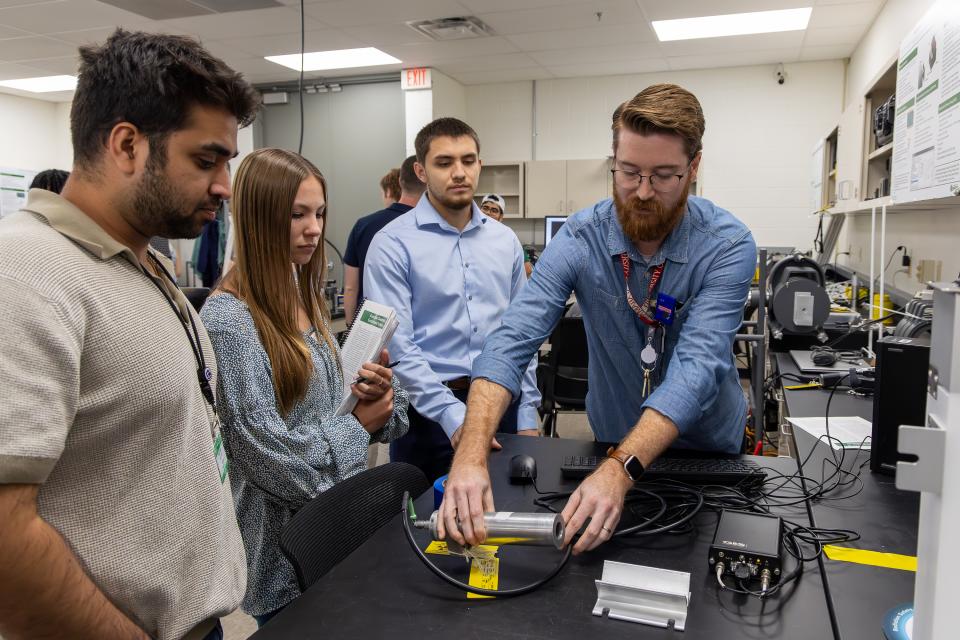
Photo of NNSA Material Control and Accountability Academy Interns in Lab
Photo by Carlos Jones | Oak Ridge National Laboratory
  1. Do I have to be a U.S. citizen to apply? 
    Yes, the security clearance levels for this internship require U.S. citizenship.
  2. Do we get to choose the site we work at?
    Interns’ academic background and experience are taken into consideration for site placements. Site placements are based on site availability in different MC&A areas.
  3. Is the internship paid? Does it cover housing, relocation, or travel?
    Yes, this internship is paid. Interns also receive stipends for housing, local travel, and relocation costs while at their site and costs to attend and travel to the academy are covered. Stipends are graded on the basis of education level (bachelor's, master's, or doctoral).
  4. What type of classes or training sessions are offered?
    Each intern completes a Basics of Accountability course. Additional courses vary from year to year and encompass areas such as nuclear material measurements, operations, accountability, and program management.
  5. Who do we work with during the internship?
    The Material Control and Accountability Academy partners with numerous national laboratories and production sites within the national security complex. Interns are partnered with MC&A and operations professionals at their host site.
  6. How long does the program last?
    The duration of the summer internship ranges from 8 to 12 weeks, depending on summer availability between university schedules. The summer internship ends before the student begins new classes in the fall. If interns are successful in their summer internships, they may be offered an academic year internship, which requires a time commitment of ~10 hours per week and may be remote or on-site, depending on the proximity of the intern's college/university to an NNSA site. Academic year internships are also paid internships and may also include a housing stipend depending on the nature of the internship.  
  7. What majors are accepted?
    A wide range of degree majors, including technical and business majors, are accepted. Common majors include engineering, physics, chemistry, computer science, accounting, mathematics, statistics, and business.
  8. What’s the main goal of the Academy?
    The Material Control and Accountability Academy was designed to educate the next generation of national security professionals and serve as an employment pipeline into the field of material control and accountability.
  9. What’s the application timeline?
    Applications for the summer internship are accepted from October through January. Interns must reapply for subsequent academic year and summer internships.
  10. How competitive is it?
    Positions are limited to 20 per year for new participants.
  11. What kind of security clearance or background check is required?
    Applicants must have the ability to obtain a Department of Energy Q-clearance (Top Secret/Sensitive Controlled Information equivalent).
  12. Can international students participate?
    The internship requires applicants to be U.S. citizens because of the classified nature of the work.  
  13. What is a typical day like at the MC&A Academy or during the internship?
    Daily schedules vary among sites, but during the 2.5-week group training event, expect a mix of classes, hands-on exercises, tours, and presentations from experts.
  14. Will I get hands-on experience with real equipment or data?
    Yes, the NNSA MC&A Academy was designed to provide real work experience in the area of MC&A.  
  15. Is there an opportunity to present research or findings?
    Yes, although these opportunities are provided in limited fashion because of the classified nature of the work.
  16. Will interns be working with just other interns?
    Interns are all partnered with MC&A and operations professionals but may also work with other interns.
  17. Can participation lead to future employment or career opportunities?
    Yes, the NNSA MC&A Academy was created to provide a pipeline for future career and employment opportunities in the MC&A field.
  18. What’s the difference between the Academy and the internship?
    The internship is an 8-week assignment to a host facility within the national security complex where interns work with MC&A and operations professionals. The Academy encompasses both this internship and a 2.5-week training event where interns meet the rest of their cohort at a single host site for classes, hands-on exercises, tours, and presentations from experts in a group setting.
  19. How are mentors assigned, and how often do we meet with them?
    The host site assigns site mentors to interns on the basis of area of need, and interns work with their mentors daily.
  20. Do we need prior nuclear or security experience to apply?
    Not at all! The Academy was designed with students in mind.

Research topics

National Security

PNNL

  • Get in Touch
    • Contact
    • Careers
    • Doing Business
    • Environmental Reports
    • Security & Privacy
    • Vulnerability Disclosure Policy
    • Notice to Applicants
  • Research
    • Scientific Discovery
    • Energy Resiliency
    • National Security
Subscribe to PNNL News
Department of Energy Logo Battelle Logo
Pacific Northwest National Laboratory (PNNL) is managed and operated by Battelle for the Department of Energy
  • YouTube
  • Facebook
  • X (formerly Twitter)
  • Instagram
  • LinkedIn