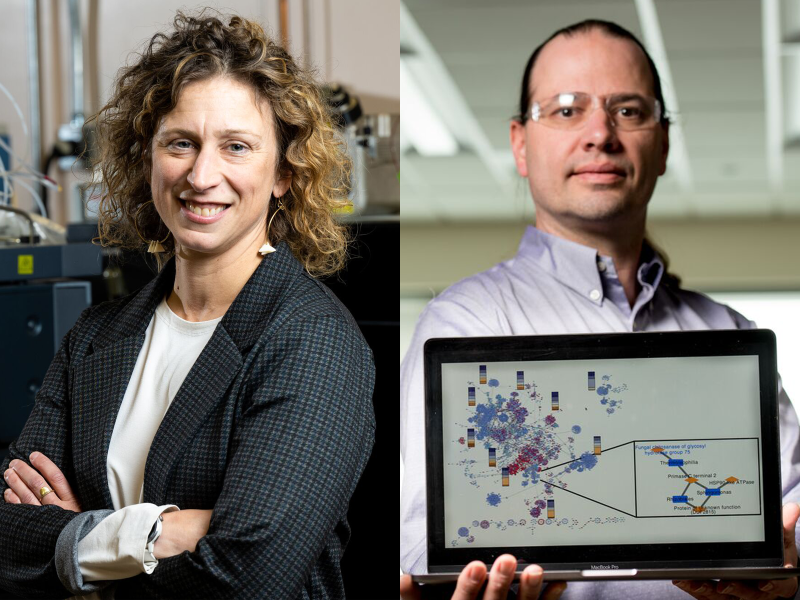
David Heldebrant was selected for the 2025 Distinguished Service Award from the American Chemical Society Division of Energy & Fuels, recognizing his impact to energy and fuels chemistry.
PDX, PNNL, and Sandia National Laboratories are exploring the feasibility of hydrogen fuel for the PDX bus fleet—an idea that could have novel benefits for hazard resilience.
CO2 separation is key for natural gas purification, but conventional techniques are high-emission processes. New research reveals a novel, doubly segmented, CO2-selective membrane that increases CO2 permeability and reduces emissions.
Armed with some of the world’s most advanced instrumentation, researchers at PNNL are working to analyze huge amounts of data and uncover hidden biological connections.
Led by interns from multiple DOE programs, a newly expanded dataset allows researchers to use easy-to-obtain measurements to determine the elemental composition of a promising carbon storage mineral.
This project sought to assure that research activities centered around different sampling and monitoring efforts in northwest Ohio would not disturb any historical cultural resources.
A multi-institutional team of researchers systematically compared extraction techniques for characterizing plant litter composition that relies on organic matter extraction.
After 20 years of contributions to the field of hydrogen safety, the Hydrogen Safety Panel launched its new mentoring program at PNNL earlier this year. Now, the program has selected its first two mentees.
Research identifies the mechanisms through which peptoids affect ions in solution and a mineral surface, increasing the rate of carbonate crystal growth.
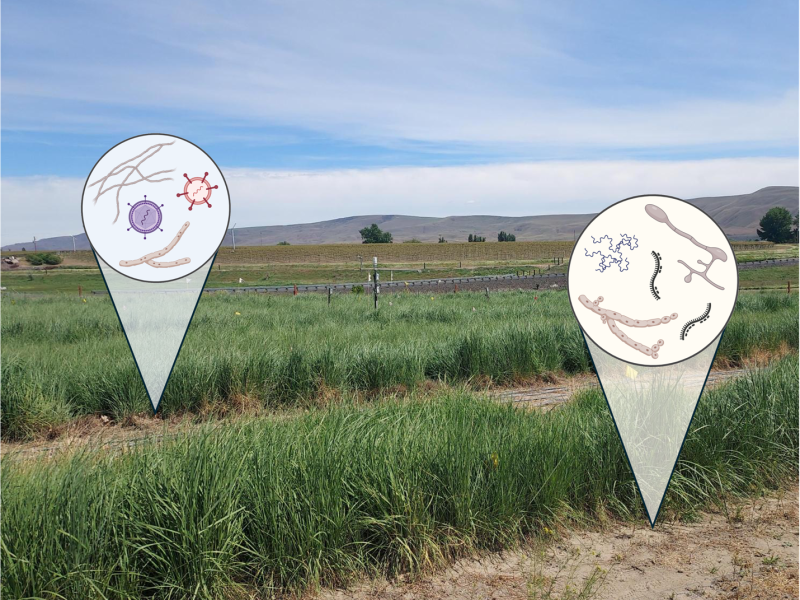
Despite the widespread presence of RNA viruses in soils, little is known about the relative contributions and interactions of biological and environmental factors shaping the composition of soil RNA viral communities.