From developing new energy storage materials to revealing patterns of Earth’s complex systems, studies led by PNNL researchers are recognized for their innovation and influence.
The ability of a storm-resolving weather model to predict the growth of storms over central Argentina was evaluated with data from the Clouds, Aerosols, and Complex Terrain Interactions (CACTI) field campaign in central Argentina.
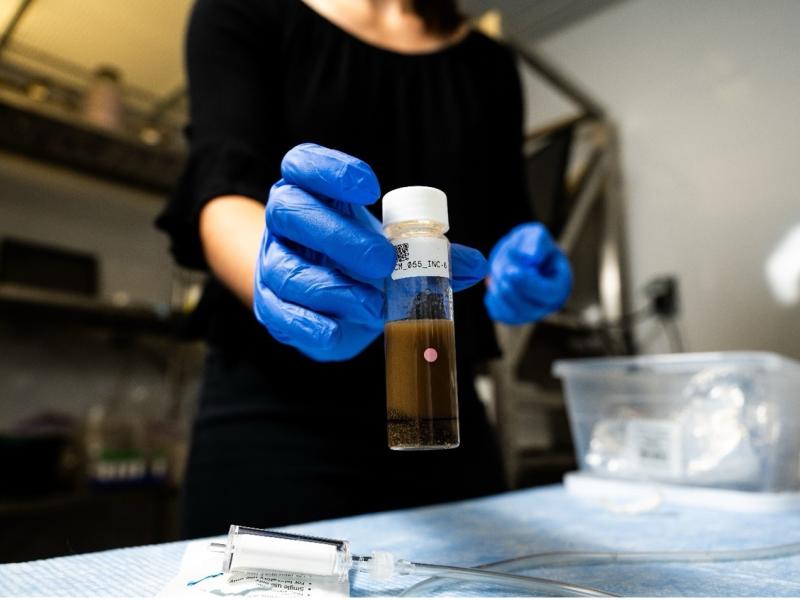
Researchers from PNNL and Parallel Works, Inc., applied machine learning methods to predict how much oxygen and nutrients are used by microorganisms in river sediments.
The rate of conversion of cloud droplets to precipitation, known as the autoconversion rate, remains a major source of uncertainty in characterizing aerosol’s cloud lifetime effects and precipitation in global and regional models.
To assess the impact of observation period and gauge location, model parameters were learned on scenarios using different chunks of streamflow observations.
PNNL's E-COMP initiative is helping unleash American energy innovation with advanced theories, models, and software tools to better operate power systems that rely heavily on high-speed power electronic control.
This study presents an automated method to detect and classify open- and closed-cell mesoscale cellular convection (MCC) using long-term ground-based radar observations.
A new web-based tool provides easy-to-understand progress metrics and other data about groundwater cleanup sites overseen by the DOE Office of Environmental Management.
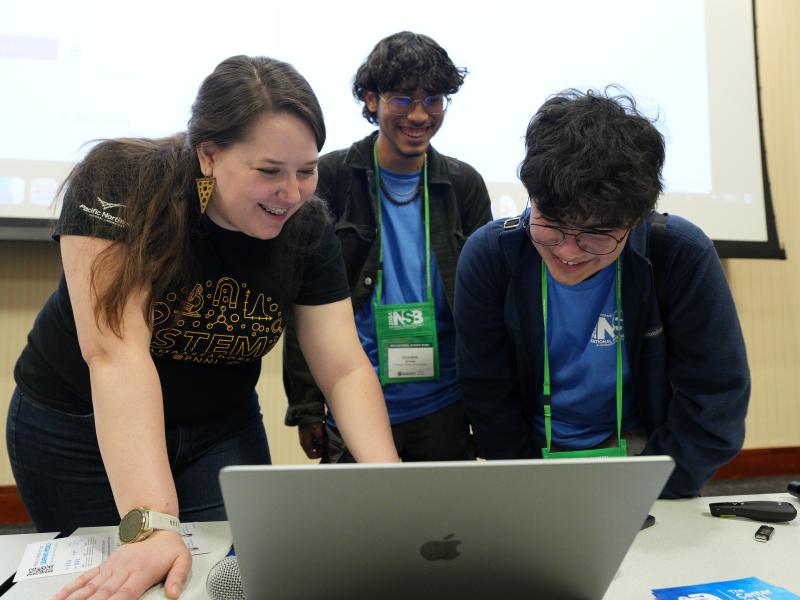
Anika Halappanavar’s research into COVID-19 misinformation earned her recognition by the Washington State Academy of Sciences as one of the state’s top high school researchers.
PNNL researchers develop software that uses geographical data to build a free, open-source grid reference system to provide a precise system to locate structures.
PNNL data scientists Svitlana Volkova and Emily Saldanha, along with former PNNL intern Pamela Bilo Thomas, will publish their research on online information spread in Nature's Scientific Reports.
As a member of the NAM board of directors, Brett Jefferson, PNNL data scientist, will help lead the professional association’s mission to advance mathematical excellence of underrepresented minorities.
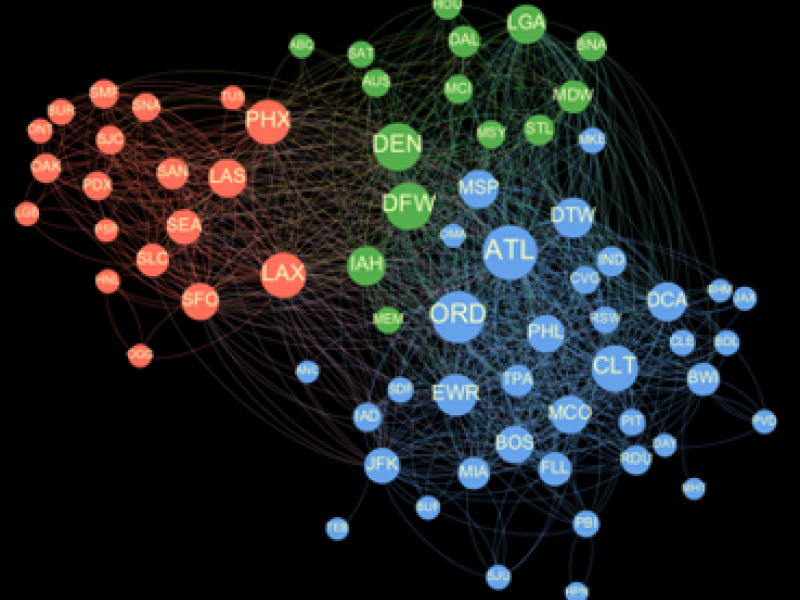
First-of-its-kind network analysis on a supercomputer can speed real-time applications for cybersecurity, transportation, and infectious disease tracking
At a conference featuring the most advanced computing hardware and software, ML in its various guises was on full display and highlighted by Nathan Baker’s featured invited presentation.