A new book by PNNL biochemist Erick Merkley details forensic proteomics, a technique that directly analyzes proteins in unknown samples, in pursuit of making proteomics a widespread forensic method when DNA is missing or ambiguous.
The world’s largest scientific society honored Sue B. Clark, a PNNL and WSU chemist, for contributions toward resolving our legacy of radioactive waste, advancing nuclear safeguards, and developing landmark nuclear research capabilities.
Researchers at PNNL are contributing artificial intelligence, machine learning, and app development expertise to a U of W project that will ease challenges with urban freight delivery. The project will provide delivery drivers with a tool
In today’s digital age, the rabbit hole of connected information can be not only a time sink, but downright overwhelming. Even for high-performance computers.
Francesca Grogan grew up in Southern California, gravitated to competitive swimming, and chose to stay close to her geographical roots for her undergraduate and postgraduate studies.
The ANS award will be presented at the Global Top Fuel 2019 Conference this September in Seattle, and comes amid several recent recognitions for Paviet.
A radioactive chemical called pertechnetate is a bad actor when it’s in nuclear waste tanks. But researchers at PNNL and the University of South Florida have a new lead on how to selectively separate it from the nuclear waste for treatment.
Frannie Smith, a chemist specializing in nuclear waste management and disposal, was recognized as a "Notable Woman in STEM" for 2019 by the nonprofit Washington STEM program.
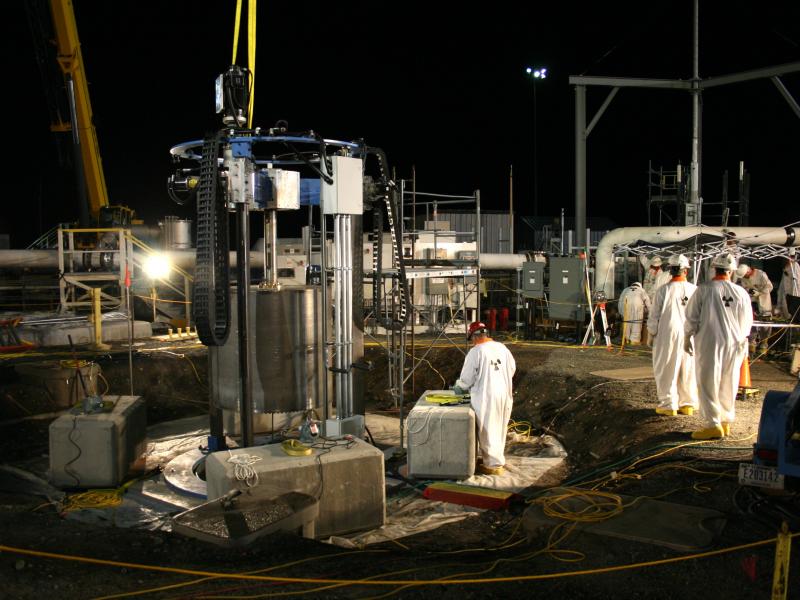
Installing new access holes (up to 6 feet in diameter) could reduce the overall time and cost to retrieve waste from Hanford's underground storage tanks, according to a structural analysis of the tank domes by PNNL and Becht Engineering.
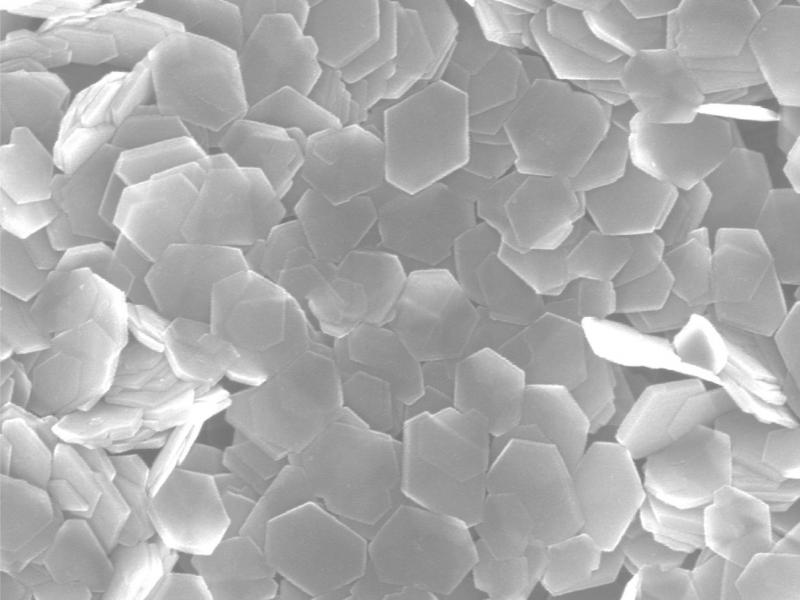
Aluminum oxyhydroxide (boehmite) nanoplatelets align and attach to form neatly ordered stacks, a novel findings that involves both experimental and computational research.
Peering through the thick, green glass of a decades-old "hot cell," an expert technician manipulates robotic arms to study highly radioactive waste from Hanford, in support of ongoing cleanup.
Vitrifying nuclear waste for storage is complicated by aluminum and understanding this behavior is vital. Research suggests that upon radiolysis, the properties of humid aluminum particles do not change substantially but hydrogen is formed.