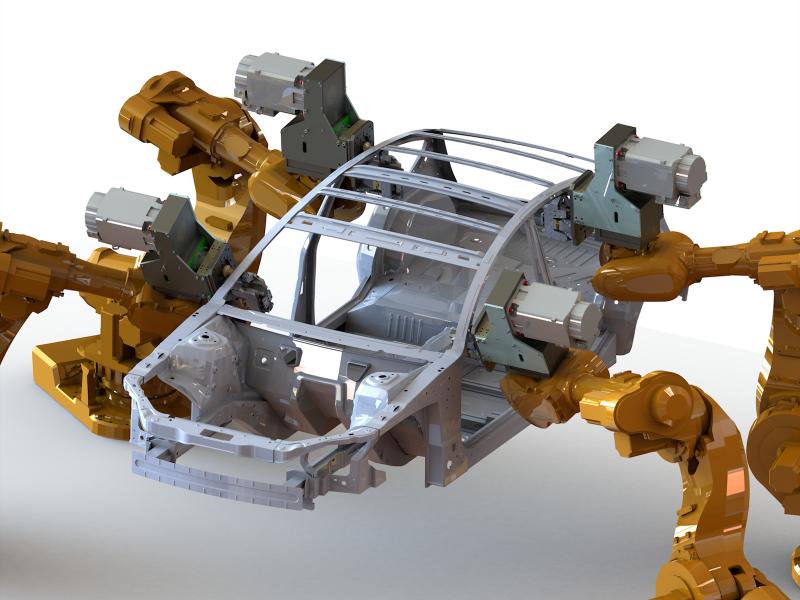
A breakthrough at PNNL could free friction stir from current constraints—and open the door for increased use of the advanced manufacturing technique on commercial assembly lines.
PNNL's ASSORT model will help airports balance passenger screening and security risks with throughput. It also quantifies risks for different traveler types and optimizes checkpoint operations, improving efficiency while enhancing safety.
By combining computational modeling with experimental research, scientists identified a promising composition that reduces the need for a critical material in an alloy that can withstand extreme environments.
PNNL researchers have developed a new, physics-informed machine learning model that accurately predicts how heat accumulates and dissipates during friction stir processing.
At the 2024 Aviation Futures Workshop, researchers from PNNL joined other subject matter experts and representatives from the stakeholder community in reimagining the passenger experience.
Researchers shared several technologies addressing urgent security challenges at the 2024 Homeland Protection Technologies Workshop at MIT Lincoln Laboratory, in Boston MA.
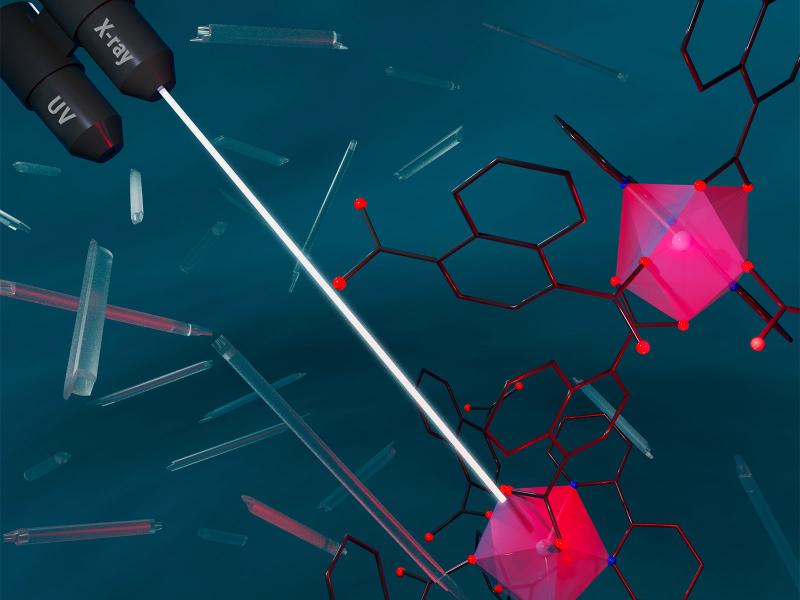
Making it on CrystEngComm’s HOT list, the article, “Designing scintillating coordination polymers using a dual-ligand synthetic approach,” highlights research on existing materials that are non-traditional scintillators.
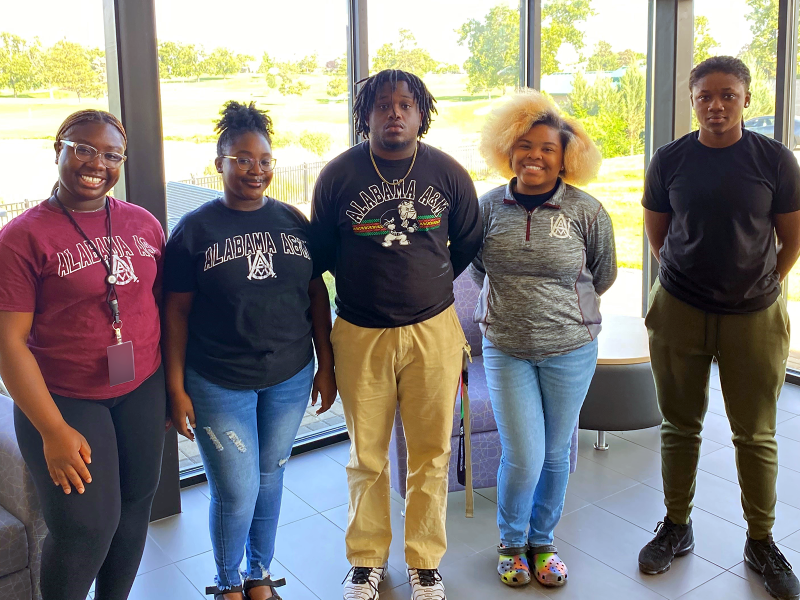
Germany Harris, Dewayne Maye, Sarah Olocha, Shaniya Pettway, and Rayonna Redmon became the first interns of the Minority Serving Institution Partnership Program Partnership for Radiation Studies Consortium at PNNL.
Katalenich was selected to attend the Grainger Foundation Frontiers of Engineering 2023 Symposium—an honor given to only 100 early-career engineers annually.
Physicist Emily Mace will share her science journey and an interactive presentation about her current research with middle school and high school students from across the country at the National Science Bowl.
Advancing the science of radiation, especially among students at minority-serving institutions, is the goal of one of the Department of Energy’s newest consortia.
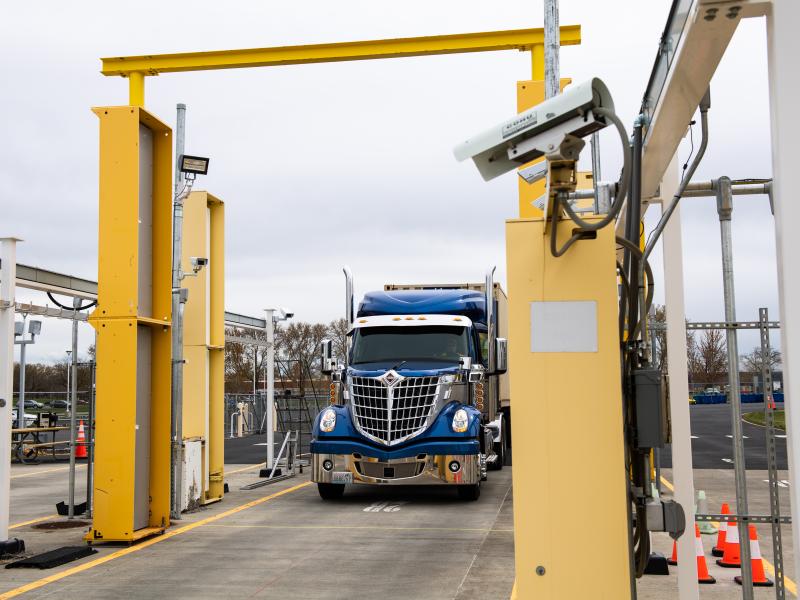
Twenty years after the first radiation portal monitor was installed, PNNL continues supporting the Department of Homeland Security’s efforts to detect and prevent terrorist weapons from crossing our borders.