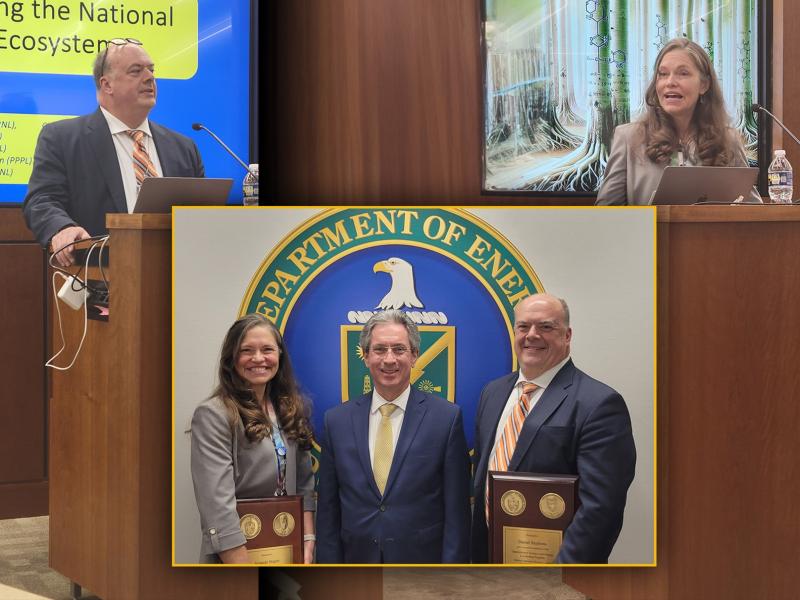
Erich Hsieh, Deputy Assistant Secretary for OE’s Energy Storage Division, shared insights about the Grid Storage Launchpad and energy storage innovations .
To improve our ability to “see” into the subsurface, scientists need to understand how different mineral surfaces respond to electrical signals at the molecular scale.
PNNL staff scientist selected as a guest editor for a special issue titled “Ligand-Metal Complementarity in Rare Earth and Actinide Chemistry,” in the well-known journal Inorganic Chemistry.
Frederick Day-Lewis, Lab Fellow and chief geophysicist at PNNL, was named the 2024 recipient of the Geological Society of America Public Service Award.
Capstone engineering projects deliver equipment to improve accuracy of chemistry lab elutions and enhance training to safeguard critical infrastructure.
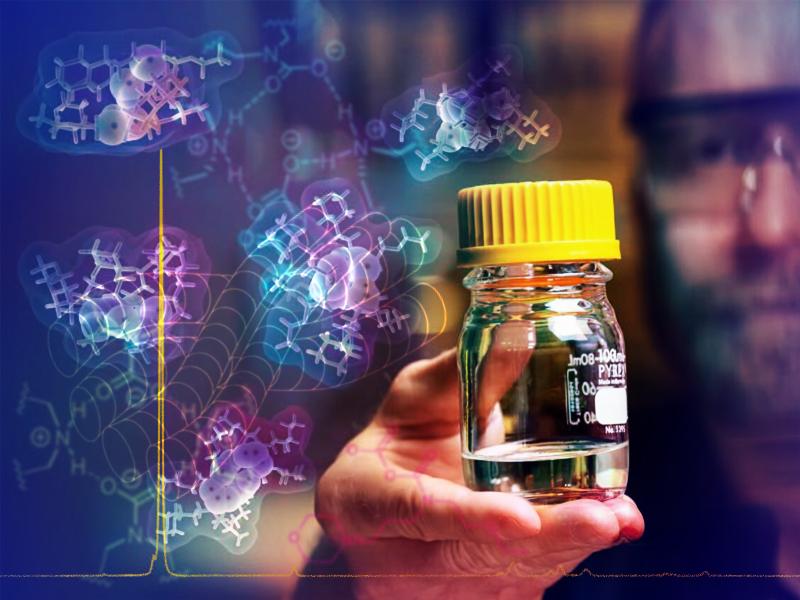
New research investigating water-lean solvents for carbon dioxide capture identifies the unique chemistry possible with their use, may lead to new design principles that move beyond single carbon capture.
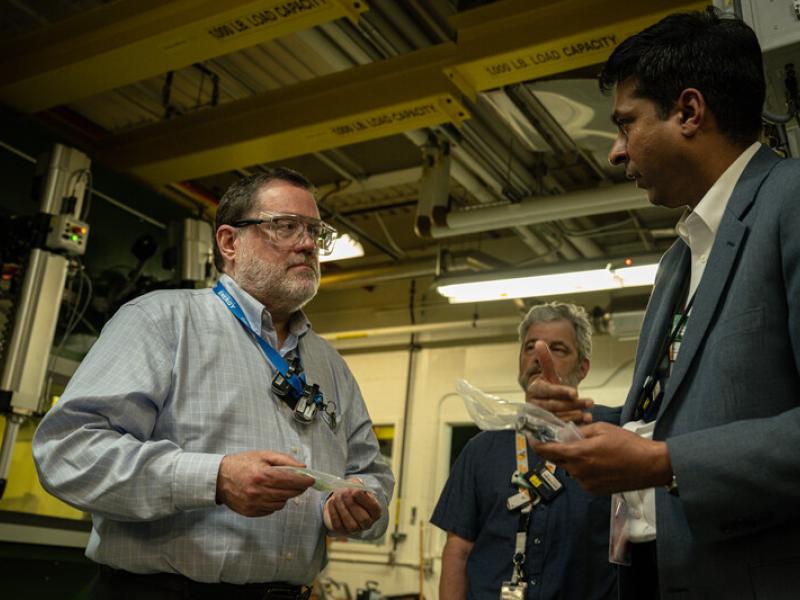
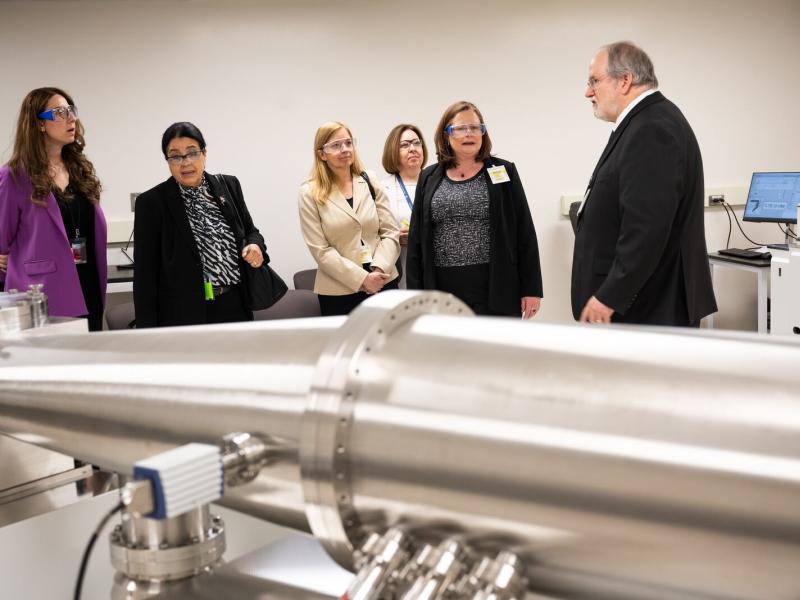
The Department of Energy Office of Nuclear Energy acting assistant secretary makes his first visit to a national laboratory in his new role, touring PNNL's Radiochemical Processing Laboratory.
Data scientist at PNNL receives the Environmental and Engineering Geophysical Society and Geonics Limited Early Career Award for work with geophysical modeling and subsurface inversion codes.
PNNL advisors joined a panel of Washington State emergency management personnel to discuss how partnerships with national laboratories are enabling science and technology solutions.
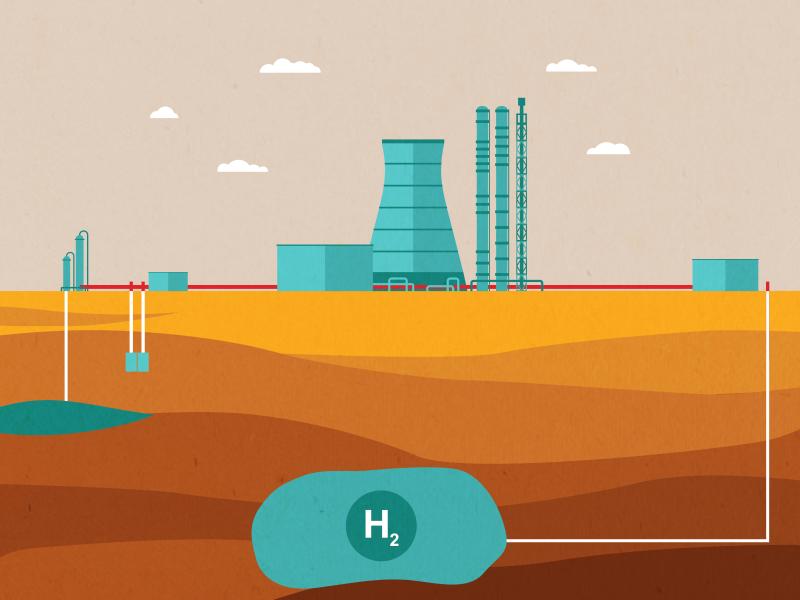
The SHASTA program is doing a deep dive on subsurface hydrogen storage in underground caverns, helping to lay the foundation for a robust hydrogen economy.