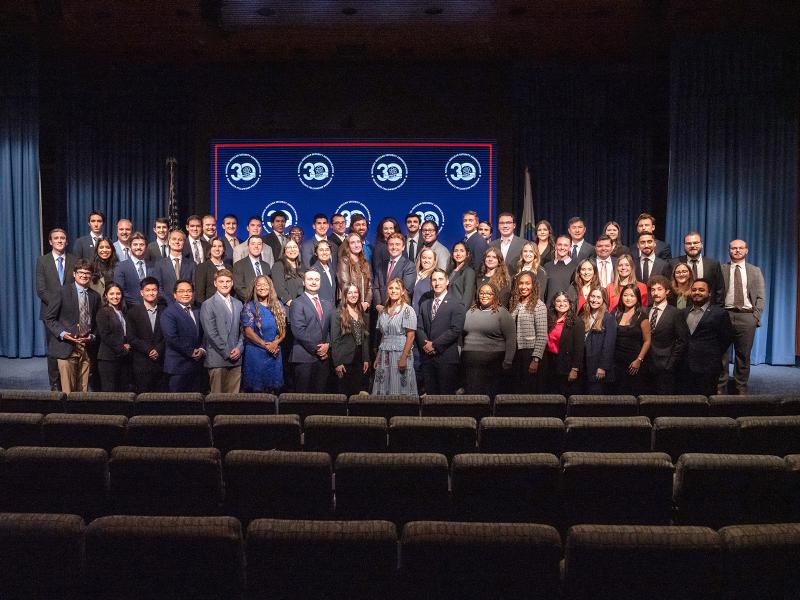
Through an unprecedented collaboration with Idaho, Savannah River, and Argonne national laboratories, the Athena Project has built a network of nearly 150 scientists.
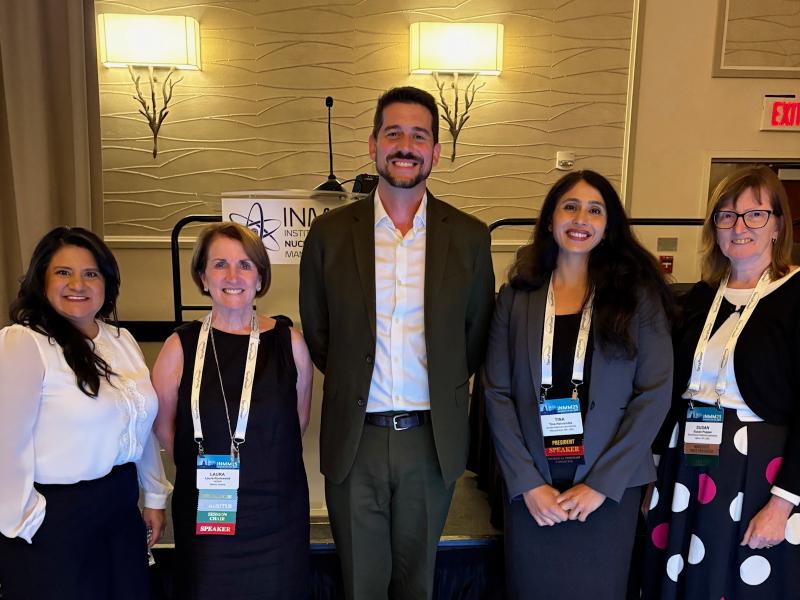
Aaron Luttman and Jonathan Forman represented PNNL at the high-profile "Risk and Reduction Science and Policy Forum" organized by Johns Hopkins University and supported by the Defense Threat Reduction Agency.
Dušan Veličković, a PNNL mass spectrometry imaging scientist received a $2.1 million grant to develop techniques to understand how changes in carbohydrate structure affect human health.
Researchers from PNNL and Parallel Works, Inc., applied machine learning methods to predict how much oxygen and nutrients are used by microorganisms in river sediments.
This study used historical data, remote sensing, and aquatic sensors to measure how far wildfire impacts propagated through the watershed after the 2022 Hermit’s Peak/Calf Canyon fire, New Mexico’s largest wildfire in history.
The Coastal Observations, Mechanisms, and Predictions Across Systems and Scales: Field, Measurements, and Experiments project established a network of observational field sites across Chesapeake Bay and western Lake Erie.
Two new publications provide emergency response agencies with critical insights into commercially available unmanned ground vehicles used for hazardous materials response.
Continued studies will deepen scientists’ understanding of virus-host interactions at the molecular level and also pave the way for developing better drugs to fight emerging viruses.