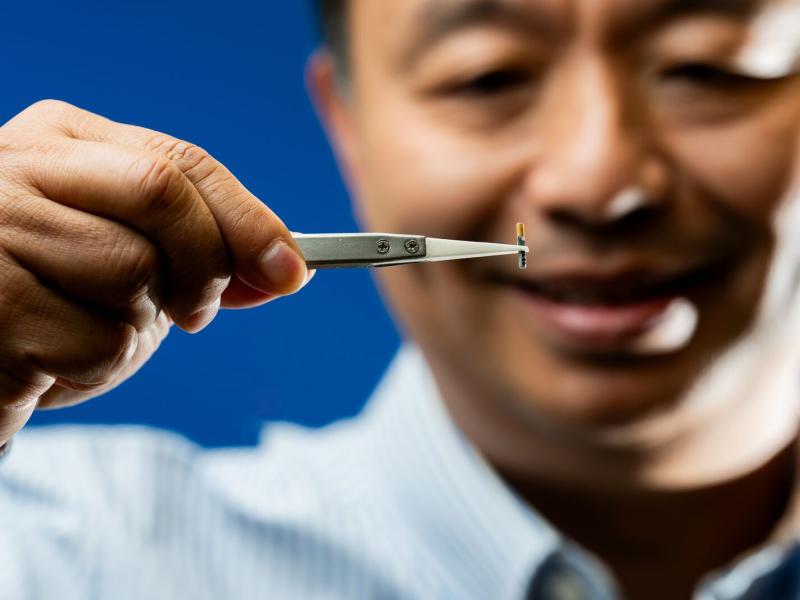
Harilal, a physicist at PNNL and a Jedi in laser-produced plasma applications, has been named a member of the Institute of Electrical and Electronics Engineers Class of 2025 fellows.
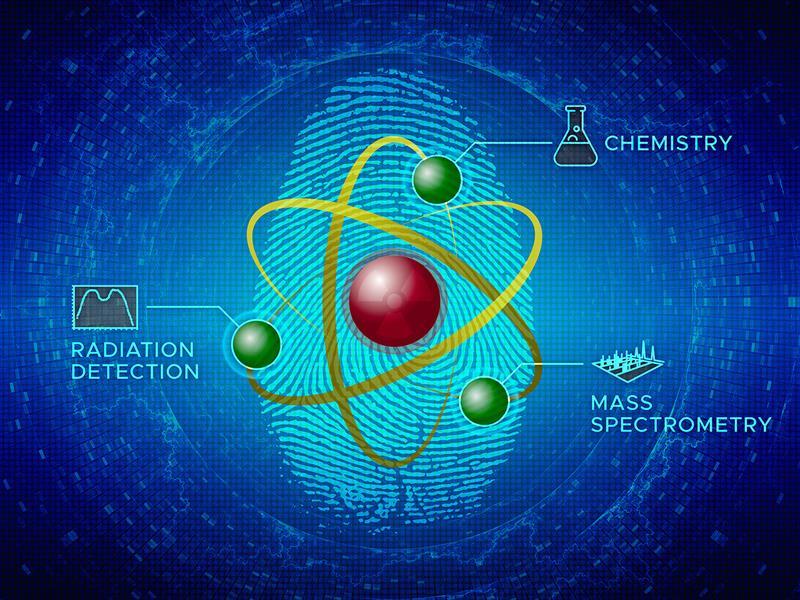
For 50 years, the NNSA and its predecessor DOE organizations have stewarded the resources and capabilities to respond to nuclear and radiological emergencies in the United States and around the world.
PNNL’s year in review includes highlights ranging from advancing soil science to understanding Earth systems, expanding electricity transmission, detecting fentanyl, and applying artificial intelligence to aid scientific discovery.
A team of researchers recently coordinated a series of international workshops aimed at enhancing chemical research security and fostering collaboration among scientists and academic researchers from both countries.
PNNL was well represented at the NAWEA/WindTech 2024 Conference with 13 PNNL experts at the conference sponsored by the North American Wind Energy Academy.
PNNL will analyze current and projected transportation fuel dynamics, supply chain risks, and risk comparators with relevant sectors, such as transportation electrification.
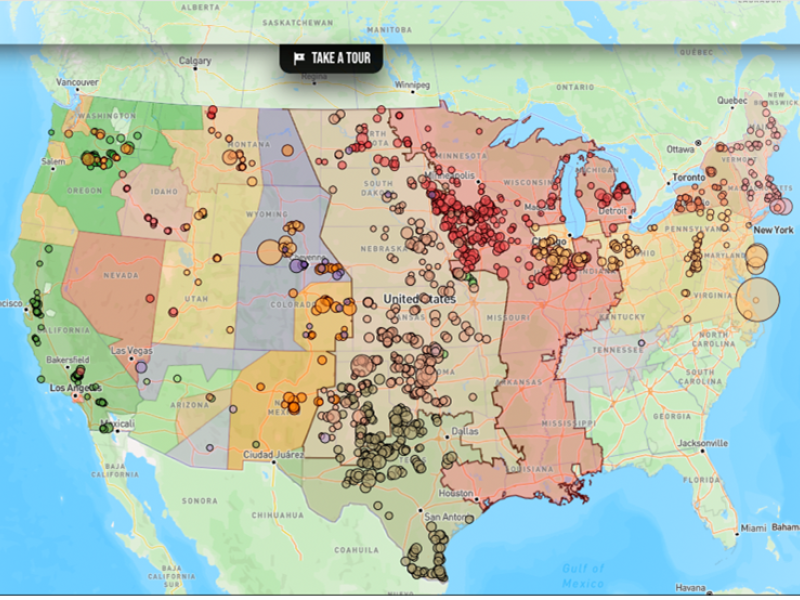
A new analysis shows how renewable energy sources like solar, wind and hydropower respond to climate patterns, and how utilities can use this data to save money and invest in energy storage.
PNNL Earth scientist Alison Delgado will serve as an author for the “Science of Response Management” chapter of the Sixth National Climate Assessment (NCA6.)
In partnership with the Ukrainian Government, PNNL and other U.S. implementers set out on a journey to create a roadmap to rebuild, modernize, and decarbonize Ukraine’s steel industry with small modular reactors.
Alicia Amerson's passion for science communication, expertise in marine mammal research, and experience in wildlife photography provide a robust foundation for her new role with the Clallam County Marine Resources Committee.