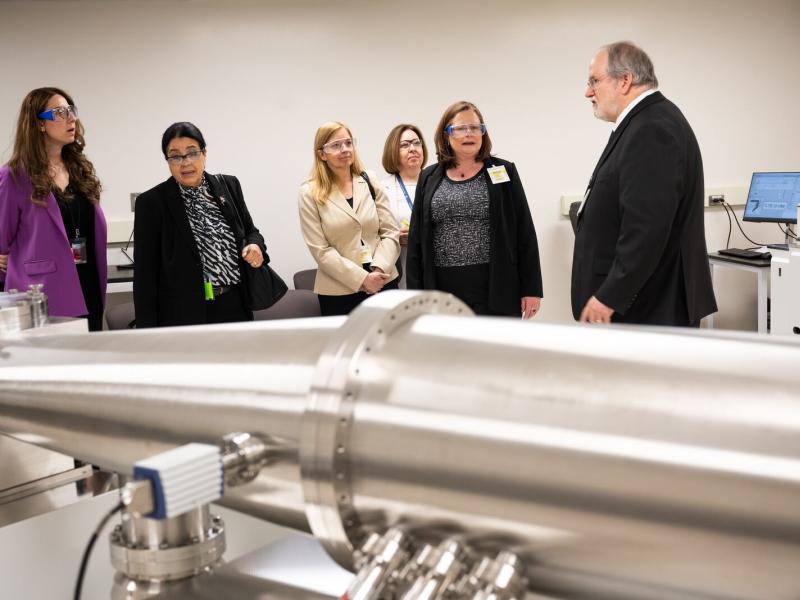
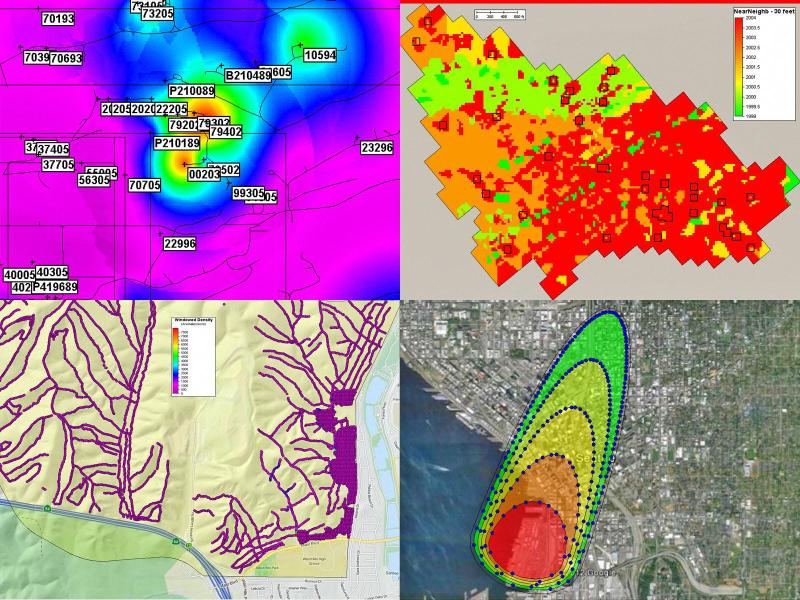
Visual Sample Plan, a free software tool developed at PNNL that boosts statistics-based planning, has been recognized with a 2024 Federal Laboratory Consortium Award.
An energy expert and economist who has played a leading role in formulating and coordinating U.S. climate policy is the new director of the Joint Global Change Research Institute in College Park, Maryland.
Harish Gadey, David Peeler, and Tom Brouns named to Waste Management Symposia Program Advisory Committee positions to help develop radioactive waste management discussions.
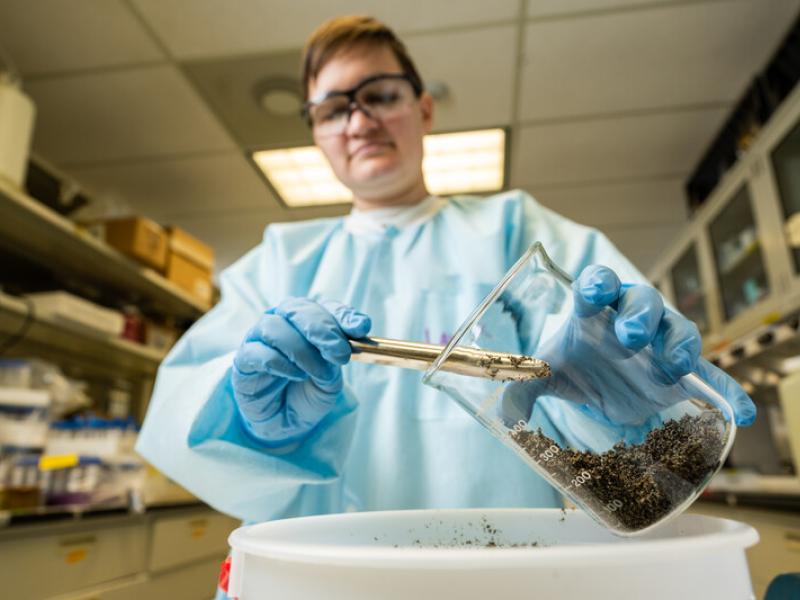
Scientists at PNNL have published a new article that focuses on understanding the composition, dynamics, and deployment of beneficial soil microbiomes to get the most out of soil.
Researchers use models to represent relationships between climate and socio-economic processes, helping inform decisions for slowing climate change and enhancing resilience.
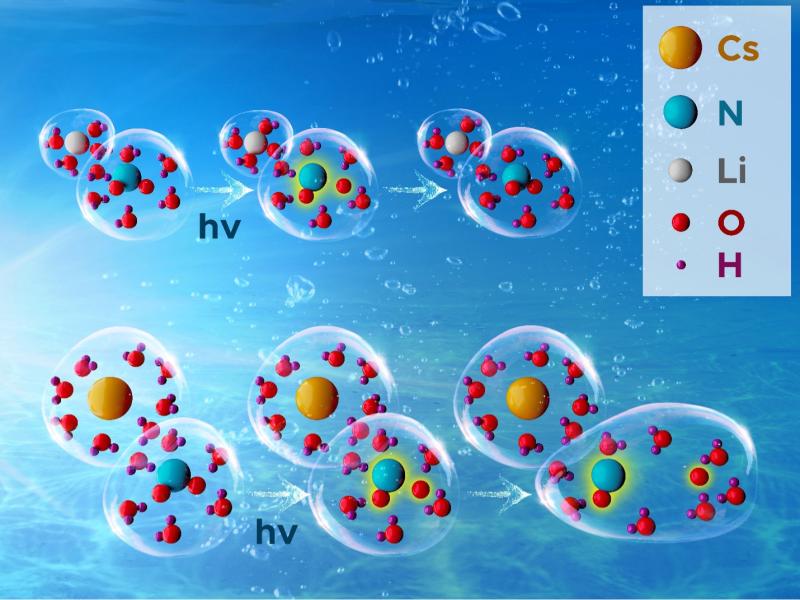
Resolving how nanoparticles come together is important for industry and environmental remediation. New work predicts nanoparticle aggregation behavior across a wide range of scales for the first time.
Soil is a massive reservoir of carbon, holding three times the amount of carbon than in the atmosphere. Soil is a massive reservoir of carbon, holding three times the amount of carbon than in the atmosphere.
Claudia Tebaldi, a PNNL Earth scientist, has been named a Fellow of the American Geophysical Union. Tebaldi and others will be recognized at AGU23 in December.
Variations in the level of market globalization can greatly affect the amount of water required to meet future global demand for agricultural commodities.
Climate change and socioeconomic pressures are transforming passenger and freight transportation in the Arctic, producing effects that have yet to be fully understood.
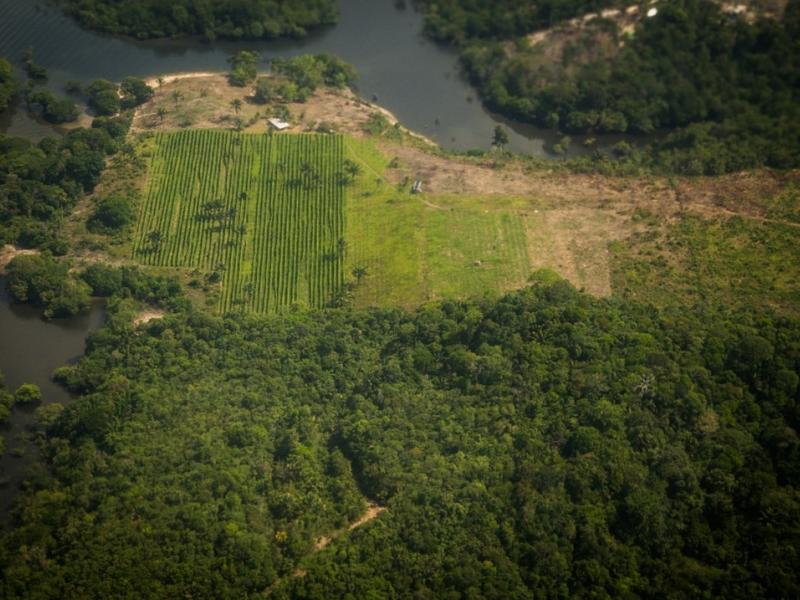
In a new paper, researchers point to three major efforts where the biggest climate mitigation gains stand to be realized: ramping up carbon dioxide removal, reigning in non-carbon dioxide emissions and halting deforestation.
Testing the assumption that different future socio-economic development patterns, which result in different land-use changes, can be paired with different future climate outcomes for risk assessments in a multi-model framework.