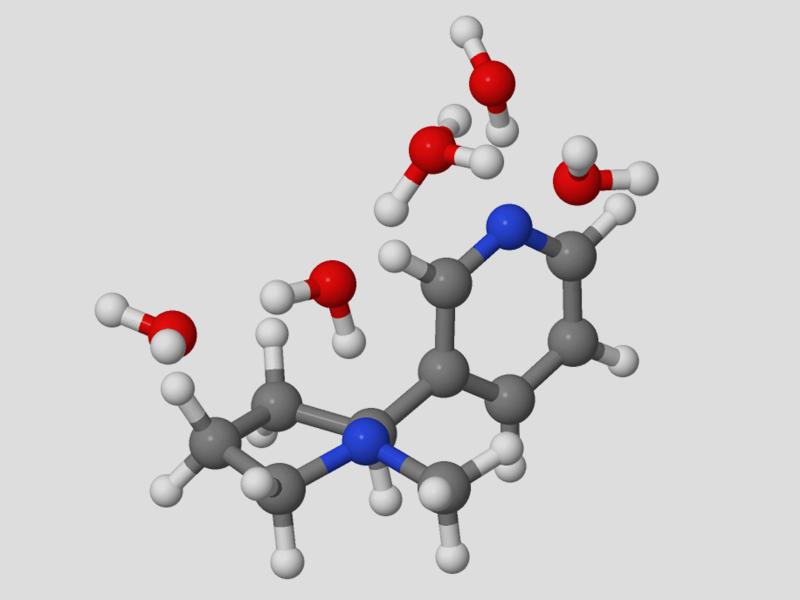
A new study demonstrates a hybrid model that can simulate part of a system at the molecular scale and other parts at larger scales in a computationally efficient manner, providing greater simulation flexibility.
Andrew White goes back to his alma mater, Georgia Tech, as young alumni keynote speaker for the Sustainability Showcase, part of the university’s larger Sustainable Development Goals Action & Awareness Week.
Tennessee State University received Department of Energy funding to establish an academy focused on preparing students and professionals to work in an emerging field: clean energy systems. PNNL is helping with that effort and others.
Researchers at PNNL devised a new workflow for integrating life cycle analysis into building design, aided by a computational method that adapts existing software to net-zero energy, carbon-negative homes.
GUV can reduce transmission of airborne disease while reducing energy use and carbon emissions. But fulfilling that promise depends on having accurate and verifiable performance data.
Researchers from PNNL have been assessing installation and use of electric heat pumps in an Alaskan community that relies on fuel oil for heat. The resulting information could advance electrification in cold rural areas across the nation.
Researchers investigated how stable nanoparticle suspensions form using facet engineering on hematite nanoparticles, demonstrating that controlling the faceting of nanoparticles can effectively maintain particle dispersity.
Chemists Wilma Rishko and Samantha Johnson are set to receive an ACS Division of Inorganic Chemistry Award for Undergraduate Research as a mentor-mentee pair.
Researchers devised a quantitative and predictive understanding of the cloud chemistry of biomass-burning organic gases helping increase the understanding of wildfires.