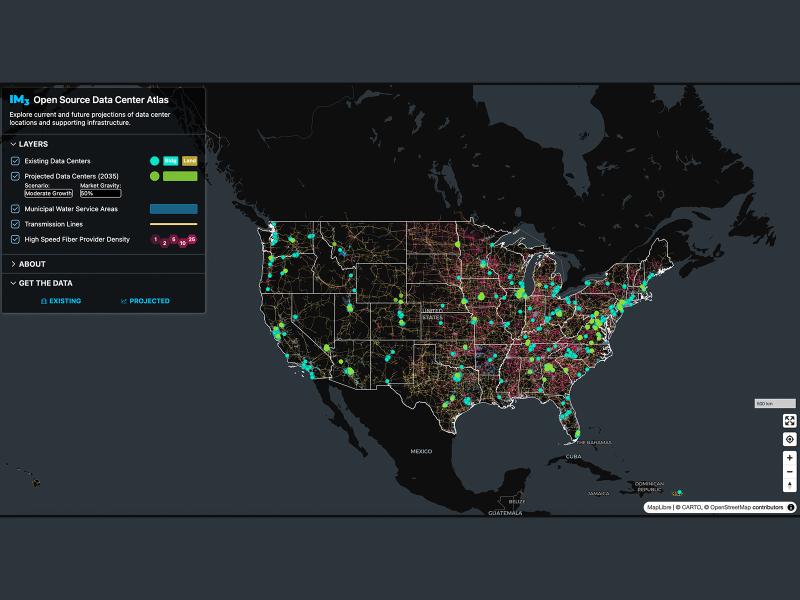
Now, anyone can easily explore and access data from a nationwide map of data centers, the infrastructure that powers them, and projections of future data center locations.
Ice crystals are surprisingly tolerant of defects in their structure. The findings come from the first-ever molecular-resolution observations of nanoscale samples of ice frozen from liquid water.
PNNL researchers have developed a new, physics-informed machine learning model that accurately predicts how heat accumulates and dissipates during friction stir processing.
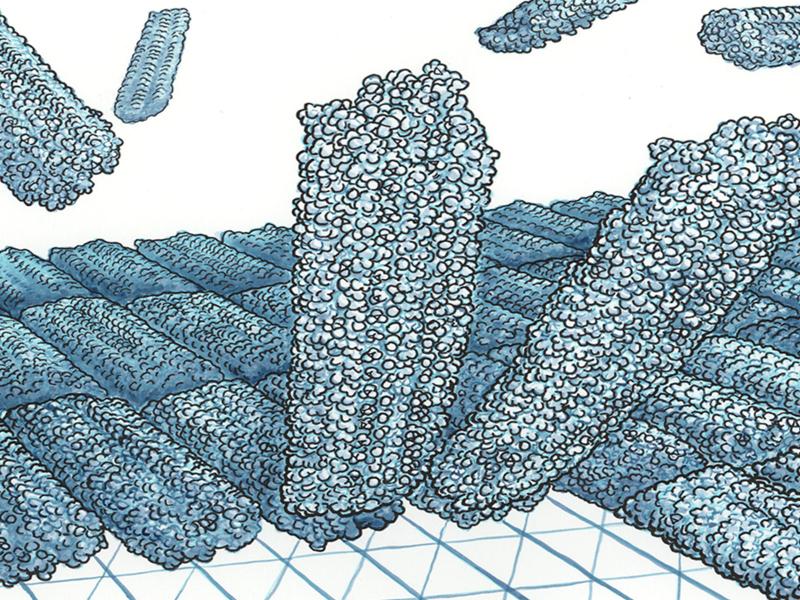
Ultra-thin layers of silk deposited on graphene in perfect alignment represent a key advance for the control needed in microelectronics and advanced neural network development.
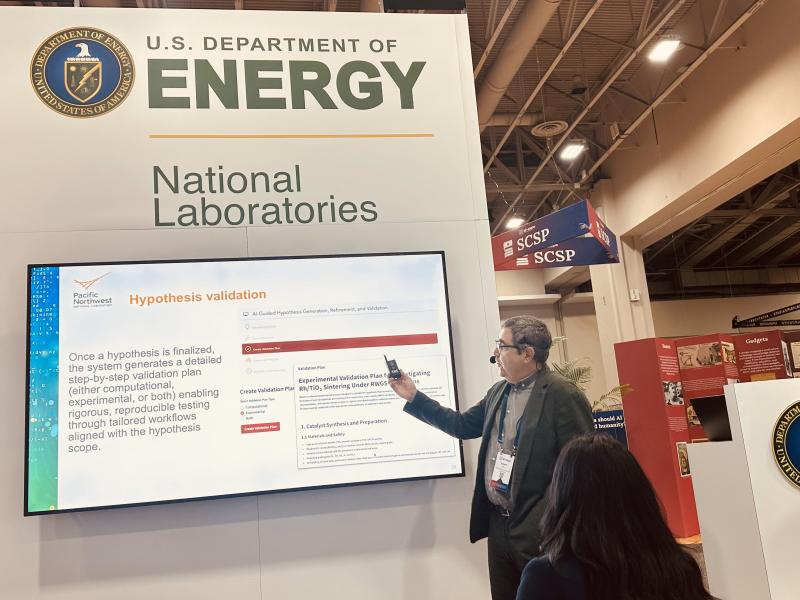
Neeraj Kumar discusses how AI can transform scientific research at the Platform for Advanced Scientific Computing Conference and Trillion Parameter Consortium European Workshop.
PNNL computing experts Robert Rallo and Court Corley contribute their knowledge to a recent DOE report on applications of AI to energy, materials, and the power grid.