May 4, 2026
News Release

Introducing HiVe: A Faster, Cheaper Joining Technique from PNNL

High-Velocity Joining decreases the cost and energy needed to achieve strong joints

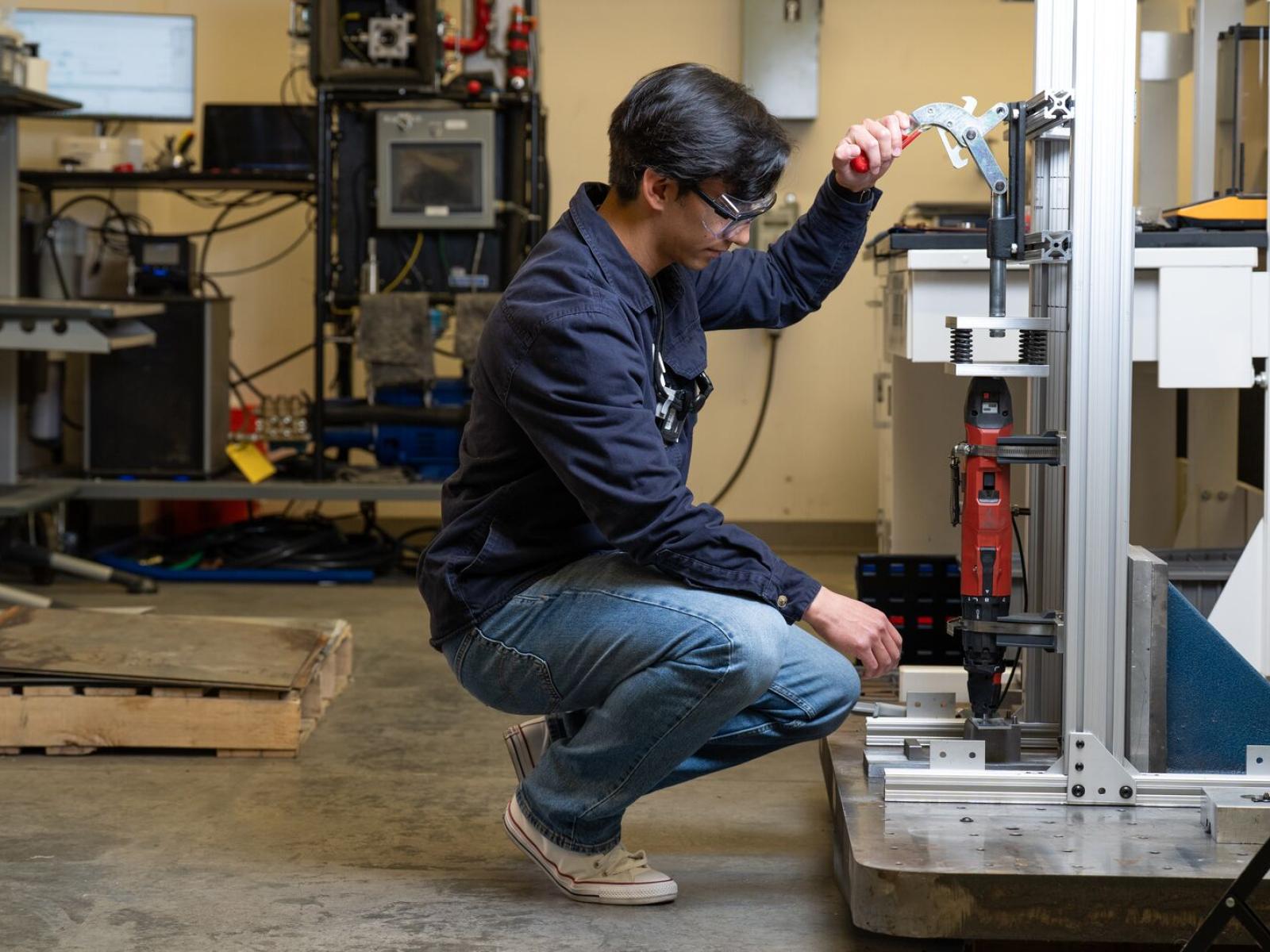
A man kneels in front of a manufacturing instrument, setting it up for operations.

Lab technician Jorge Ortiz sets up the HiVE instrument for a clinching test. HiVe uses high speed and pressure to join dissimilar metals with less energy than current manufacturing techniques.

Photograph by Andrea Starr | Pacific Northwest National Laboratory 

RICHLAND, Wash.—Every year, billions of metal pieces are joined together to build millions of vehicles in the United States. These joints must sustain not just regular wear and tear, but also potentially catastrophic forces. 

Manufacturers have relied on traditional joining methods, using rivets, welds, or screws to create strong and safe vehicles. However, with the emergence of lighter and stronger materials, some of these methods are more difficult to employ. Now, manufacturers are looking for less costly, faster and less energy-intensive ways to join these novel and dissimilar materials.

The Department of Energy’s Pacific Northwest National Laboratory might have the answer. PNNL researchers have recently developed a new manufacturing technology—called High-Velocity Joining—for joining sheets of metal without the inherent limitations of conventional techniques.

HiVe could reduce costs while allowing manufacturers to join difficult-to-join/weld materials in a process not available on the market today. The system drives rivets at 50–300 meters per second through multiple sheets of materials. But where traditional riveting requires preheated, predrilled holes, HiVe takes advantage of velocity to create heat and pressure to form a melted, metallurgical bond between the rivet and the metal sheets, significantly improving the performance of the joint. 

“HiVe joints look very similar to mechanical joints achieved by self-piercing riveting, clinching or conventional riveting, but what sets it apart is that it forms a metallurgical bond rather than a mechanical one,” said Vineet Joshi, a materials scientist at PNNL and principal investigator on the project. “This combines the practicality of conventional fastening with the performance benefits of solid-state joining.”

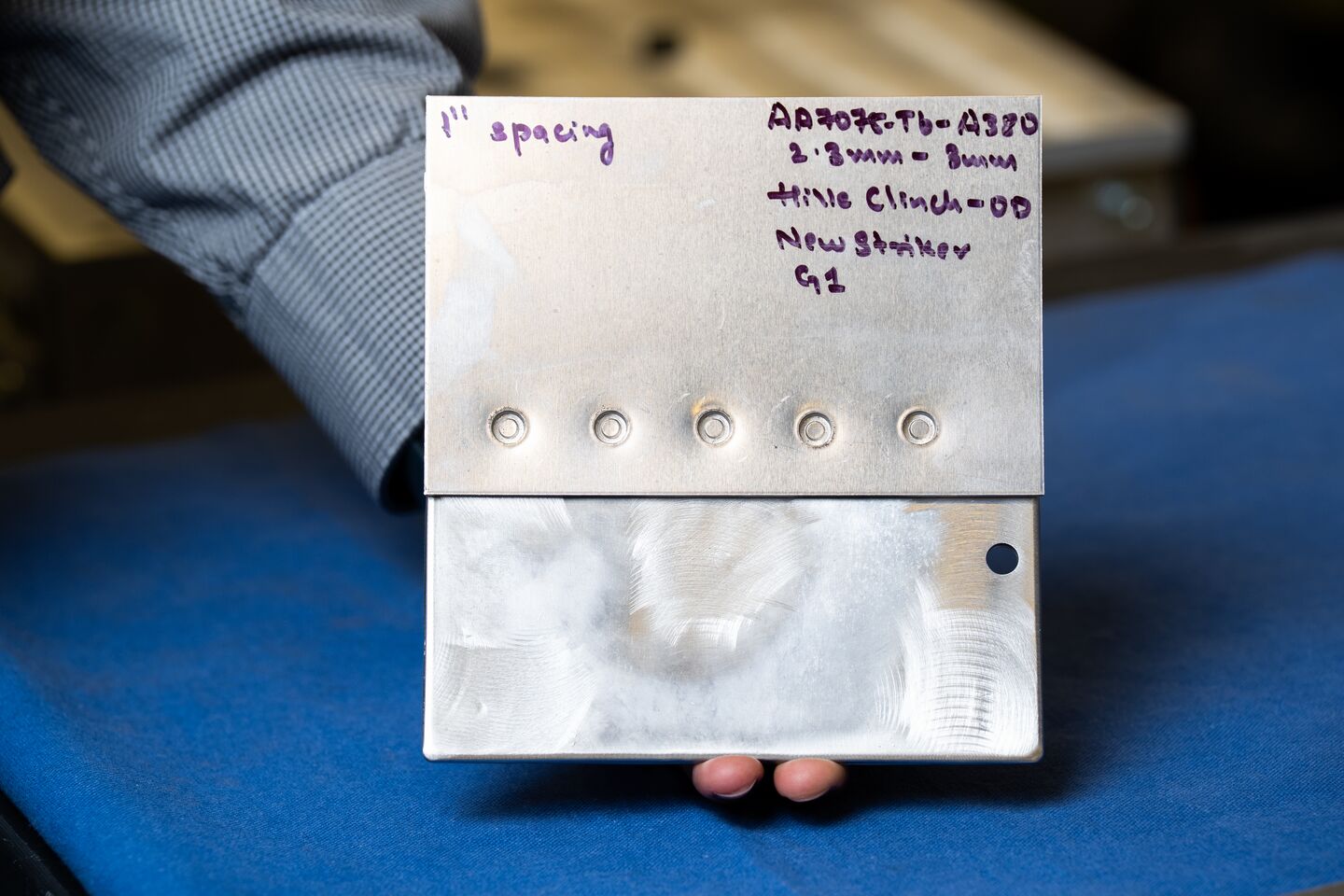
Image shows two pieces of metal joined together. Along the point of the join are 6 small circles where the joining took place.
A sample showing two pieces of metal joined together by clinching. (Photograph by Andrea Starr | Pacific Northwest National Laboratory)

The team also developed a new method for clinching, which similarly uses force and pressure to join together metal pieces entirely without a rivet. In total, HiVe encompasses four different methods for the variety of joints needed on a factory floor.

“With HiVe, we achieved stronger or equal-strength joins to other welding techniques, such as spot welding. But we could do it in a fraction of a second, much faster compared to traditional welding processes,” Joshi added.

The HiVe system has two granted and three pending patents for the apparatus and methods.

The origins of HiVe

Manufacturers use body structures of steel and aluminum alloys to build vehicles that are relatively light, fuel-efficient and safe. Attaching all those pieces together requires a variety of different methods, including traditional riveting and processes involving melting and fusing materials together. Some types of welds, like spot welding, rely on heat produced by an electrical current. Such techniques increase both the time and energy needed, and thus the cost required, to build a car.

What’s more, manufacturers often must join two pieces of metal that vary greatly in their chemical makeup, strength or thickness. These differences can create problems both for riveting and for spot welding, Joshi said.

“Resistance welding, also known as spot welding, is difficult once you need to join two different kinds of metal. For example, aluminum melts at 660 degrees Celsius, while steel melts at 1500 degrees,” he continued.

Similarly, these differences can complicate the riveting process. In certain cases, rivets can pierce through steel into aluminum, but not the other way around, Joshi continued.

Joshi and team started thinking outside the box. At first, they tried to build a complicated machine from scratch to push the rivet at high speeds. But then they found inspiration in an already-existing tool: a concrete fastener, used in the construction industry to anchor walls and other structures. Concrete fasteners use small, controlled bursts fueled by gunpowder.

On a hunch, Joshi sent then-PhD-candidate Ben Schuessler to a hardware store to pick up a concrete nail fastener to test the premise in the lab.

New use for an old instrument

The research team built a frame for the concrete fastener and experimented by driving rivets through 3-millimeter-thick sheets of aluminum alloy. They were astonished by the results: the rivet not only successfully pierced both metal sheets without a pre-drilled hole, but it had formed a metallurgical bond at that interface, creating an even stronger than expected bond. 

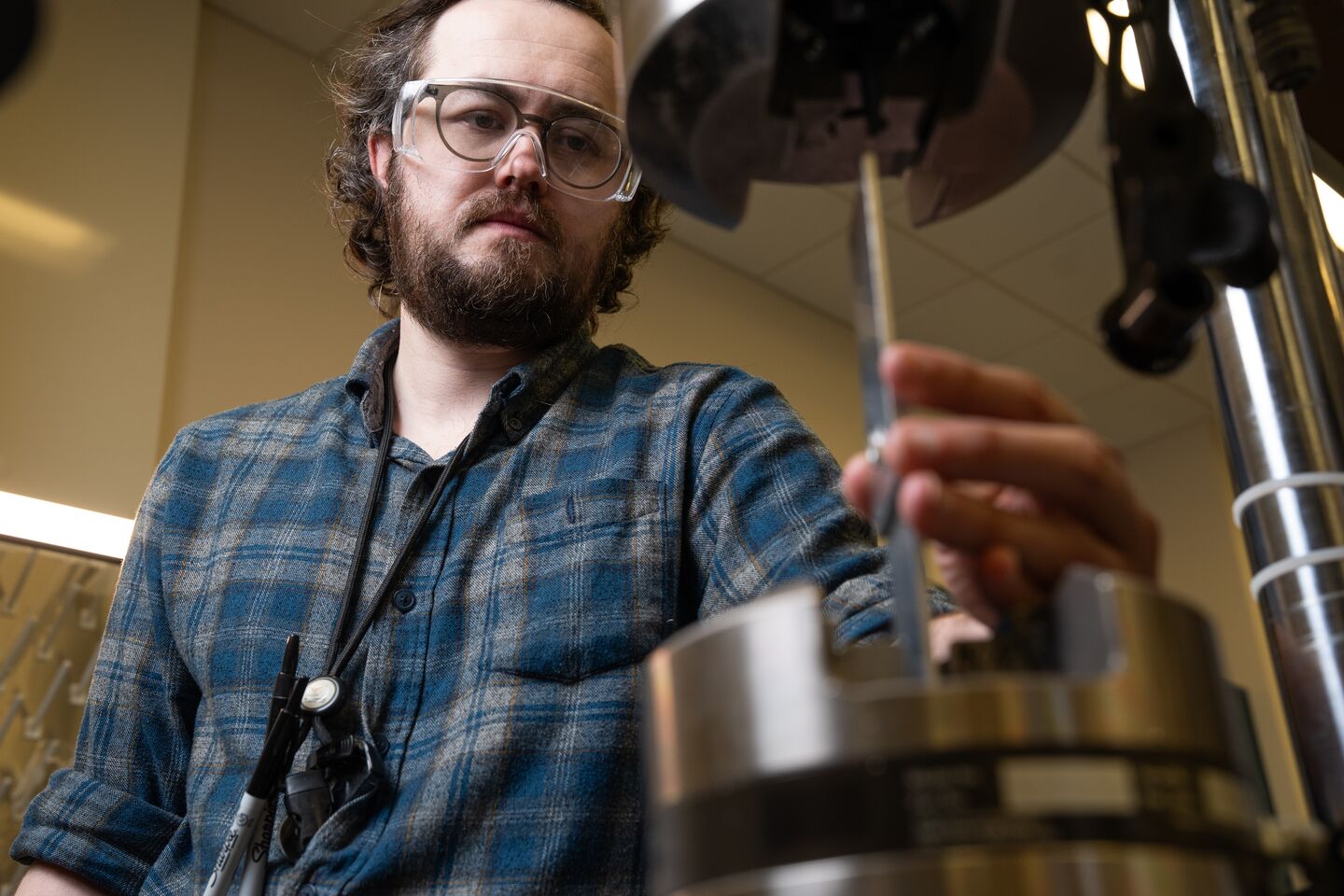
A man stands looking over a manufacturing instrument
Mechanical engineer Ethan Nickerson conducts a lap shear test on two pieces of metal joined by HiVe to determine the clinched join's strength. (Photograph by Andrea Starr | Pacific Northwest National Laboratory)

Then, the team serendipitously discovered HiVe clinching: in one test, Schuessler forgot to load a rivet into the concrete fastener, so the piston shot past the barrel and smashed the metal sheets together. 

“When I went to pull the two pieces apart, they wouldn’t budge,” said Schuessler, who is now a staff materials scientist. Curious to see what happened, the team cut the joined point in half and examined it under a microscope. 

What they saw was at the joined point, the bonded aluminum sheets had a fine crystal structure. With his past crystallography experience, Schuessler surmised that the material had experienced a moment of very high temperature followed by rapid cooling, which created a weld. In follow-up strength tests, failures occurred in the surrounding material rather than in the bonded area.

“That’s when we knew we were onto something,” Schuessler said. 

The future of high-velocity joining

Since the initial experiments with the concrete fastener, the team has built a full apparatus and has established four official HiVe methods: HiVe-clinching for fast, consumable-free sheet joining; HiVe-self-piercing rivet for high-strength, multi-material stacks of metal using rivets; HiVe-solid rivet for demanding structural applications; and HiVe-nailing for “blind” joins, where the back of the joined material isn’t accessible. 

The researchers have also improved upon the gunpowder-fueled mechanism, Schuessler said. Gunpowder is hard to standardize and implement in a commercial environment. On the factory floor, manufacturers would need to know that every rivet would be shot at the exact same speed, and they’d need to be able to tweak that speed in predictable ways for different uses. 

“With gunpowder, the speed of that piston can vary by 10 to 20 percent shot-to-shot,” Schuessler said.

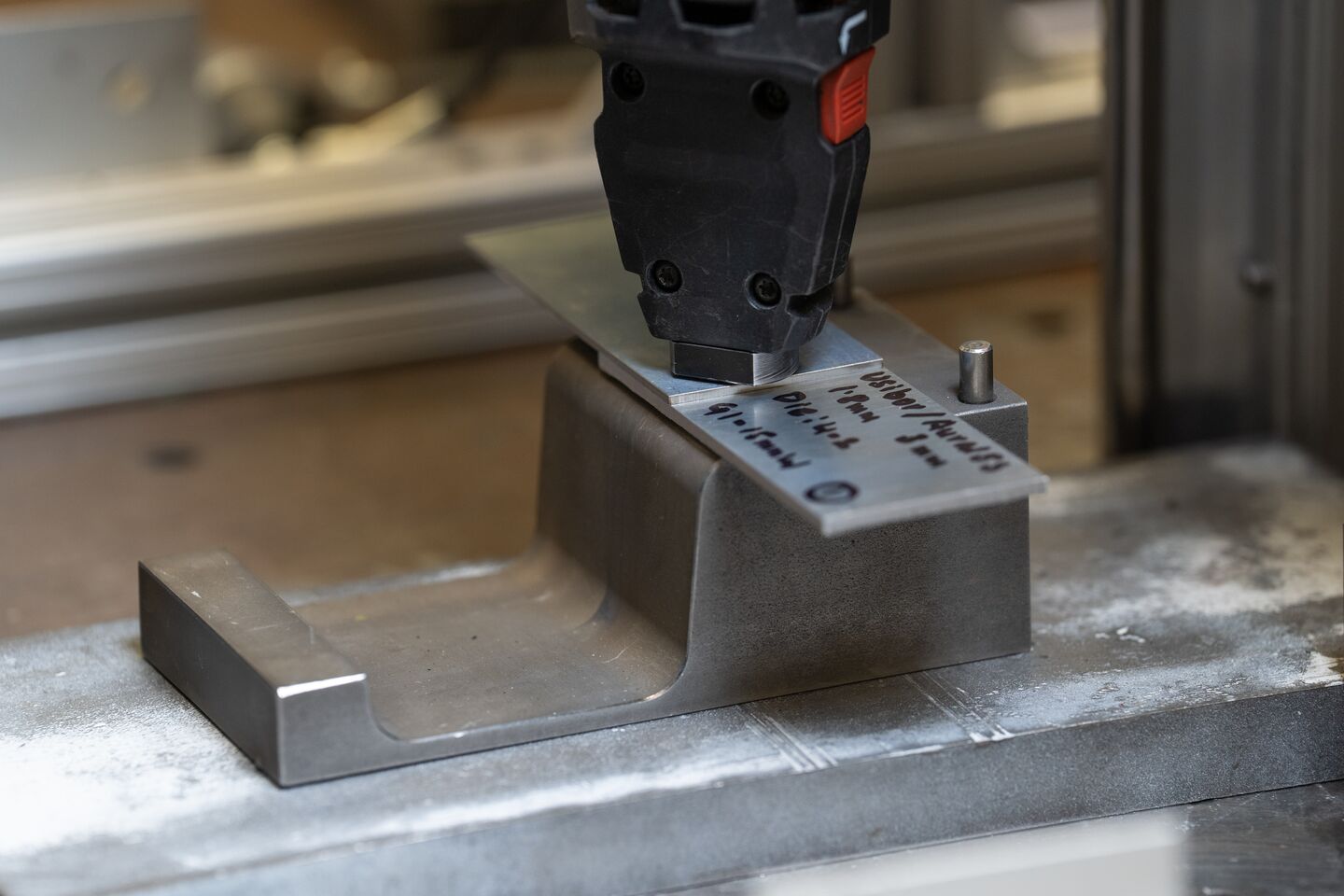
A tip of a joining instrument aligned with a piece of metal and a backing die.
The tip of the HiVe instrument set against metal pieces and the backing die, ready to operate. (Photograph by Andrea Starr | Pacific Northwest National Laboratory)

Instead, the research team is working on a system that electromagnetically propels rivets, using a well-controlled rotating magnet that creates an electric current and the force necessary to propel and rivet or punch within a compact HiVe joining machine. 

HiVe was also presented at the Automotive Circle Conference 2025, where it drew strong interest from industry experts focused on next-generation manufacturing and lightweight structures. The process demonstrated how HiVe can enable faster, lower-cost fabrication while maintaining strong performance, particularly for difficult material combinations.

Learn more about HiVe on PNNL’s website, and contact PNNL’s Office of Commercialization for more information on research collaborations and commercialization opportunities. 

###

About PNNL

Pacific Northwest National Laboratory draws on its distinguishing strengths in chemistry, Earth sciences, biology and data science to advance scientific knowledge and address challenges in energy resiliency and national security. Founded in 1965, PNNL is operated by Battelle and supported by the Office of Science of the U.S. Department of Energy. The Office of Science is the single largest supporter of basic research in the physical sciences in the United States and is working to address some of the most pressing challenges of our time. For more information, visit the DOE Office of Science website. For more information on PNNL, visit PNNL's News Center. Follow us on Twitter, Facebook, LinkedIn and Instagram.

Published: May 4, 2026