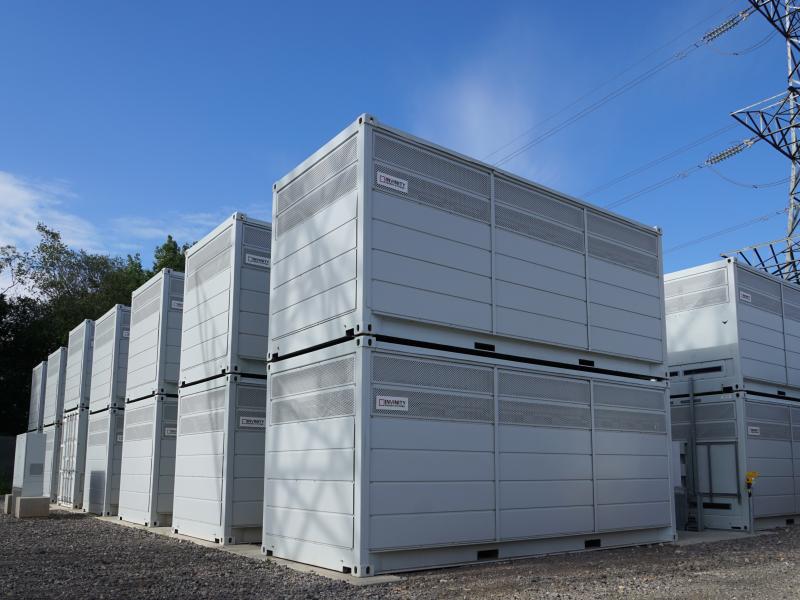
Erich Hsieh, Deputy Assistant Secretary for OE’s Energy Storage Division, shared insights about the Grid Storage Launchpad and energy storage innovations .
In the latest issue of the Domestic Preparedness Journal, Ashley Bradley and Kristin Omberg share how new research is shedding light on the scientific and technological challenges with detecting fentanyl.
PNNL computing experts Robert Rallo and Court Corley contribute their knowledge to a recent DOE report on applications of AI to energy, materials, and the power grid.
PNNL advisors joined a panel of Washington State emergency management personnel to discuss how partnerships with national laboratories are enabling science and technology solutions.
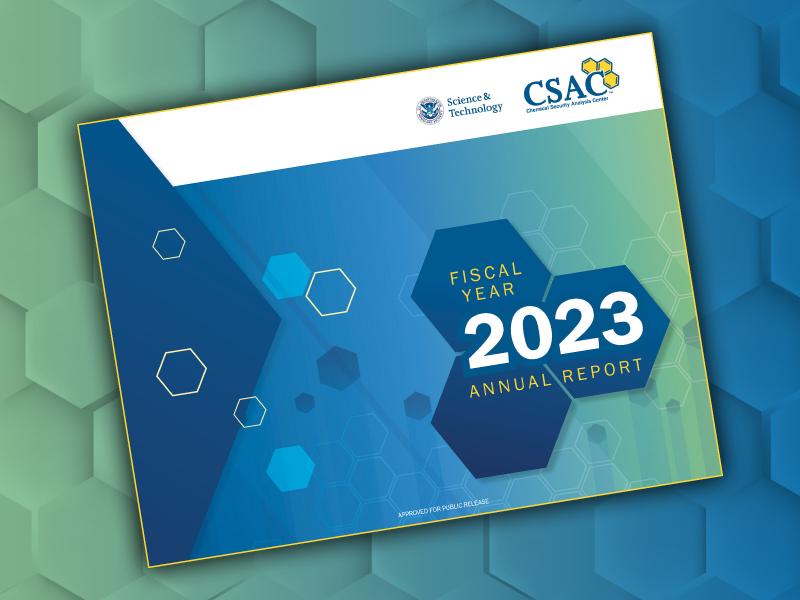
PNNL is supporting the Department of Homeland Security Science and Technology Directorate's Chemical Security Analysis Center in improving capabilities to enhance detection and analysis of chemical threats.
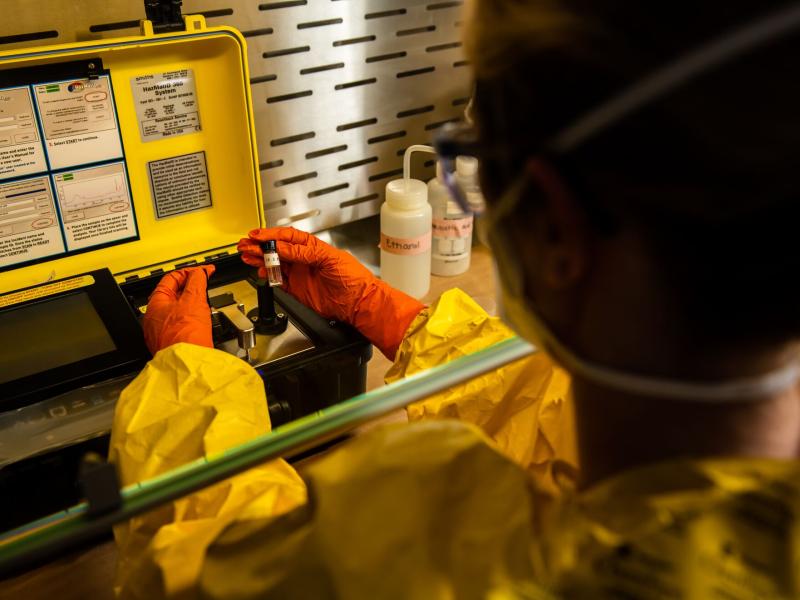
A new report highlights the results of an assessment PNNL conducted of field-portable detection products used by first responders to detect illicit substances like fentanyl in the field.
PNNL’s Center for the Remediation of Complex Sites convened attendees from around the world to discuss challenges associated with environmental contamination.
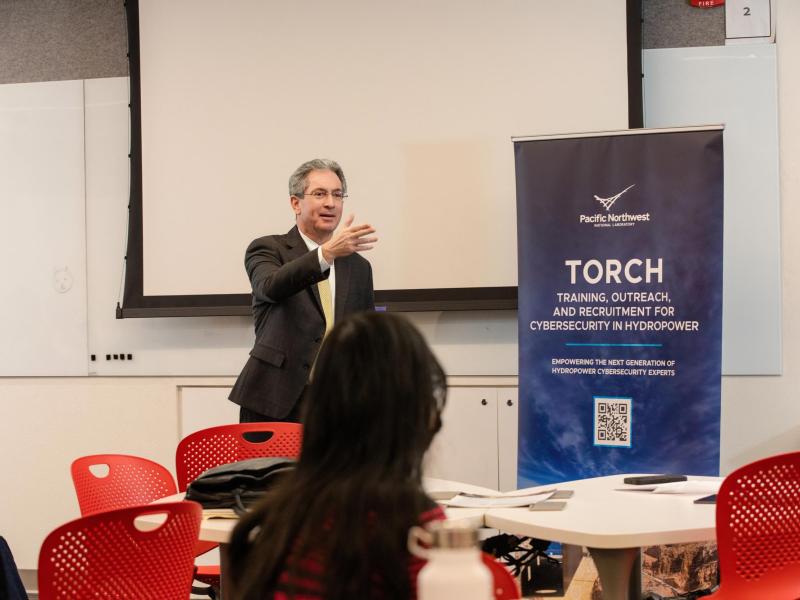
Pacific Northwest National Laboratory launches the Training Outreach and Recruitment for Cybersecurity Hydropower program at the University of Texas at El Paso.
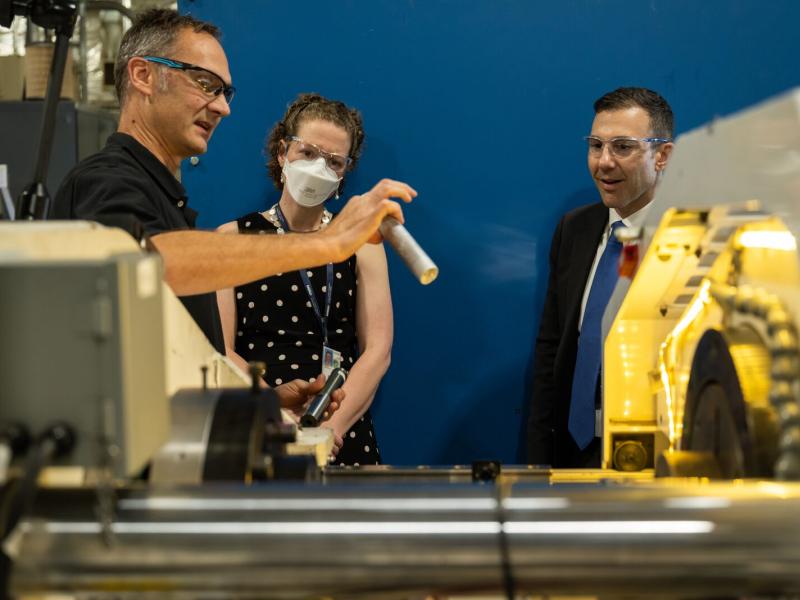
A team of scientists at PNNL developed new computational models to predict the behavior of these impurities and reduce the expense and risk related to actinide metal production.
Leaders from the DOE Office of Energy Efficiency and Renewable Energy visited PNNL October 19–20 for a firsthand look at capabilities and research progress.