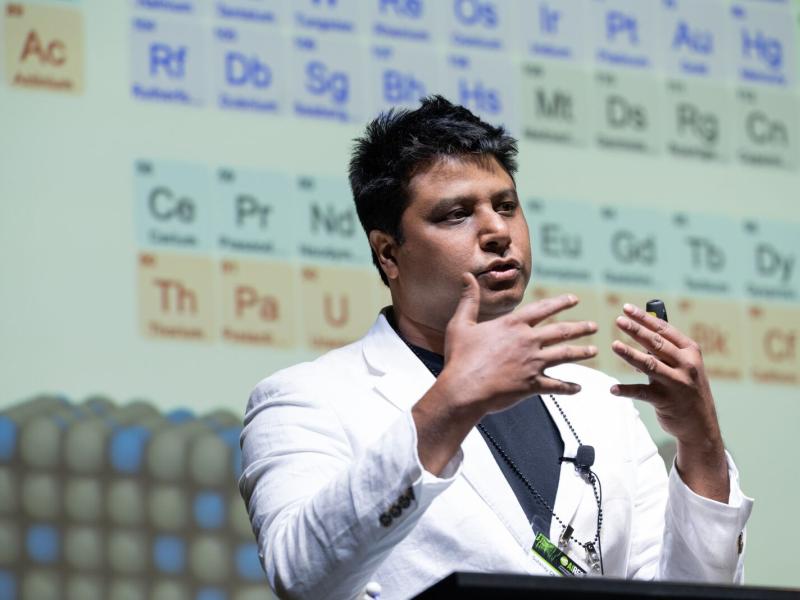
Distributed science is thriving at PNNL, where scientists share data and collaborate with researchers around the world to increase the impact of the work.
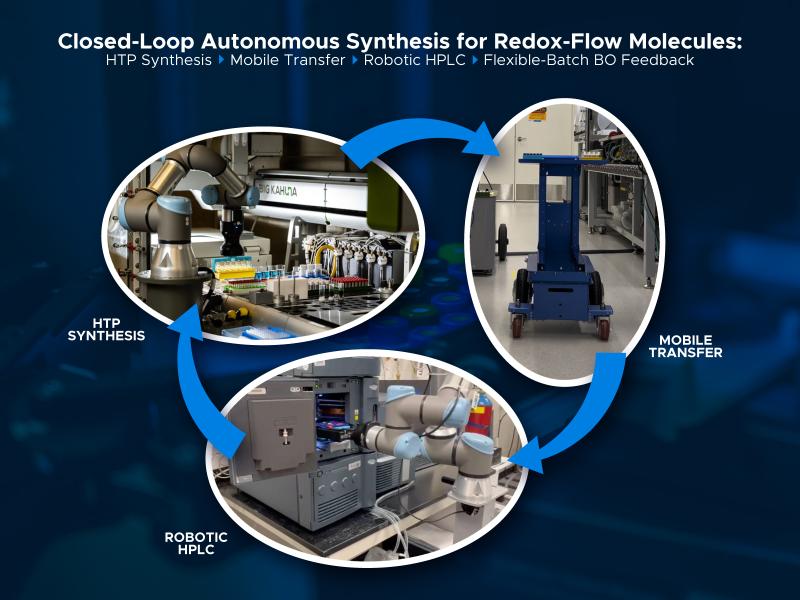
A closed-loop workflow brings together digital and physical frameworks to advance high-throughput experimentation on redox-active molecules in flow batteries.
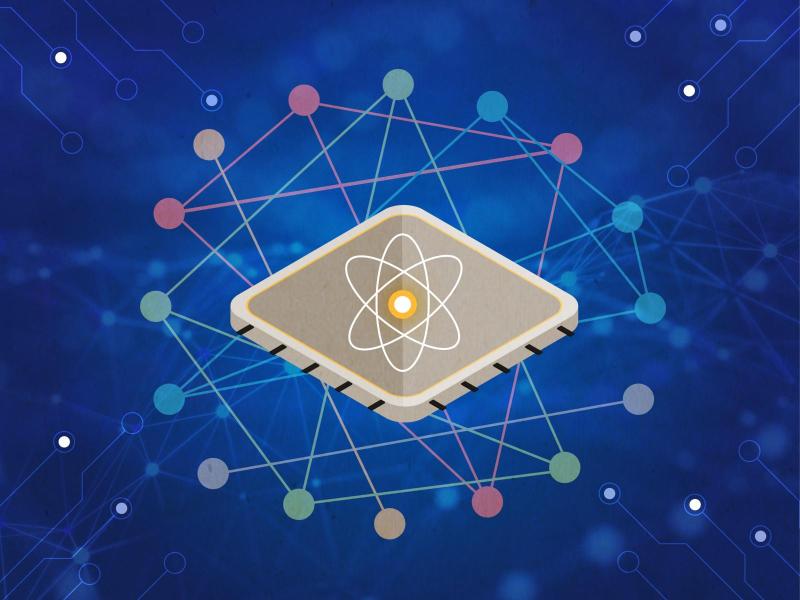
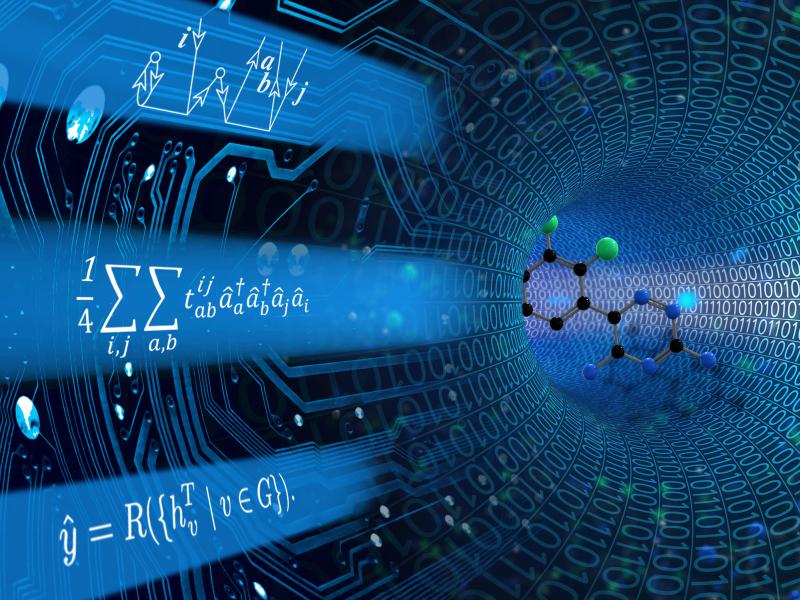
In a recent publication in Nature Communications, a team of researchers presents a mathematical theory to address the challenge of barren plateaus in quantum machine learning.
PNNL played host in mid-May to the Artificial Intelligence for Robust Engineering & Science workshop, an annual event that explores advances in artificial intelligence
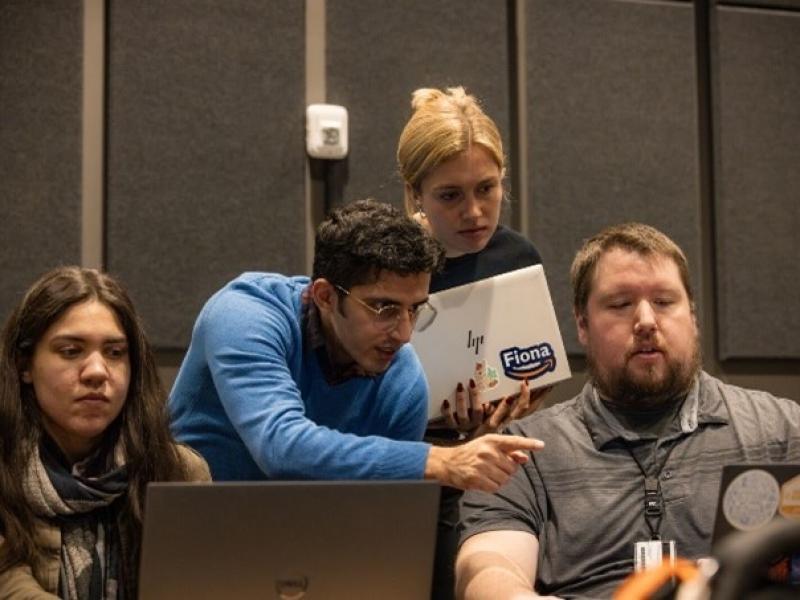
PNNL recently partnered with Amazon Web Services for AWS GameDay, a gamified learning event that challenges participants to use AWS solutions to solve real-world technical problems in a team-based setting.
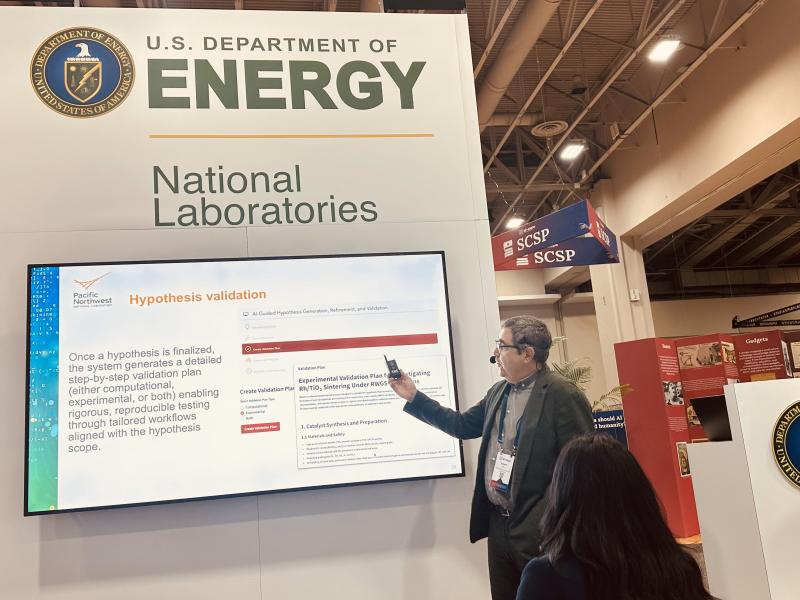
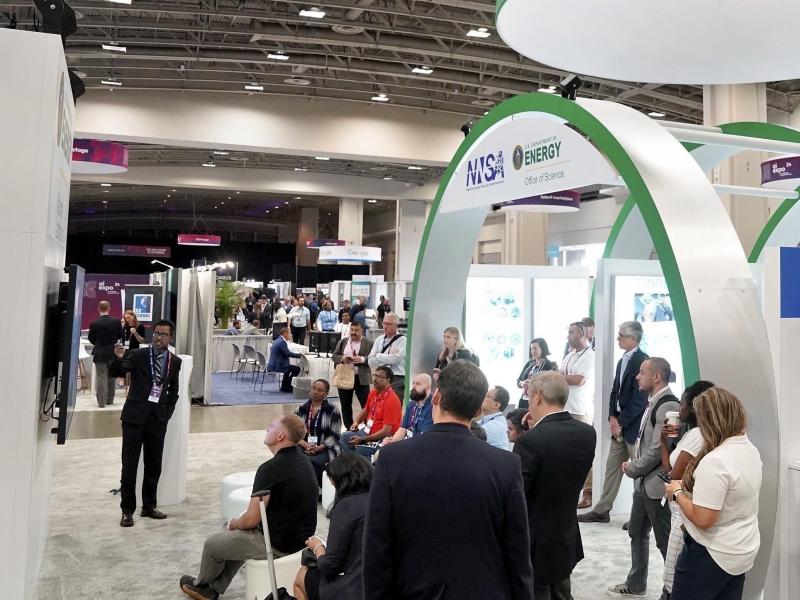
Ripples demonstration will take place at the DOE booth at the International Conference for High Performance Computing, Networking, Storage, and Analysis.
Scientists at PNNL were awarded nearly $12 million to better understand pathogens, how they spread, and how to prepare the nation against future outbreaks.
Bradley Crowell with the U.S. Nuclear Regulatory Commission sees advanced materials integrity, radiological measurement, and environmental capabilities on his first visit to PNNL.
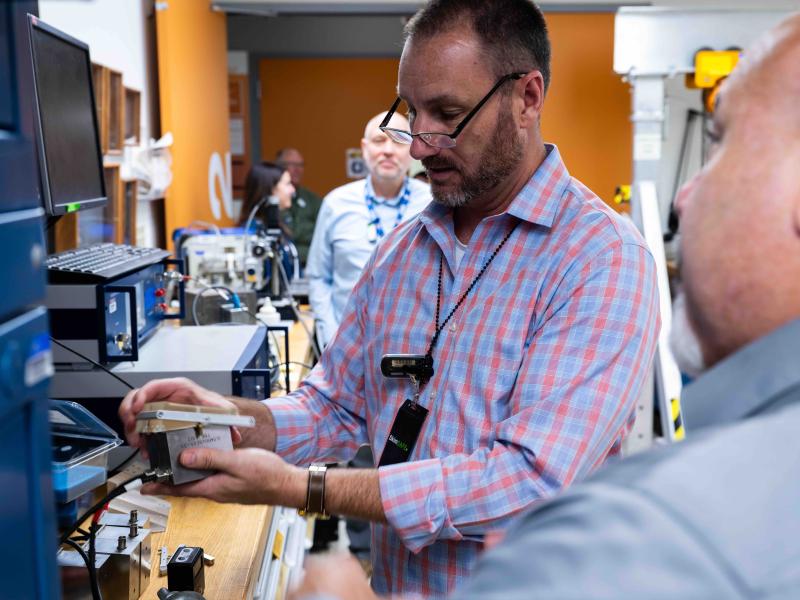
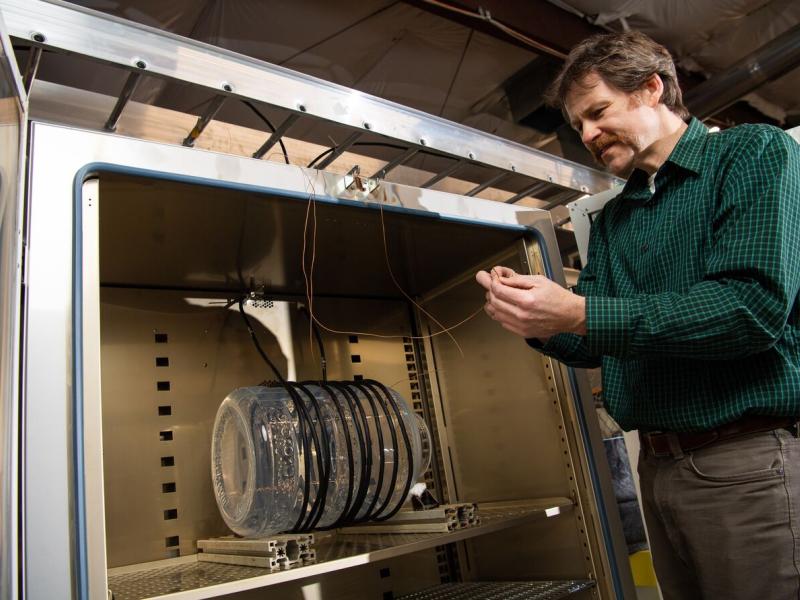
PNNL’s ARENA test bed analyzes how electrical cables degrade in extreme environments and how nondestructive examination inspection technologies can detect and locate damage.