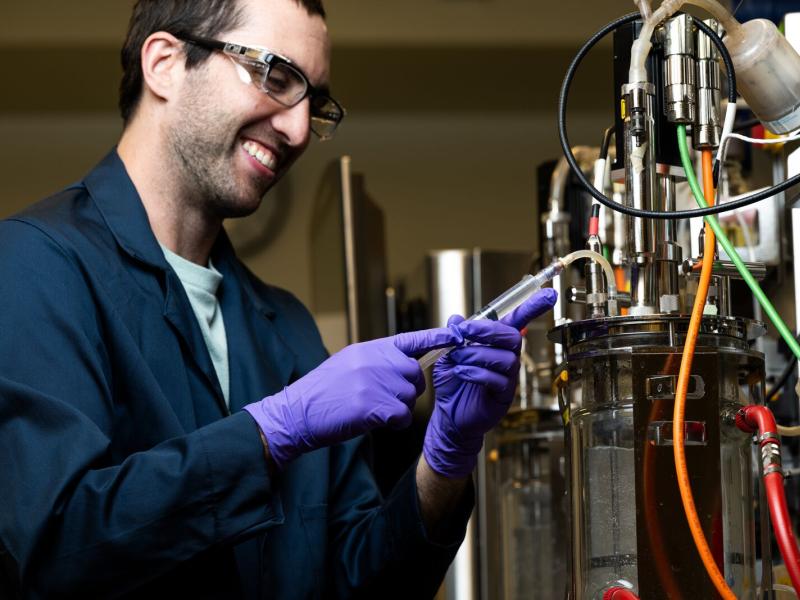
Predicting how organisms’ characteristics respond to not only their genes, but also their environments (a nascent field called predictive phenomics), is extraordinarily challenging. Researchers at PNNL are using AI to tackle that challenge.
PNNL researchers have found yet another way to turn trash into treasure: using algal biochar, a waste production from hydrothermal liquefaction, as a supplementary material for cement.
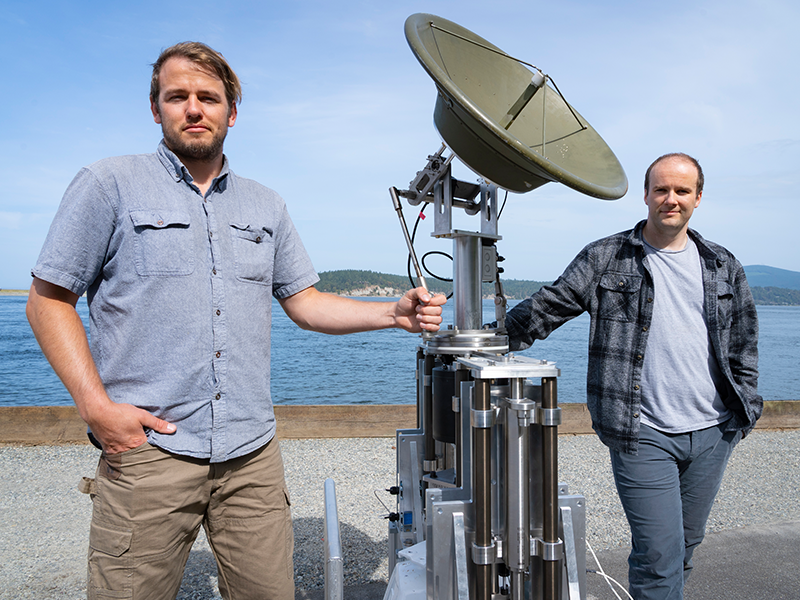
Engineers at PNNL devised a system that allows radar antennae to maintain stable orientation while mounted on platforms in open water that pitch and roll unpredictably. They were recently invited to participate in DOE's I-Corps program.
PNNL’s Matt Paiss heads NFPA 800, shaping a unified battery safety code for hazards from production to disposal with the aim of safeguarding communities and guiding safe practices worldwide.
PNNL was well represented at the NAWEA/WindTech 2024 Conference with 13 PNNL experts at the conference sponsored by the North American Wind Energy Academy.
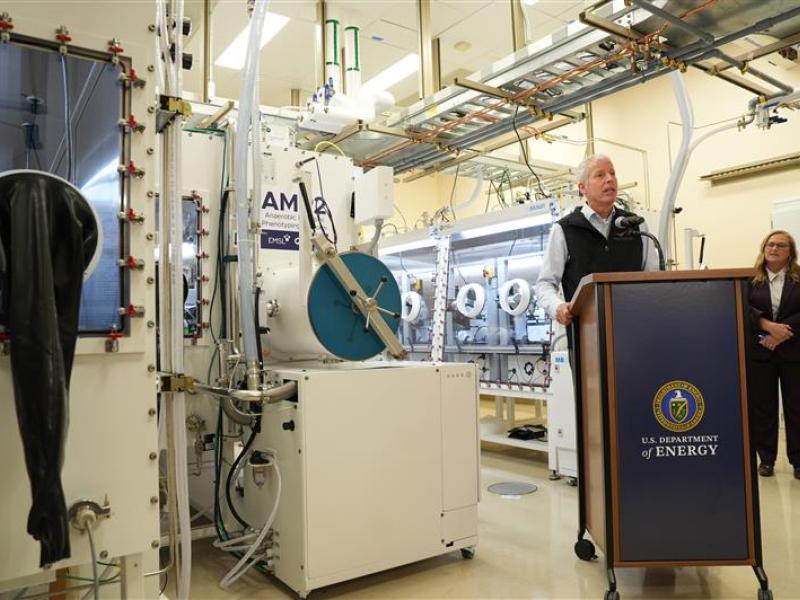
The Grid Storage Launchpad dedication event was attended by leaders in grid and transportation energy storage, battery innovation, and industry stakeholders working to transform America’s energy system.
Erich Hsieh, Deputy Assistant Secretary for OE’s Energy Storage Division, shared insights about the Grid Storage Launchpad and energy storage innovations .
Recycling polyolefin materials is challenging. One waste management strategy is plastic upcycling. New work demonstrates a single-step upcycling route coupling cracking and alkylation, recycling carbon and keeping valuable resources active.
PNNL’s patented Shear Assisted Processing and Extrusion (ShAPE™) technique is an advanced manufacturing technology that enables better-performing materials and components while offering opportunities to reduce costs and energy consumption.
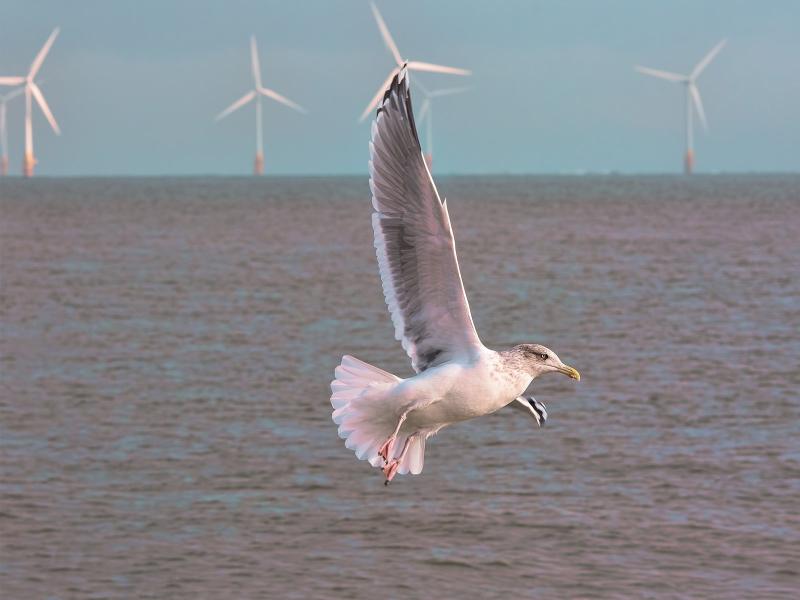
In a study off the West Coast, researchers find that although seabirds generally soar underneath the height of possible future wind turbine blades, more work is being done to fully understand seabird flight behavior.
Mahon joined the advisory committee of the Pacific Offshore Wind Consortium and the external advisory panel for the Ocean and Resources Engineering department at the University of Hawai’i at Mānoa.
Policy changes in power, energy, buildings, and more could help slow global temperature rise, according to a new report with co-authors from PNNL’s Joint Global Change Research Institute.
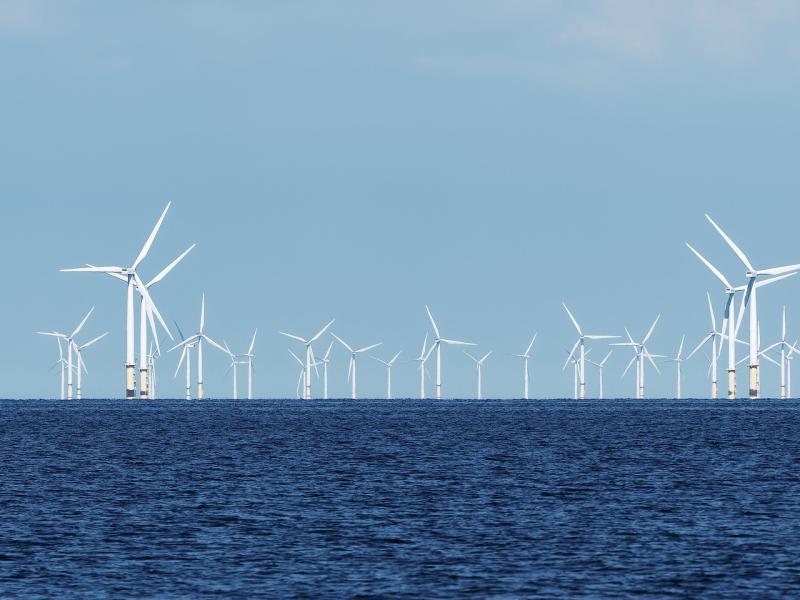
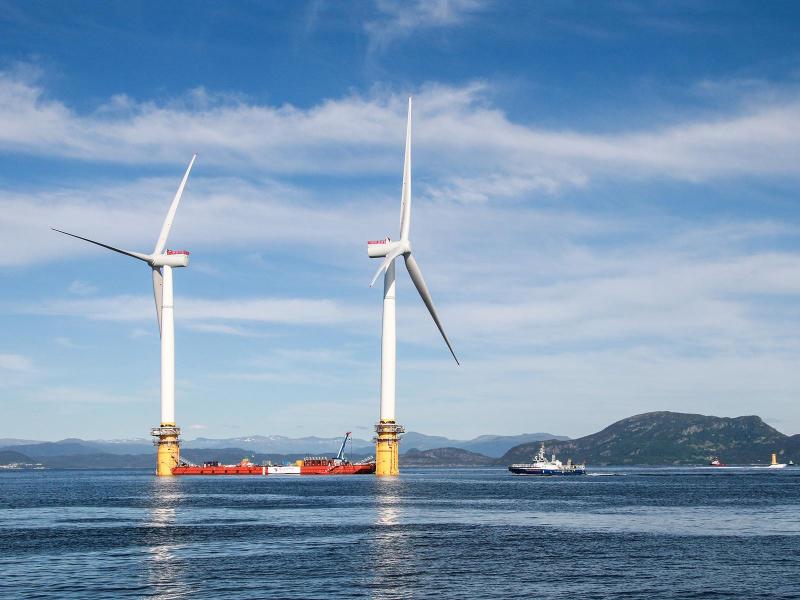
Researchers seek to bring down costs, address potential environmental risks and maximize the benefits of harnessing wind energy above the deep waters of the Pacific.