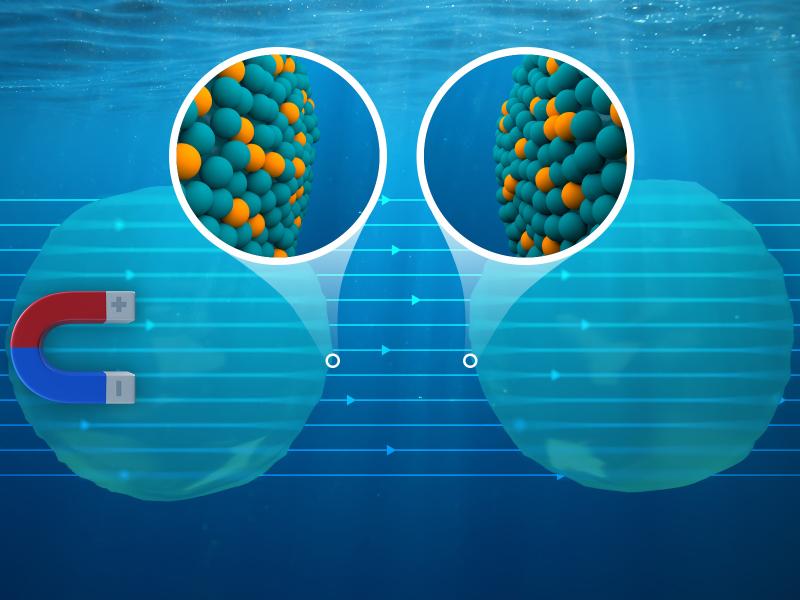
Localized gradients in magnetic fields have long-range effects on the concentration of rare earth ions in solution, facilitating field-driven extraction of critical minerals.
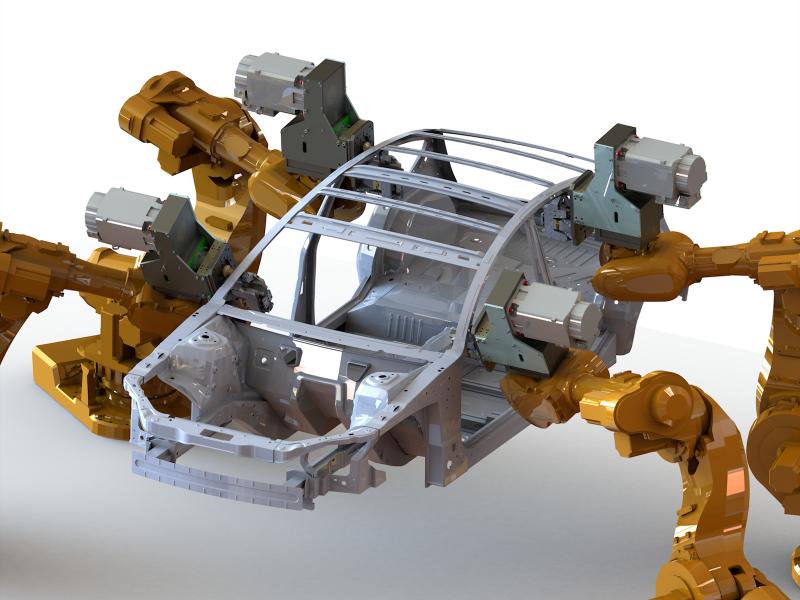
A breakthrough at PNNL could free friction stir from current constraints—and open the door for increased use of the advanced manufacturing technique on commercial assembly lines.
Nanoscale domains of magnetically susceptible critical materials encounter enhanced magnetic interactions under external magnetic fields, providing a promising new avenue for separations.
David Heldebrant was selected for the 2025 Distinguished Service Award from the American Chemical Society Division of Energy & Fuels, recognizing his impact to energy and fuels chemistry.
This summer, PNNL hosted the inaugural “As Conductive As Copper” (AC2.0) workshop, fostering a collaborative conversation on the future of the U.S. copper supply chain.
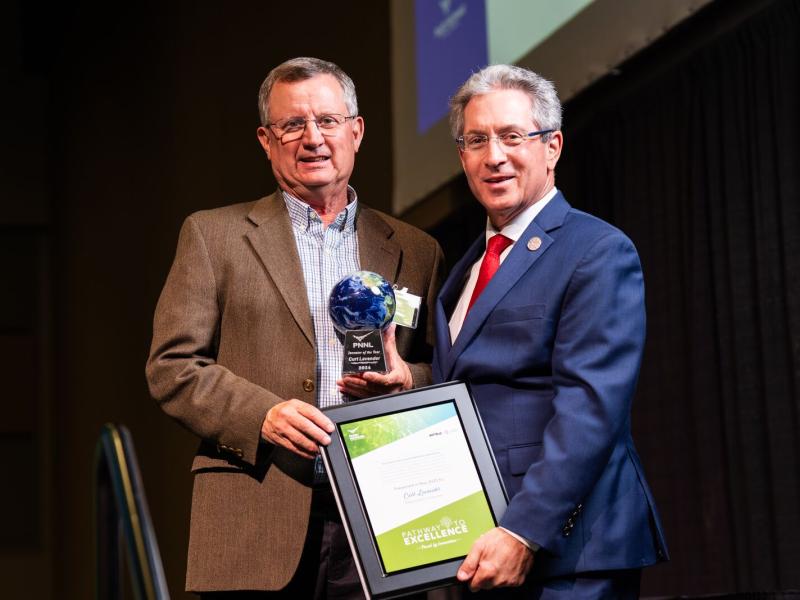
From vehicles and airplanes to solid-phase processing of metals—how Curt Lavender and his team at PNNL solve industry problems with practical ingenuity.
Shear Assisted Processing and Extrusion (ShAPE) imparts significantly more deformation compared to conventional extrusion. The latest ShAPE system at PNNL, ShAPEshifter, is a purpose-built machine designed for maximum configurability.
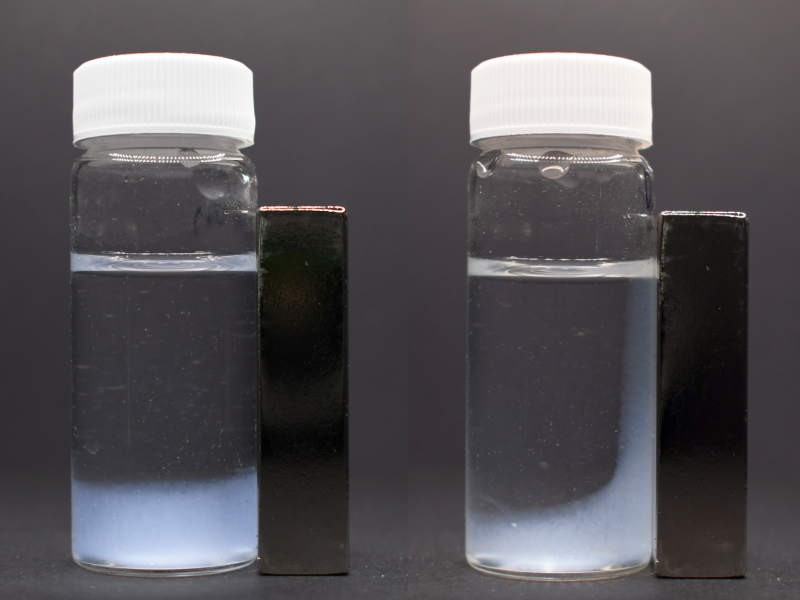
A PNNL team has developed an energy- and chemical-efficient method of separating valuable critical minerals from dissolved solutions of rare earth element magnets.
By combining computational modeling with experimental research, scientists identified a promising composition that reduces the need for a critical material in an alloy that can withstand extreme environments.
PNNL’s year in review includes highlights ranging from advancing soil science to understanding Earth systems, expanding electricity transmission, detecting fentanyl, and applying artificial intelligence to aid scientific discovery.