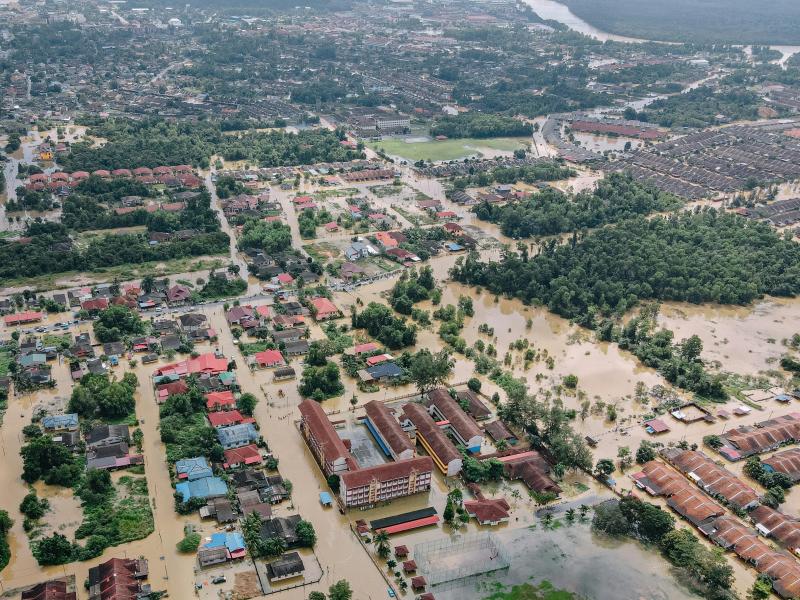
New datasets delineating global urban land support scientific research, application, and policy, but they can produce different results when applied to the same problem making it difficult for researchers to decide which to use.
A tethered balloon system was used at the Southern Great Plains atmospheric observatory in Oklahoma to collect atmospheric particles from ground and aloft levels. Samples were later analyzed for their organic molecular composition.
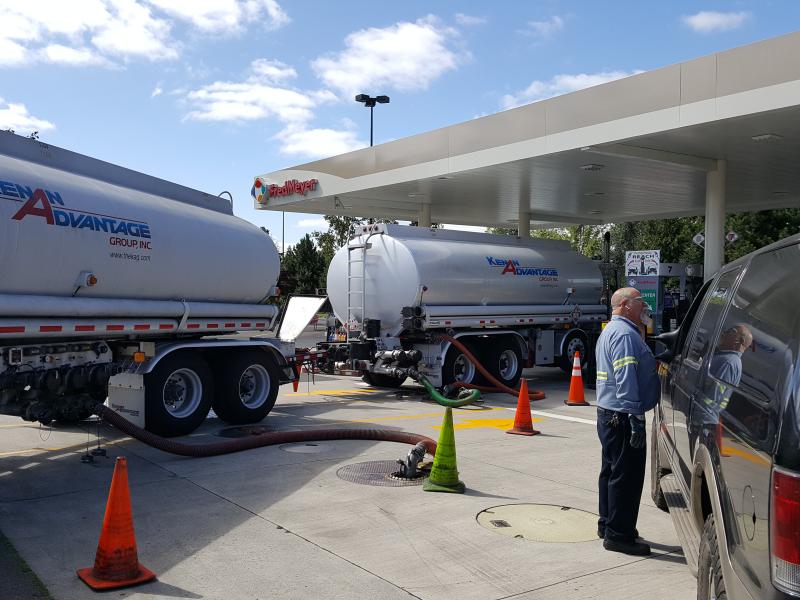
PNNL will analyze current and projected transportation fuel dynamics, supply chain risks, and risk comparators with relevant sectors, such as transportation electrification.
A recent paper published in Science sheds light on how aerosols—tiny particles in the air—released by industrial activities can trigger downstream snowfall events.
The demand for energy is growing—and so is the technology supporting it. However, future development of power generation technologies could be affected by a key factor: material supply.
After 20 years of contributions to the field of hydrogen safety, the Hydrogen Safety Panel launched its new mentoring program at PNNL earlier this year. Now, the program has selected its first two mentees.
Through a detailed examination of historical data supported by mechanistic analysis and model experiments, researchers unveil that a large-scale climate system intensifies heat extremes and wildfire risks in the PNW.
This study shows that dry dynamics alone is not enough to understand jet stream persistence. Instead, clouds and precipitation are more important contributors than internal “dry” mechanisms to this memory of the Southern Hemisphere jet.
This study evaluated the sensitivity of multiple geophysical methods to measure and evaluate the spatiotemporal variability of select soil properties across terrestrial–aquatic interfaces.
Researchers integrated field measurements, lab experiments, and model simulations to study oxygen consumption dynamics in soils along a coastal gradient.
Pyrocumulonimbus clouds are increasing in frequency as large wildfires become more prevalent in a warming climate. These clouds can inject smoke particles into the atmosphere, where they can remain suspended for several months.
This research explores how changes in groundwater levels affect the chemistry of underground water, especially in areas where land meets water, like wetlands.