Distribution System Architecture Transformation (DSAT)
Distribution System Architecture Transformation (DSAT) image composite created by Cortland Johnson | Pacific Northwest National Laboratory
Electric distribution systems in the United States are rapidly evolving. Distributed energy resources, electrification, changing customer expectations, and new policies at all levels are reshaping how electricity is generated, delivered, and managed. Utilities must balance rising demand, increasing complexity, and the need for reliable, resilient, and affordable electric service. They also need to integrate new technologies and customer-owned energy resources. The industry is moving toward greater coordination between transmission and distribution systems. This shift allows more efficient operations, easier integration of diverse resources, and improved balancing of generation and load.
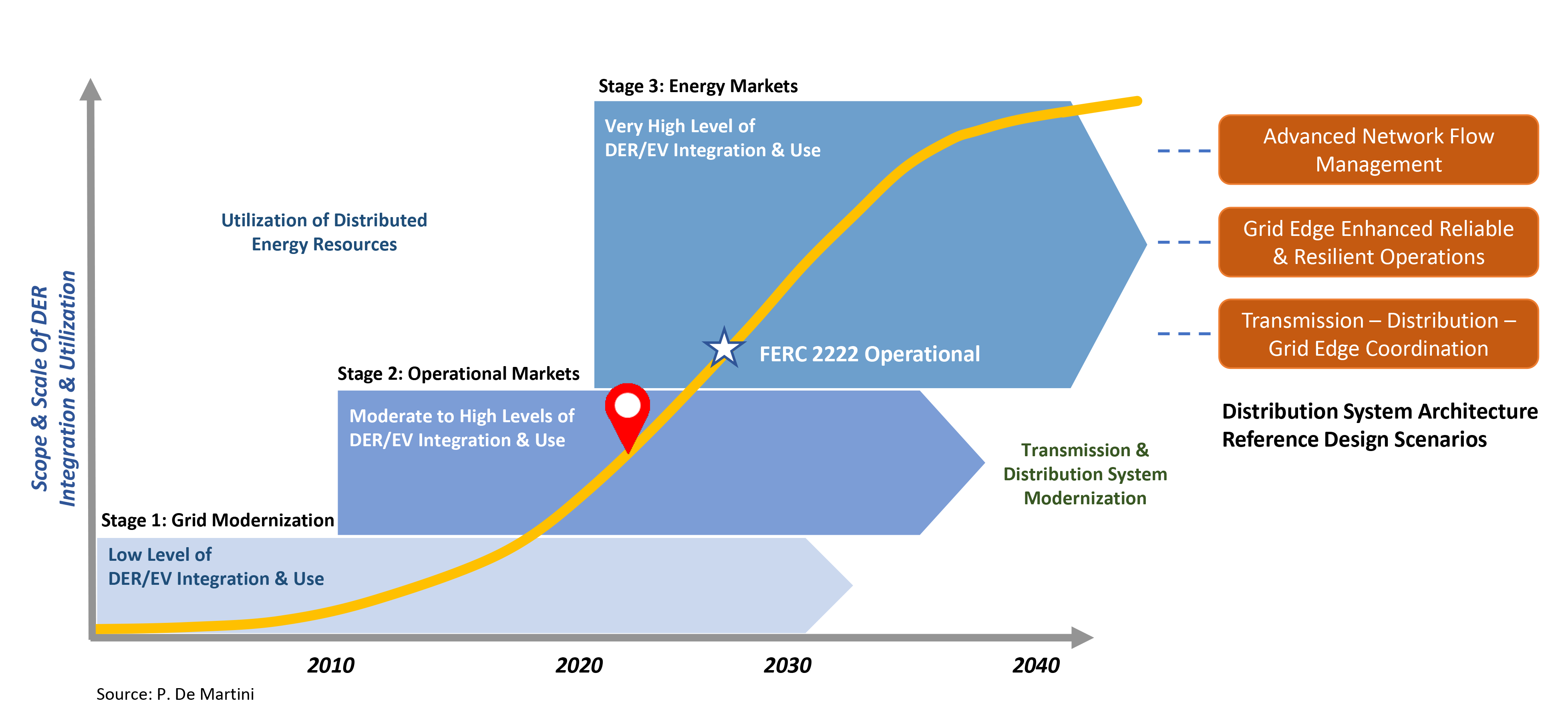
The figure below shows the industry’s progression from traditional grid modernization to more advanced operational and energy markets, which require greater coordination among distributed energy resources, transmission and distribution systems, utilities, and customers. Graphic was adapted from Distribution System Evolution (p. 3), by Paul De Martini and Lisa Schwartz, 2023, Department of Energy. Adapted with permission.
Evolution of Distribution System Architecture
Pacific Northwest National Laboratory (PNNL) addresses these challenges through the Distribution System Architecture Transformation (DSAT) initiative. Sponsored by the U.S. Department of Energy, Office of Electricity, DSAT offers practical guidance and reference architectures. The initiative provides technical resources and planning frameworks to help utilities, regulators, technology developers, and industry modernize electric distribution systems.
Framework for distribution system transformation
The DSAT initiative defines system architectures, reference designs, and functional requirements for an operational model. This model aims to reduce long-term costs and enables growth and optimization. DSAT helps organizations apply proven grid architecture principles to modernize the power system. It improves planning and operations, enhances interoperability, and strengthens transmission and distribution coordination. DSAT also supports technology integration.
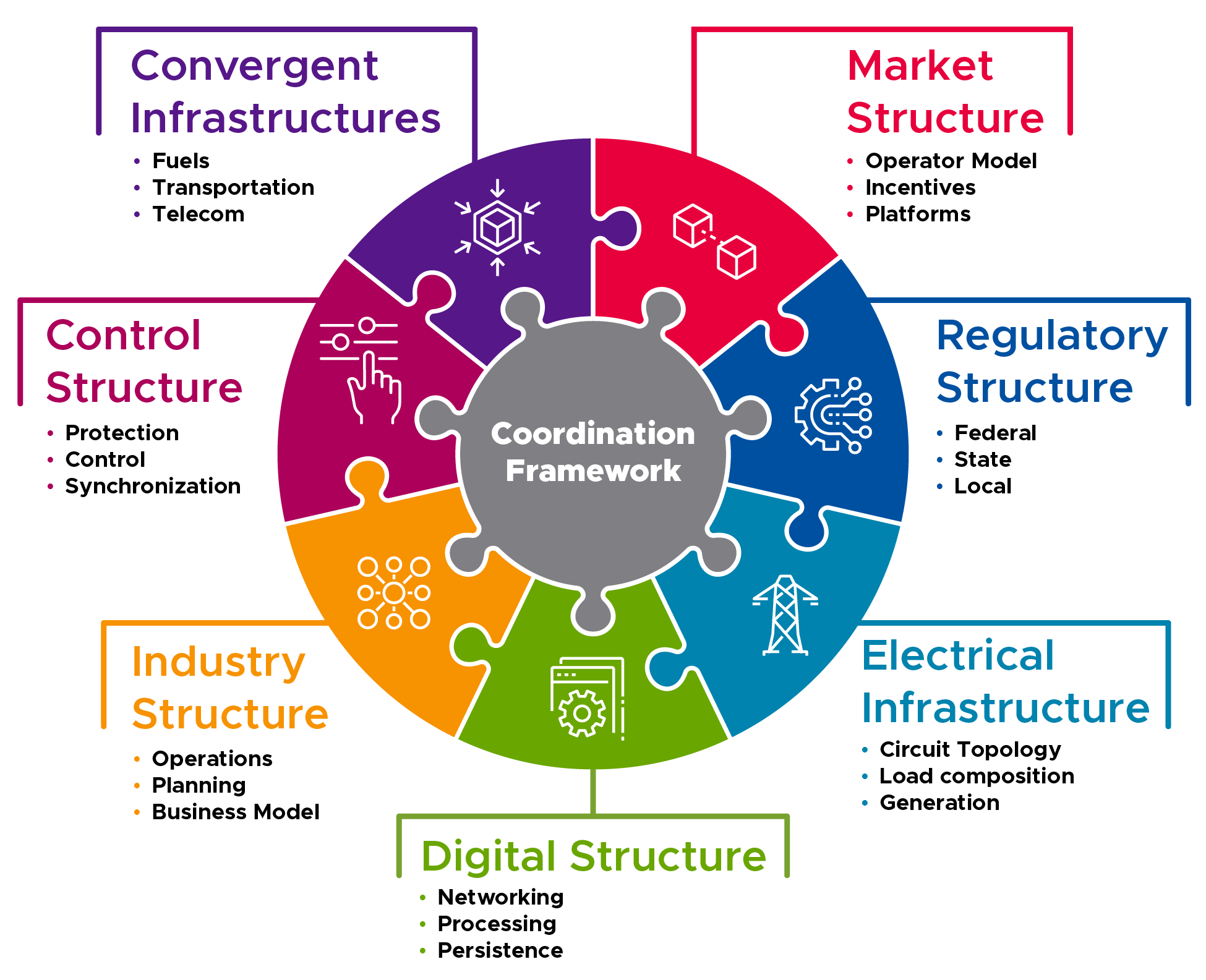
The DSAT program addresses critical capabilities and coordination required for the future electric system. This includes physical infrastructure, sensing and communications, system protection, automation, controls, operational coordination, and information technology. DSAT also supports the integration of energy resources, markets, and grid operations across transmission and distribution systems.
Turning architecture into action
Building on the foundational work of PNNL’s Modern Distribution Grid project and related industry initiatives, DSAT translates complex technical concepts into practical guidance that organizations can use today.
DSAT provides strategic planning resources for utility executives, regulators, and other decision-makers. For planners, architects, and engineers, DSAT delivers technical guidance, reference architectures, and implementation considerations. These resources help develop power system designs, operational capabilities, coordination strategies, and technology roadmaps that address each utility’s unique needs and objectives.
Frequently Asked Questions
What is DSAT?
Distribution System Architecture Transformation (DSAT) is an initiative from the U.S. Department of Energy, Office of Electricity. Led by PNNL, it offers guidance, reference architectures, technical reports, and tools that support utilities, regulators, planners, and industry in modernizing electric distribution systems.
DSAT supports reliable, resilient, and efficient electric distribution systems. It also works to improve the planning, design, and operation of distributed energy resources (DERs). A DER is a framework that uses grid architecture techniques to align objectives for operations, markets, and customers.
Who should use this guidance?
DSAT guidance is designed for electric utilities, public utility commissions, state energy offices, and distribution system planners. It also serves engineers, architects, technology developers, policymakers, and organizations involved in modern electric distribution systems. The guidance includes both high-level planning resources for decision-makers and technical references for engineers and architects.
What is reference coordination architecture and how does it work?
Through objective-based planning, reference coordination architecture (RCA) connects requirements with specific roles. This process identifies capability needs and helps prioritize investments. RCA can be applied by many stakeholders, allowing them to clarify their role in grid modernization and understand how grid architecture, markets, and control systems interact. The flexibility of RCA makes it suitable for different jurisdictions because it focuses on capability needs rather than strict designs.
What is the Grid Code Repository?
The Grid Code Repository is a searchable collection of guidance and standards. It contains reference materials that are maintained by the U.S. Department of Energy, Office of Electricity. The repository organizes resources on topics such as distribution grid modernization, grid edge resource integration, operations, governance, and information sharing. It helps utilities, regulators, and industry find relevant grid codes and guidance.
If you would like to receive email notifications as the repository develops, please subscribe via this Microsoft Form.
Can I contribute documents and tools?
Yes, you can contribute to documents and tools.
If you would like to suggest a grid code for the team to consider for the repository, submit your information and details via this Microsoft Form.
If you have suggestions about items to include (e.g., research papers, tools, case studies, software, guidance documents, or reports) on this website, email them to DSAT-Team@pnnl.gov.
Where can I find archived guidance?
The DSAT website provides access to the latest guidance, reports, and tools on the Related Resources page.
References
- Grid Architecture: Foundational Report
- Grid Architecture 2: Advanced Concepts for Grid Architecture
- Operational Coordination across Bulk Power, Distribution and Customer Systems
- Common Grid Services: Terms and Definition Report
- Energy Services Interface: Requirements Document
- Guide to Developing Energy Services Interfaces
- Energy Services Interface: Architecture, Requirements, and Agreements
- The Distribution System Operator with Transactive (DSO+T) Study