Distributed science is thriving at PNNL, where scientists share data and collaborate with researchers around the world to increase the impact of the work.
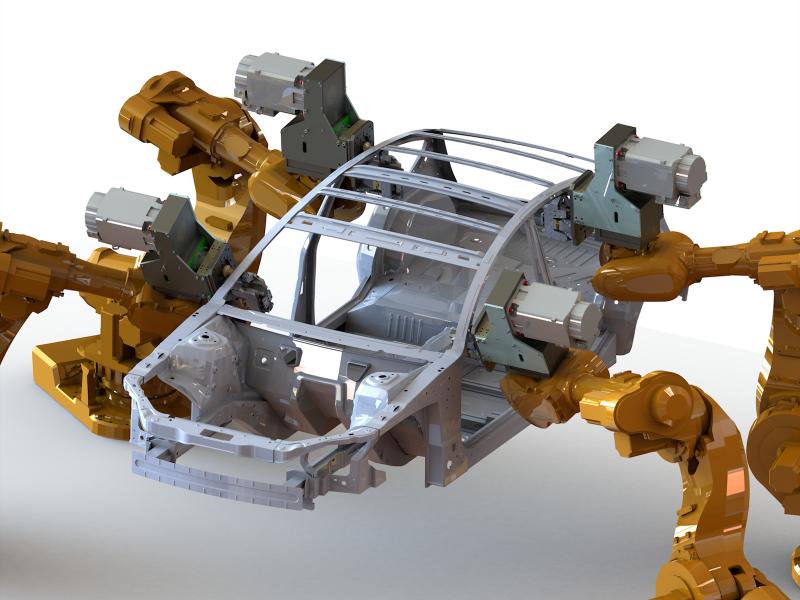
A breakthrough at PNNL could free friction stir from current constraints—and open the door for increased use of the advanced manufacturing technique on commercial assembly lines.
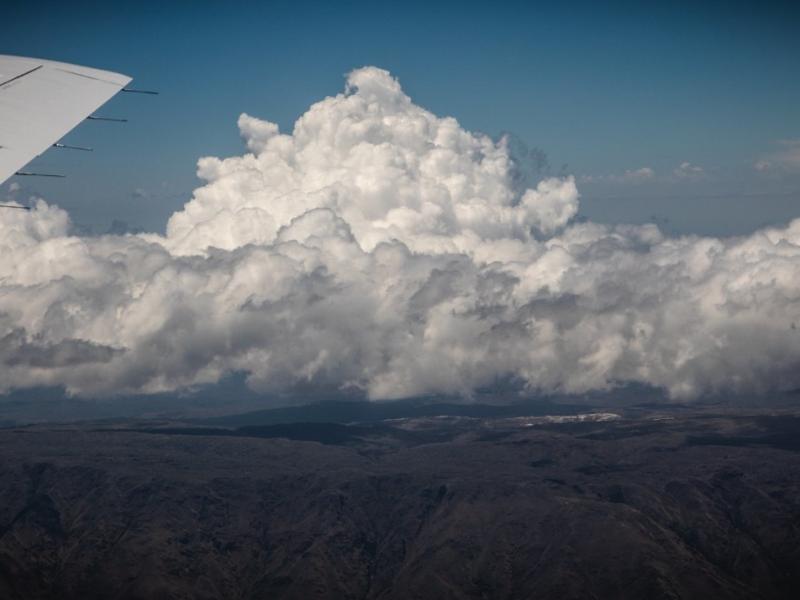
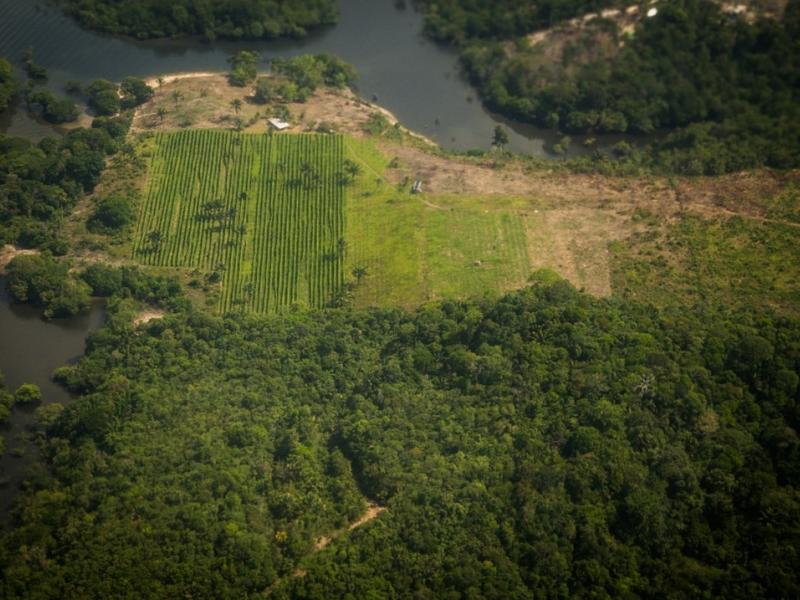
The ability of a storm-resolving weather model to predict the growth of storms over central Argentina was evaluated with data from the Clouds, Aerosols, and Complex Terrain Interactions (CACTI) field campaign in central Argentina.
Atmospheric aerosol particles modulate climate and the Earth’s energy balance by scattering and absorbing sunlight. They also seed clouds, acting as cloud condensation nuclei.
Extensive in situ and remote sensing measurements were collected to address data gaps and better understand the interactions of convective clouds and the surrounding environment.
PNNL's ASSORT model will help airports balance passenger screening and security risks with throughput. It also quantifies risks for different traveler types and optimizes checkpoint operations, improving efficiency while enhancing safety.
By combining computational modeling with experimental research, scientists identified a promising composition that reduces the need for a critical material in an alloy that can withstand extreme environments.
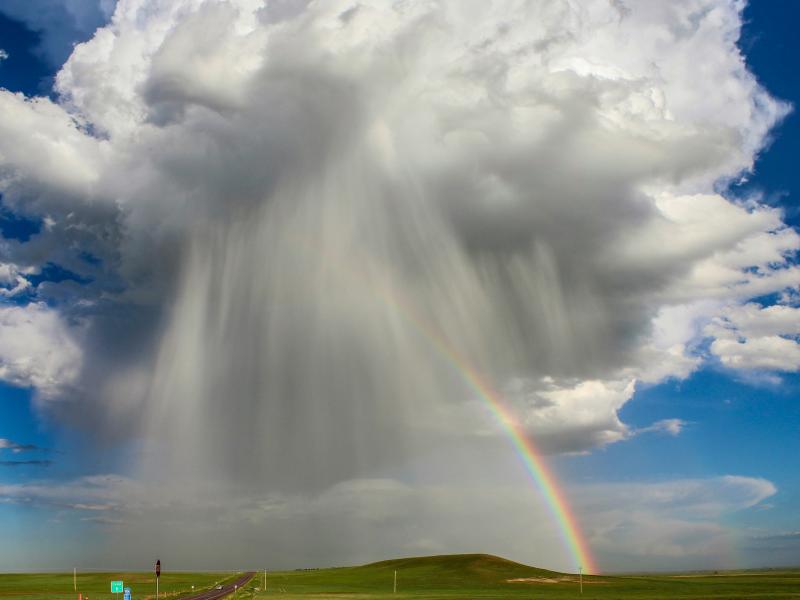
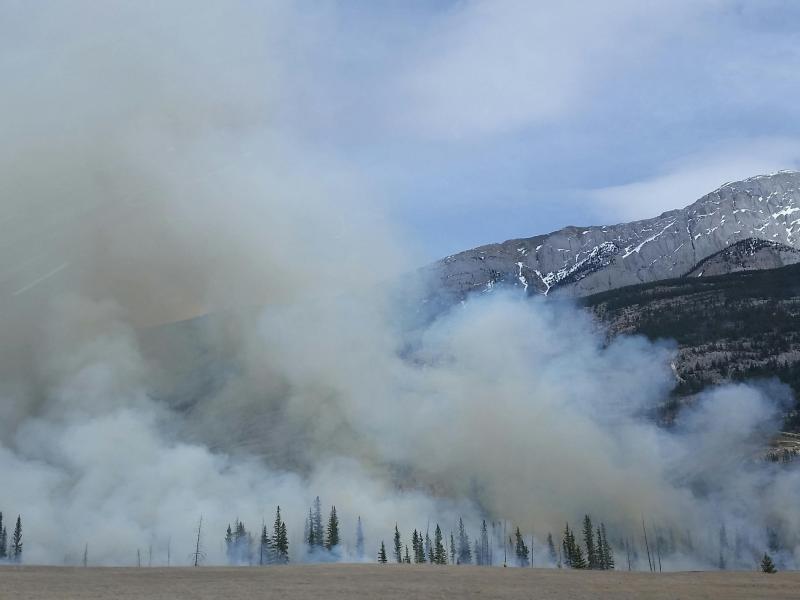
Pyrocumulonimbus clouds are increasing in frequency as large wildfires become more prevalent in a warming climate. These clouds can inject smoke particles into the atmosphere, where they can remain suspended for several months.
PNNL researchers have developed a new, physics-informed machine learning model that accurately predicts how heat accumulates and dissipates during friction stir processing.
Using numerical simulations to reproduce the laboratory experiments, this study reveals that liquid droplets are present near the bottom surface, which warms and moistens the air in the chamber.
At the 2024 Aviation Futures Workshop, researchers from PNNL joined other subject matter experts and representatives from the stakeholder community in reimagining the passenger experience.
Aerosol particles imbue climate models with uncertainty. New work by PNNL researchers reveals where in the world and under what conditions new particles are born.
Researchers show how satellite observations from the MODerate Resolution Imaging Spectroradiometer and CloudSat radar can be used to constrain the ACI radiative forcing that is linked to droplet collection in marine liquid clouds.
Researchers shared several technologies addressing urgent security challenges at the 2024 Homeland Protection Technologies Workshop at MIT Lincoln Laboratory, in Boston MA.
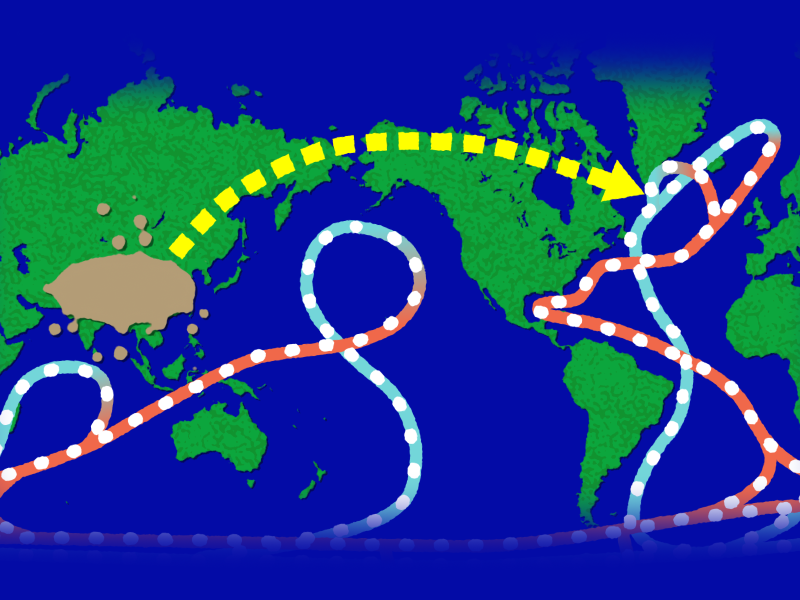
Published in Nature Communications, Increased Asian Aerosols Drive a Slowdown of Atlantic Meridional Overturning Circulation, identifies the role aerosols over Asia is having on the AMOC, a complex system of currents in the Atlantic Ocean.
Researchers devised a quantitative and predictive understanding of the cloud chemistry of biomass-burning organic gases helping increase the understanding of wildfires.