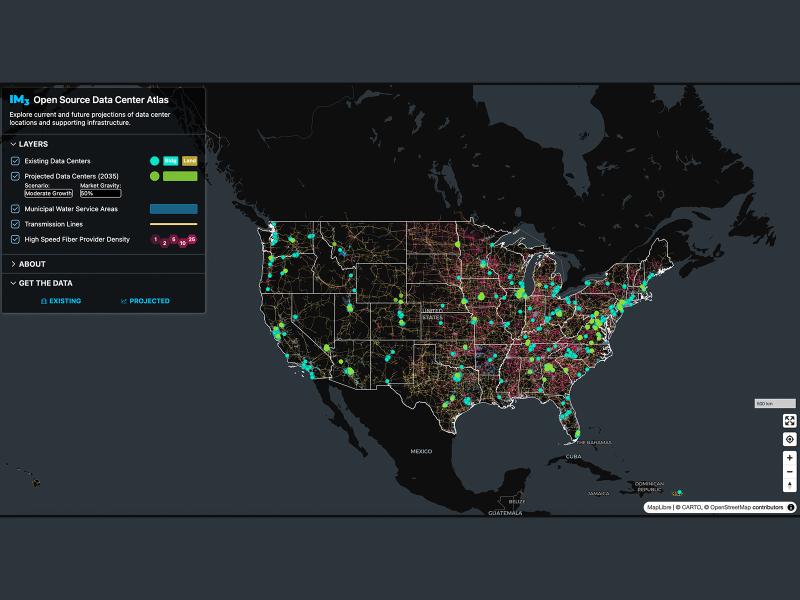
Now, anyone can easily explore and access data from a nationwide map of data centers, the infrastructure that powers them, and projections of future data center locations.
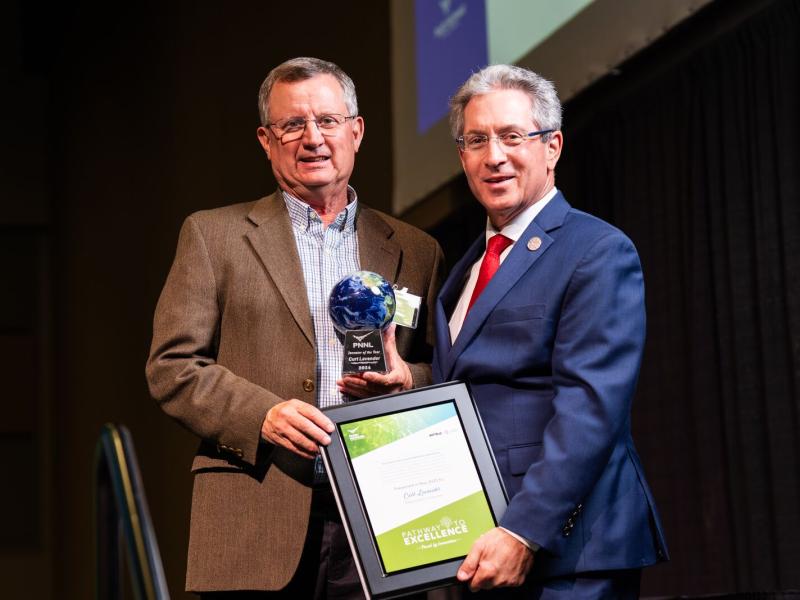
From vehicles and airplanes to solid-phase processing of metals—how Curt Lavender and his team at PNNL solve industry problems with practical ingenuity.
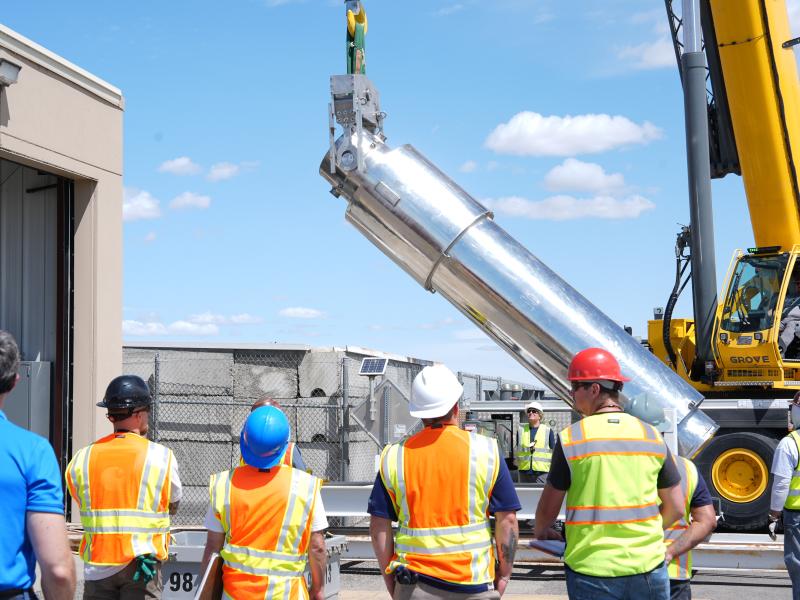
Two new publications provide emergency response agencies with critical insights into commercially available unmanned ground vehicles used for hazardous materials response.
Jonathan Barr, senior systems engineer at PNNL, was recently invited to co-present on a panel at the Texas Department of Emergency Management Annual Conference.
The Wildfire Mitigation Plan Database was built to support electric utilities, state governments, policymakers, and regulators in understanding and improving wildfire risk and resilience strategies.
By combining computational modeling with experimental research, scientists identified a promising composition that reduces the need for a critical material in an alloy that can withstand extreme environments.
New datasets delineating global urban land support scientific research, application, and policy, but they can produce different results when applied to the same problem making it difficult for researchers to decide which to use.
The demand for energy is growing—and so is the technology supporting it. However, future development of power generation technologies could be affected by a key factor: material supply.
PNNL researchers earned five Papers of Note, 17 Superior Papers, and one poster award for their environmental remediation, radioactive waste, and nuclear energy-related presentations.