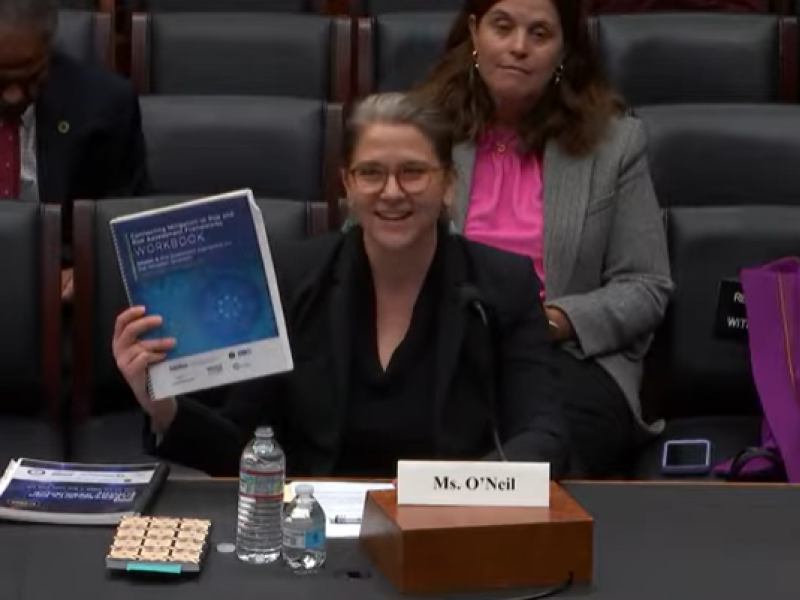
Rebecca O’Neil, a research principal in the Energy and Environment Directorate at PNNL, was invited to testify before the House Committee on Energy and Commerce’s Subcommittee on Energy.
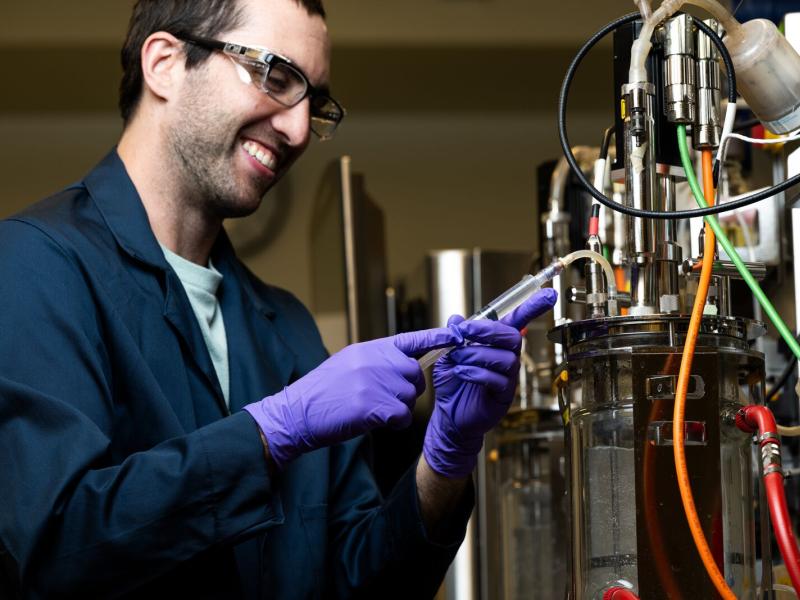
Predicting how organisms’ characteristics respond to not only their genes, but also their environments (a nascent field called predictive phenomics), is extraordinarily challenging. Researchers at PNNL are using AI to tackle that challenge.
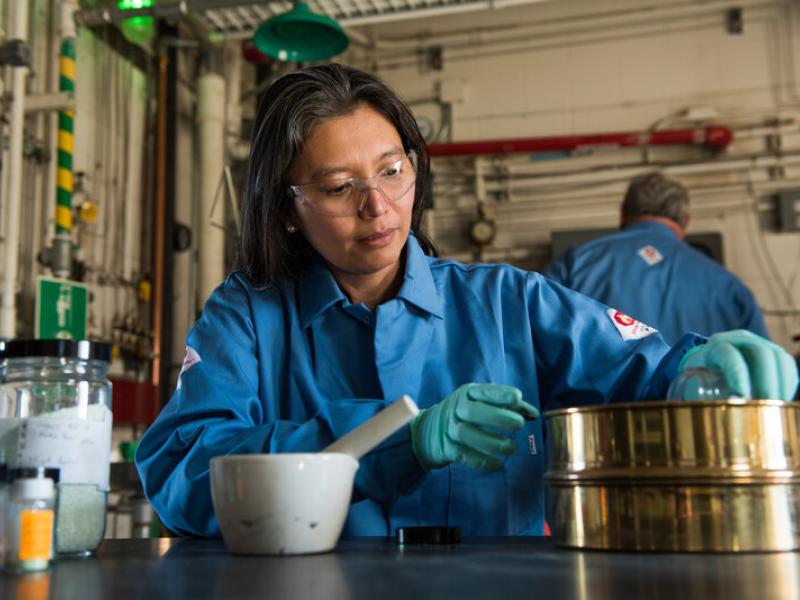
PNNL researchers have found yet another way to turn trash into treasure: using algal biochar, a waste production from hydrothermal liquefaction, as a supplementary material for cement.
PNNL's E-COMP initiative is helping unleash American energy innovation with advanced theories, models, and software tools to better operate power systems that rely heavily on high-speed power electronic control.
The Generator Scorecard, developed by PNNL in partnership with BPA, automates generator evaluations, reducing engineering workloads and improving grid reliability.
PNNL was well represented at the NAWEA/WindTech 2024 Conference with 13 PNNL experts at the conference sponsored by the North American Wind Energy Academy.
The National Transmission Planning Study presents several transmission expansion scenarios that would reliably support the growing demand for energy across the nation.
Recycling polyolefin materials is challenging. One waste management strategy is plastic upcycling. New work demonstrates a single-step upcycling route coupling cracking and alkylation, recycling carbon and keeping valuable resources active.
PNNL’s patented Shear Assisted Processing and Extrusion (ShAPE™) technique is an advanced manufacturing technology that enables better-performing materials and components while offering opportunities to reduce costs and energy consumption.
Andrew White goes back to his alma mater, Georgia Tech, as young alumni keynote speaker for the Sustainability Showcase, part of the university’s larger Sustainable Development Goals Action & Awareness Week.