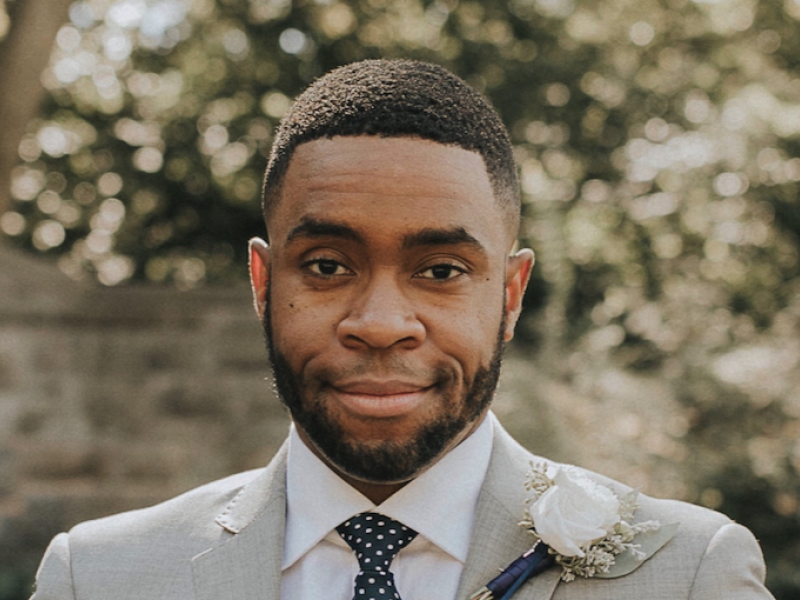
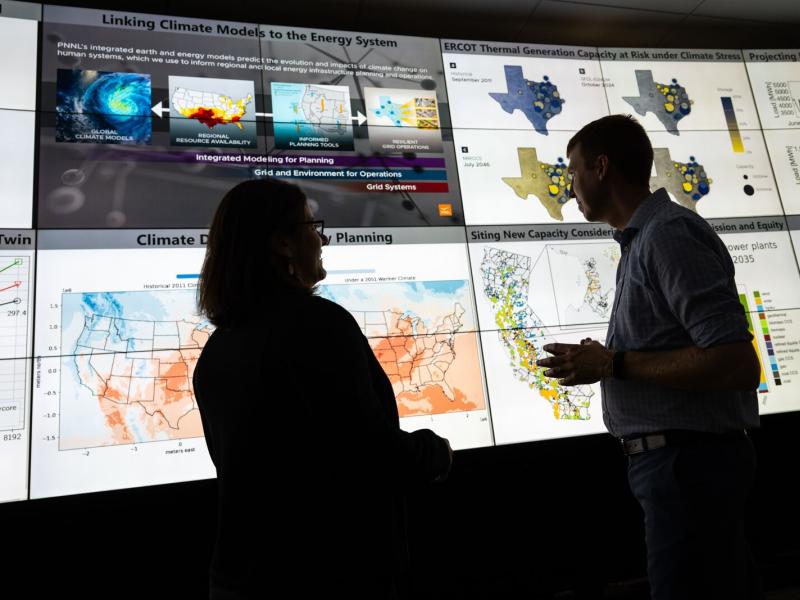
Erich Hsieh, Deputy Assistant Secretary for OE’s Energy Storage Division, shared insights about the Grid Storage Launchpad and energy storage innovations .
Aerosol particles imbue climate models with uncertainty. New work by PNNL researchers reveals where in the world and under what conditions new particles are born.
Accessing groundwater may become more difficult—and more expensive—as groundwater supplies become increasingly scarce and underground aquifer levels fall.
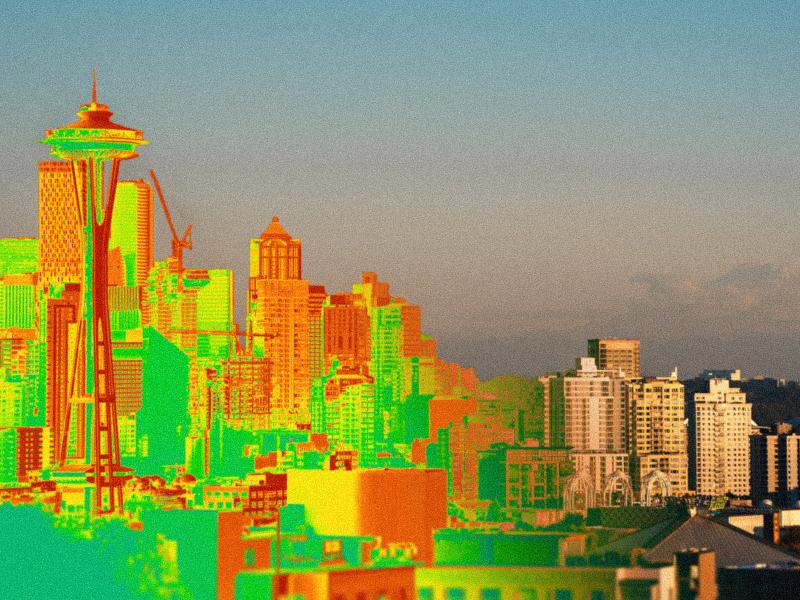
Once thought to cover too little of the Earth’s surface to affect climate at larger scales, new work finds that city sprawl does add to global warming—over land, at least.
PNNL advisors joined a panel of Washington State emergency management personnel to discuss how partnerships with national laboratories are enabling science and technology solutions.
An energy expert and economist who has played a leading role in formulating and coordinating U.S. climate policy is the new director of the Joint Global Change Research Institute in College Park, Maryland.
At the GovAI Summit 2023, Ryan Eddy joined the Department of Homeland Security Science and Technology Directorate on a panel highlighting artificial intelligence impacts and opportunities in the field of emergency management.
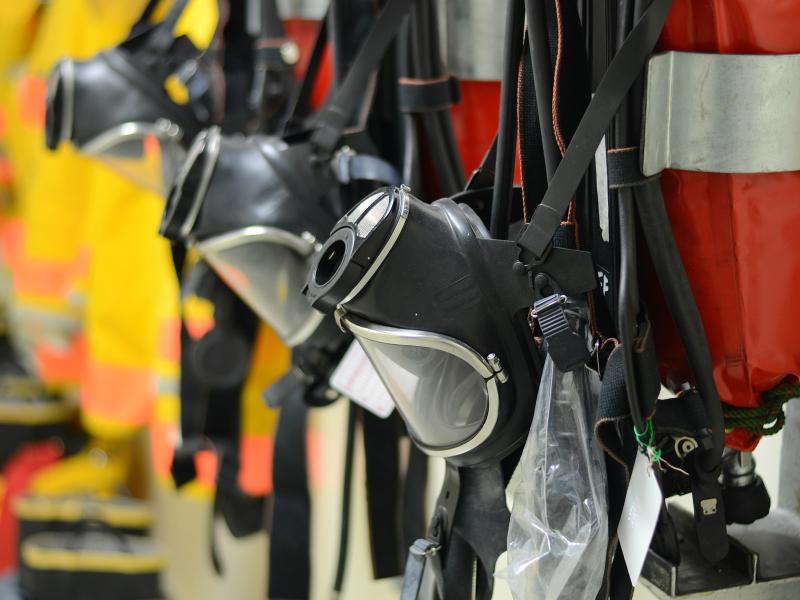
A team of researchers received an award for their contributions to improving the operational readiness and safety posture of the firefighter community by conducting a rigorous evaluation of commercially available equipment.
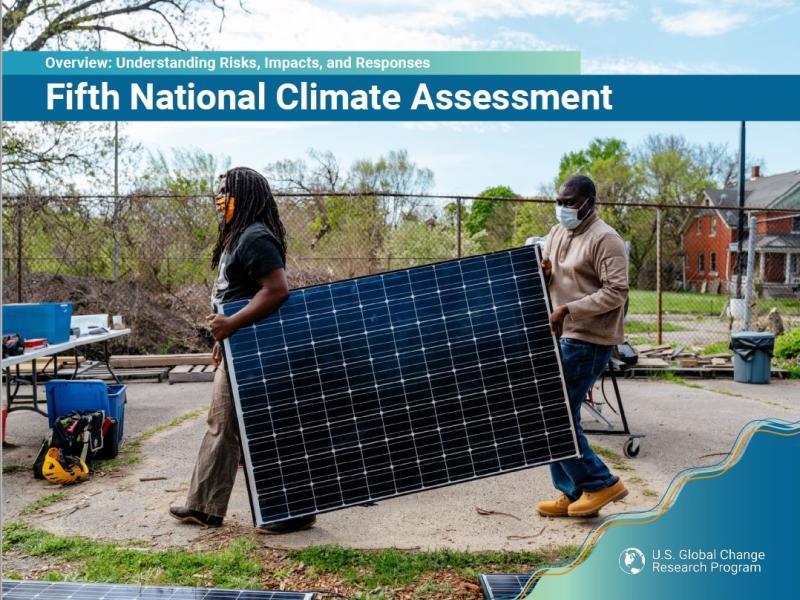
Researchers use models to represent relationships between climate and socio-economic processes, helping inform decisions for slowing climate change and enhancing resilience.