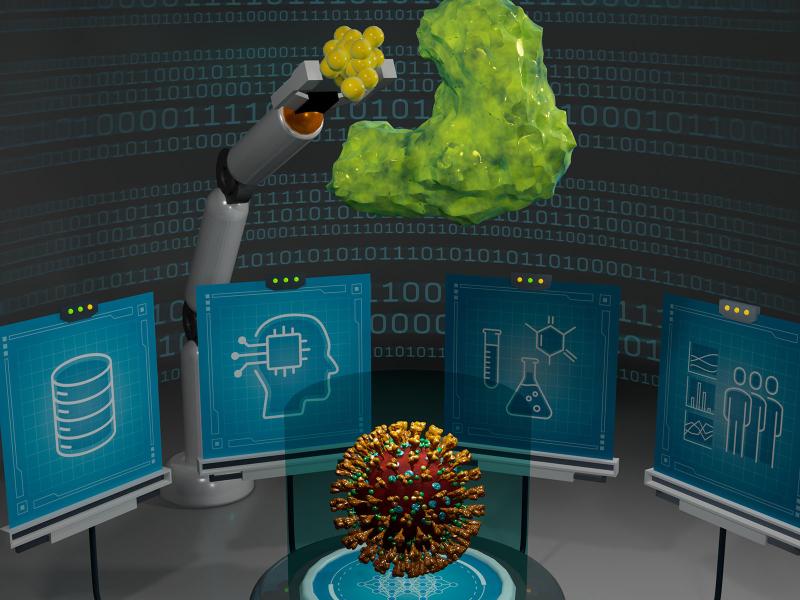
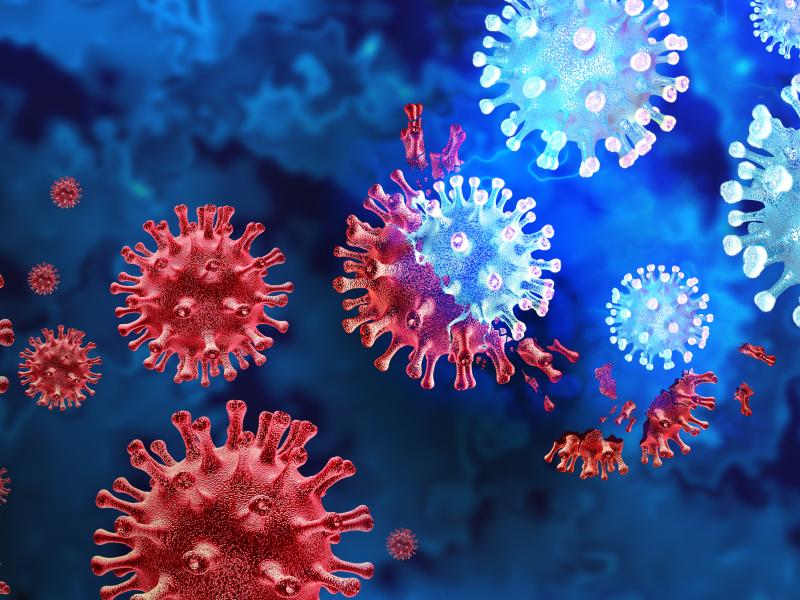
Data-driven autonomous technology to rapidly design and deliver antiviral interventions targeting SARS-CoV-2 to reduce drug discovery timeline and advance bio preparedness capabilities.
Data scientist Jung Lee accepted the position of review editor for Frontiers in Computational Neuroscience after serving as a guest editor for a special issue.
Kathleen Doty recently shared legal insight on the challenge of space debris in her presentation “Regulating Space Junk” as part of the University of Georgia School of Law’s Spring 2023 Space Law Speaker Series.
PNNL physicist in the Signature Sciences and Technology Division was officially announced as a member of the FRIB User Organization Executive Committee.
The work by the team at PNNL takes a critical step in leveraging ML to accelerate advanced manufacturing R&D, specifically for manufacturing techniques without access to efficient, first-principles simulations.
PNNL research analysist specializing in biological and chemical weapons nonproliferation invited to join editorial board for Frontiers in Microbiology.
PNNL mathematician Aaron Luttman contributed to the organizing committee for workshop exploring robust machine learning and artificial intelligence systems for the U.S. Army.
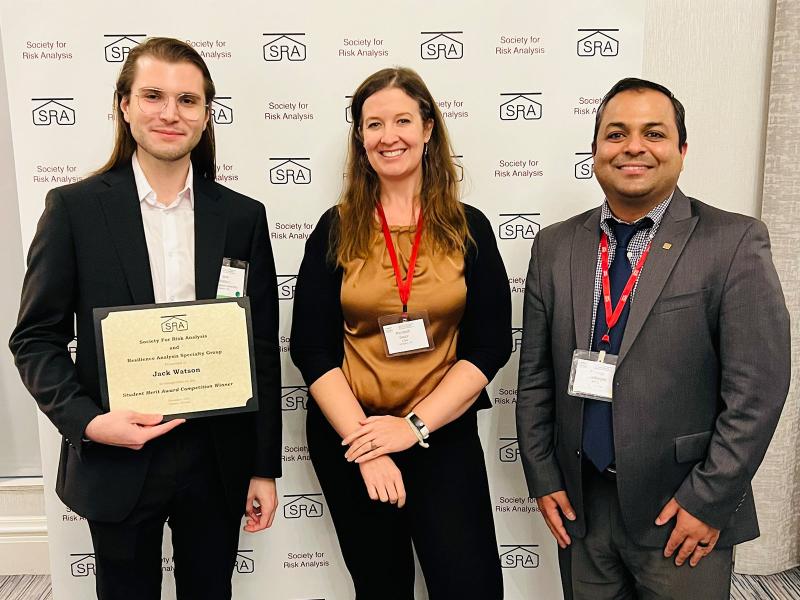
For a second year in a row, doctoral intern Jack Watson was awarded the Student Merit Award by the Society for Risk Analysis and the Resilience Analysis Specialty group.
Steven Spurgeon’s research is featured in the cover of the MRS Bulletin along with his team’s invited perspective on the future of machine learning for electron and scanning probe microscopy.
To thwart pathogens, researchers in the epidemiology field of infectious disease (ID) prediction are continuously trying to forecast when, where, and how an ID event will occur.
As leaders in AI and machine learning, PNNL experts are sharing their latest findings at the 36th annual Neural Information Processing Systems (NeurIPS) Conference, Nov. 28–Dec. 9, 2022.