Scientists are taking their cues from fungi in the digestive tracts of cows, goats and sheep in the search for new ways to create sustainable fuels and medicines.
A genetic modification in fungi is more common than has been thought, offering scientists a new tool as they explore the use of fungi to convert biomass to fuels, chemicals and enzymes.
PNNL is collaborating with three small businesses to address technical challenges concerning hydrogen for fuel cell cars, bio-coal and nanomaterial manufacturing.
When water comes in for a landing on the common catalyst titanium oxide, it splits into hydroxyls just under half the time. Water's oxygen and hydrogen atoms shift back and forth between existing as water or hydroxyls, and water has the sli
PNNL scientists have developed a system to convert methane into an energy-rich substance that can be used as the basis for biofuels and even feed for cows that create the gas in the first place.
Yong Wang, a catalysis researcher at PNNL and WSU, was selected to receive the annual fellow award given by the Industrial & Engineering Chemistry division of the American Chemical Society.
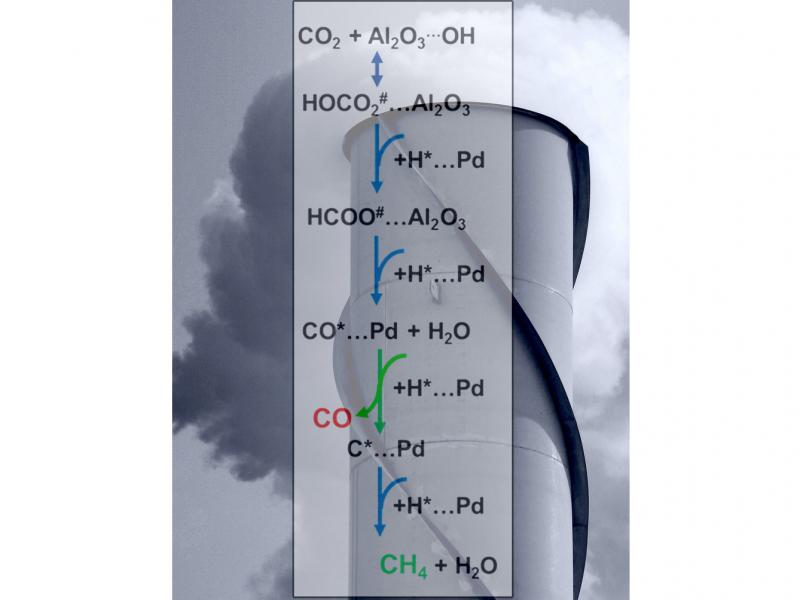
At next week's American Chemical Society meeting, experts spanning a wide range of disciplines will get together to toss around ideas on technologies to capture the carbon dioxide.