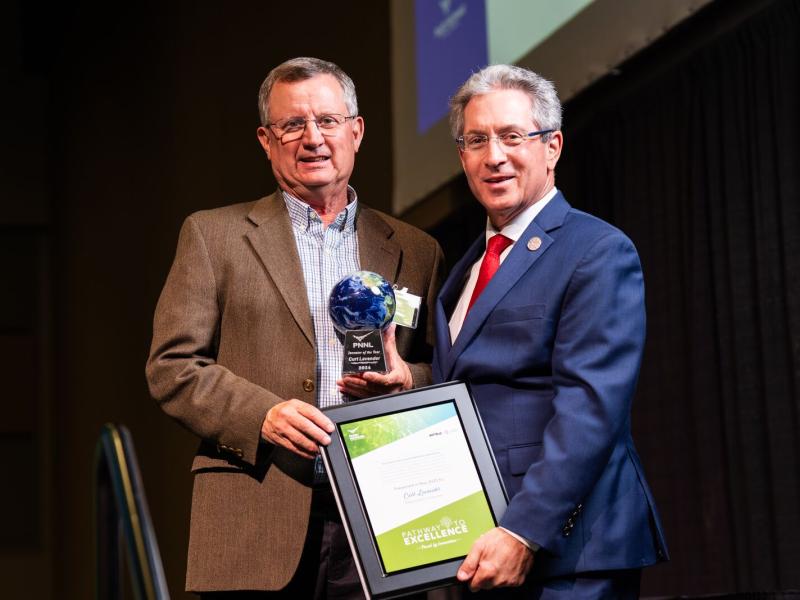
From vehicles and airplanes to solid-phase processing of metals—how Curt Lavender and his team at PNNL solve industry problems with practical ingenuity.
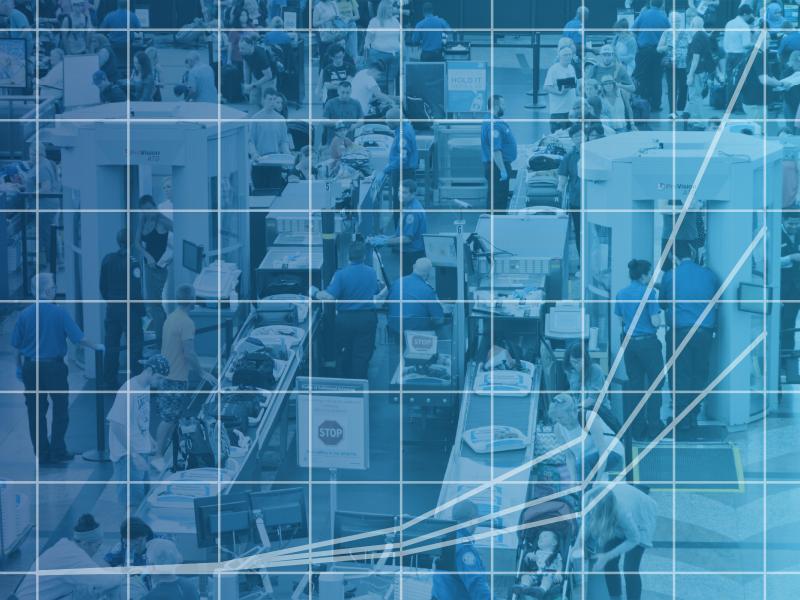
PNNL's ASSORT model will help airports balance passenger screening and security risks with throughput. It also quantifies risks for different traveler types and optimizes checkpoint operations, improving efficiency while enhancing safety.
At the 2024 Aviation Futures Workshop, researchers from PNNL joined other subject matter experts and representatives from the stakeholder community in reimagining the passenger experience.
PNNL’s patented Shear Assisted Processing and Extrusion (ShAPE™) technique is an advanced manufacturing technology that enables better-performing materials and components while offering opportunities to reduce costs and energy consumption.
Researchers shared several technologies addressing urgent security challenges at the 2024 Homeland Protection Technologies Workshop at MIT Lincoln Laboratory, in Boston MA.
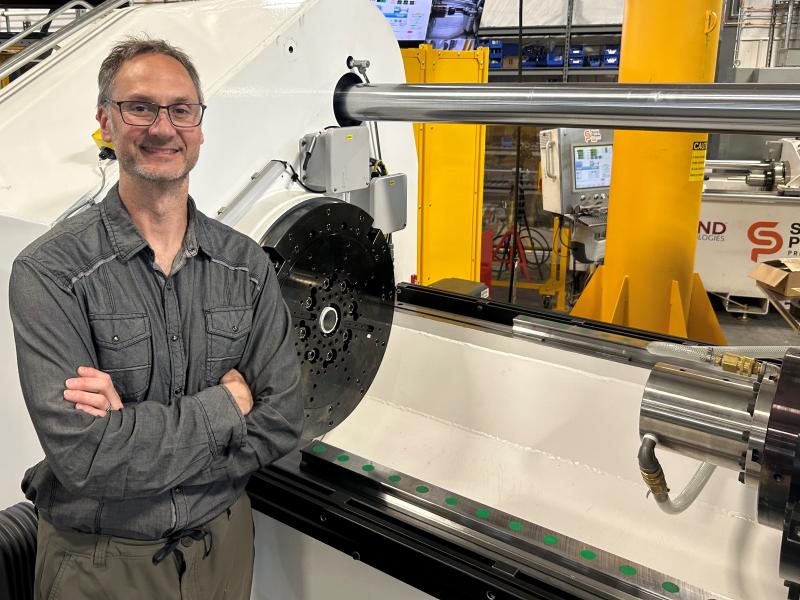
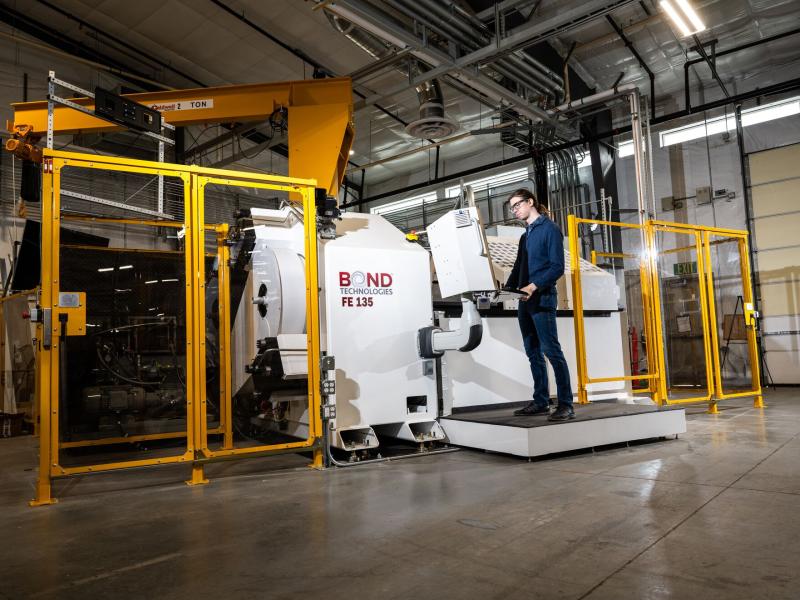
The next-generation ShAPE machine has arrived at PNNL, where it will help prove the mettle of the ShAPE extrusion technique. ShAPE 2 is designed to allow researchers to produce larger, more complex extrusions.
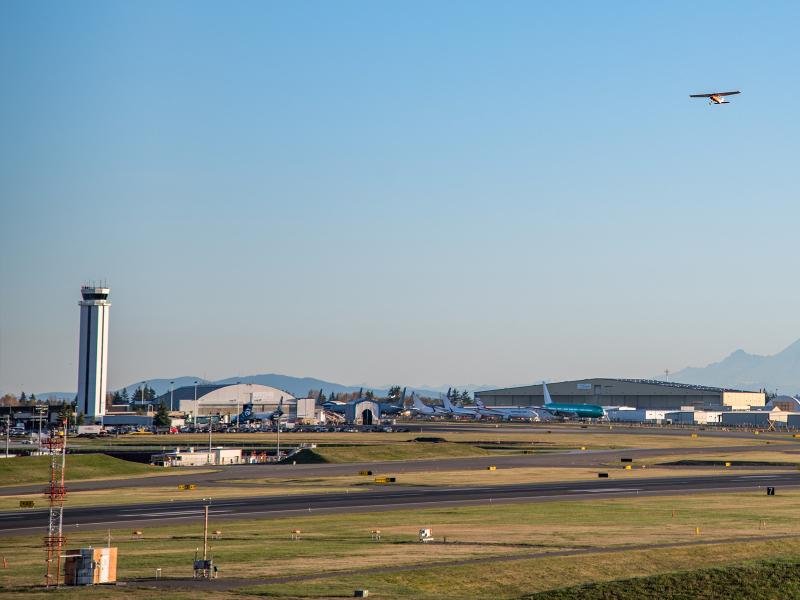
An initiative from Washington State University and Snohomish County leaders is aiming to make Paine Field a nexus for testing and improving sustainable aviation fuels made from non-petroleum materials.
The Department of Energy’s Vehicle Technologies Office recently issued two awards to researchers at PNNL for their contributions to areas that are crucial for the expansion of electric vehicles.
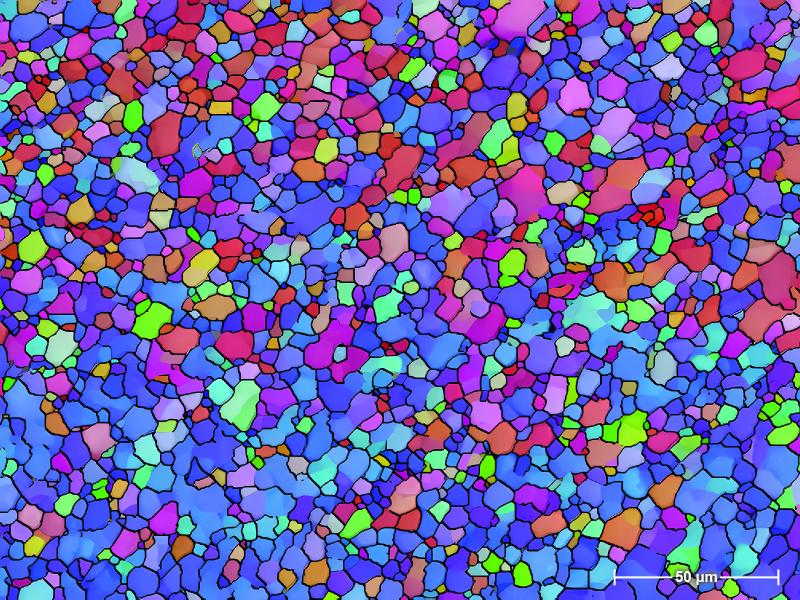
Research published in Journal of Manufacturing Processes demonstrates innovative single-step method to manufacture oxide dispersion strengthened copper materials from powder.
A process developed at PNNL that converts biomass and waste into a chemical intermediate or into gasoline, diesel, and jet fuel is available for commercial licensing.