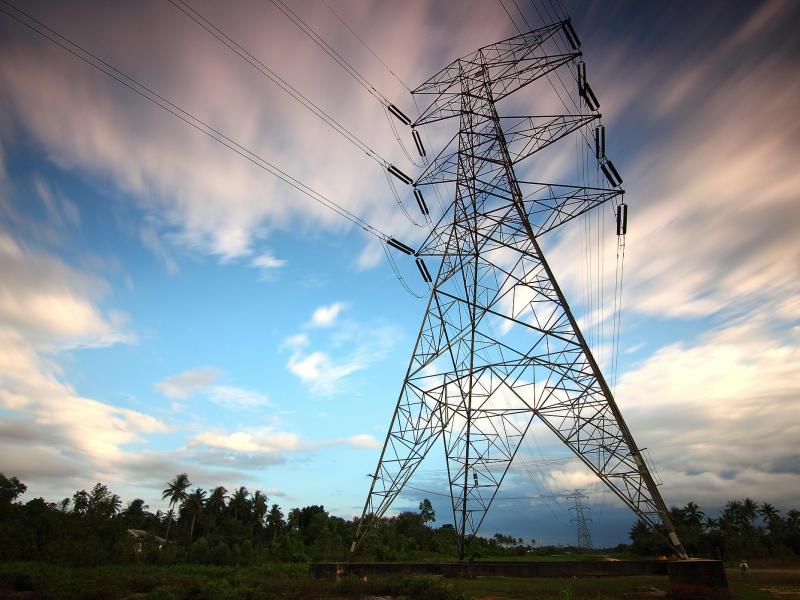
A new analysis shows how renewable energy sources like solar, wind and hydropower respond to climate patterns, and how utilities can use this data to save money and invest in energy storage.
Global experts gathered at PNNL for the 9th International Conference on Sodium Batteries, sharing advancements in sodium battery research and development.
A Helios Hydra UX DualBeam, which utilizes a plasma focused ion beam and scanning electron microscope for sample preparation and analysis, was installed at the Grid Storage Launchpad.
Energy storage is increasingly critical to building a resilient electric grid in the United States—a trend embodied by the Grid Storage Launchpad, a newly inaugurated, 93,000-square-foot facility at PNNL.
The Sodium-ion Alliance for Grid Energy Storage, led by PNNL, is focused on demonstrating high-performance, low-cost, safe sodium-ion batteries tested for real-world grid applications.
Controlling the nanostructure of silk fibroin—a protein found in silk—is a key step toward designing and fabricating electronics that leverage the material’s promising mechanical, optical and biocompatible properties.
Three PNNL-supported projects are at the forefront of developing advanced data analytics technologies to enhance the U.S. power grid’s reliability, resilience, and affordability.
Sergei Kalinin honored with the David Adler Lectureship Award for contributions to materials physics through automated experimentation and ferroelectric materials work.
Ultra-thin layers of silk deposited on graphene in perfect alignment represent a key advance for the control needed in microelectronics and advanced neural network development.