Conference

Critical Minerals & Materials Science Summit

Hero image showing the CM2S2 conference branding and information
November 3 - 5, 2026

Pacific Northwest National Laboratory, Richland, WA, USA

The 2026 Critical Minerals & Materials Science Summit (CM2S2) is a premier interdisciplinary conference convening leaders from national laboratories, government, industry, and academia to advance the science and technology underpinning secure, sustainable critical mineral supply chains.

Recognized by the U.S. Department of Energy as a national priority, critical minerals and materials science are foundational to energy dominance, economic competitiveness, and national security. CM2S2 directly supports this mission by fostering innovation across the full research-to-deployment continuum—connecting foundational science with applied research, pilot-scale studies, and deployable solutions.

Hosted by Pacific Northwest National Laboratory and the Pacific Northwest Chapter of the AVS Science & Technology Society, CM2S2 will showcase cutting-edge research in supply chain modeling, extraction and separations science, and AI-enabled autonomous research to accelerate translation from discovery to applied research and development.

Submit your abstract today!

  • Abstract Submission Deadline: September 25th
  • Non-U.S. Citizen Registration Deadline: September 25th
  • U.S Citizen Registration Deadline: October 23rd

Key Technical Themes

Global-to-Local Supply Chain Modeling

Featured Topics Include:

  • The CMM landscape: challenges, gaps, and opportunities for U.S. leadership
  • M²US: AI-enabled modeling to unlock critical mineral supply
  • Data-to-decision pipelines for supply chain forecasting from government, laboratory, and industry perspectives

Science for Extraction and Separation

Focus Areas Include:

  • Interfacial chemistry and transport phenomena in CMM systems 
  • Field- and flow-based separation
  • Bio-based and biomimetic approaches
  • Bridging atomic-scale understanding to applied and field-scale separations
  • Recovery from terrestrial, marine, and coastal systems
  • Recovery from waste and unconventional feedstocks (tailings, slags, brines, e-waste)

Cross-Cutting Theme: AI and Autonomous Science

Featured Topics Include:

  • AI for scientific discovery and autonomous experimentation 
  • In situ sensing and autonomous experimentation
  • Building an AI-ready CMM research ecosystem

U.S. Citizen Registration Deadline: October 23, 2026 | Non-U.S. Citizen Registration Deadline: September 25, 2026

Plenary Speakers

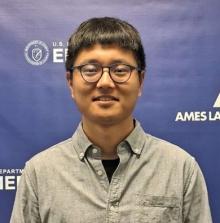
Headshot of Lun An

Dr. Lun An, Ames National Laboratory

Automation-Accelerated Discovery and Process Optimization for Critical Materials Research

Biography: Dr. Lun An is a scientist in the Division of Critical Materials at Ames National Laboratory. He earned his Ph.D. from the University of Chinese Academy of Sciences and completed postdoctoral training at the University of California, Berkeley. He joined Ames National Laboratory in 2022, where his current research focuses on developing algorithm-driven, automated workflows to accelerate the research, development, and deployment (RD&D) of sustainable processes for chemical separation and catalysis.
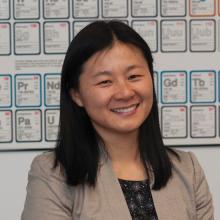
 

Headshot of Ping Yang

Dr. Ping Yang, Los Alamos National Laboratory

Autonomous Molecular Discovery for f-Elements

Biography: Ping Yang’s research focuses on elucidating the electronic structure, reactivity, and dynamical behavior of f-element systems. She is particularly interested in exploring vast chemical spaces and advancing agentic AI–driven approaches to discover novel chelation chemistries of these elements for energy applications.
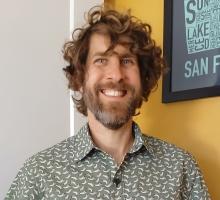
 

Tim O'Brien headshot

Dr. Tim O'Brien, U.S. Geological Survey - National Minerals Information Center

Increasing transparency and understanding of critical mineral markets through modeling: can the US and allies economically compete in monopolistic markets?

Biography: Tim O’Brien has M.S. degrees in Geology from the University of Kentucky and University of Michigan as well as a Ph.D. in Tectonics from Stanford University. He has worked as a lab manager and post-doctoral researcher at the Oregon State University and Syracuse University noble gas labs. He has contracted for the Dept. of Energy and Dept. of Defense, working on recovering critical minerals from unconventional sources and supply chain risk analysis for the National Defense Stockpile, respectively. Tim currently is a Physical Scientists for the U.S. Geological Survey - National Minerals Information Center developing mining cost models for estimating domestic supply of critical minerals.


Dr. Jacob Ward, U.S. Department of Energy - Manufacturing Deployment Office