PNNL

  • About
  • News & Media
  • Careers
  • Events
  • Research
    • Scientific Discovery
      • Biology
        • Chemical Biology
        • Computational Biology
        • Ecosystem Science
        • Human Health
          • Cancer Biology
          • Exposure Science & Pathogen Biology
        • Integrative Omics
          • Advanced Metabolomics
          • Chemical Biology
          • Mass Spectrometry-Based Measurement Technologies
          • Spatial and Single-Cell Proteomics
          • Structural Biology
        • Microbiome Science
          • Biofuels & Bioproducts
          • Human Microbiome
          • Soil Microbiome
          • Synthetic Biology
        • Predictive Phenomics
      • Chemistry
        • Computational Chemistry
        • Chemical Separations
        • Chemical Physics
        • Catalysis
      • Earth & Coastal Sciences
        • Global Change
        • Atmospheric Science
          • Atmospheric Aerosols
          • Human-Earth System Interactions
          • Modeling Earth Systems
        • Coastal Science
        • Ecosystem Science
        • Subsurface Science
        • Terrestrial Aquatics
      • Materials Sciences
        • Materials in Extreme Environments
        • Nondestructive Examination
        • Precision Materials by Design
        • Science of Interfaces
        • Smart Advanced Manufacturing
          • Cold Spray
          • Friction Stir Welding & Processing
          • ShAPE
      • Nuclear & Particle Physics
        • Dark Matter
        • Fusion Energy Science
        • Neutrino Physics
      • Quantum Information Sciences
    • Energy Resiliency
      • Electric Grid Modernization
        • Emergency Response
        • Grid Analytics
          • AGM Program
          • Tools and Capabilities
        • Grid Architecture
        • Grid Cybersecurity
        • Grid Energy Storage
        • Transmission
        • Distribution
      • Energy Efficiency
        • Appliance and Equipment Standards
        • Building Energy Codes
        • Building Technologies
          • Advanced Building Controls
          • Advanced Lighting
          • Building-Grid Integration
        • Commercial Buildings
        • Federal Buildings
          • Federal Performance Optimization
          • Resilience and Security
        • Residential Buildings
          • Building America Solution Center
          • Energy Efficient Technology Integration
          • Home Energy Score
        • Energy Efficient Technology Integration
      • Energy Storage
        • Electrochemical Energy Storage
        • Flexible Loads and Generation
        • Grid Integration, Controls, and Architecture
        • Regulation, Policy, and Valuation
        • Science Supporting Energy Storage
        • Chemical Energy Storage
      • Environmental Management
        • Waste Processing
        • Radiation Measurement
        • Environmental Remediation
      • Fossil Energy
        • Subsurface Energy Systems
        • Advanced Hydrocarbon Conversion
      • Nuclear Energy
        • Fuel Cycle Research
        • Advanced Reactors
        • Reactor Operations
        • Reactor Licensing
        • Nondestructive Examination
      • Renewable Energy
        • Solar Energy
        • Wind Energy
          • Wind Resource Characterization
          • Wildlife and Wind
          • Wind Systems Integration
          • Wind Data Management
          • Distributed Wind
        • Marine Energy
          • Environmental Monitoring for Marine Energy
          • Marine Biofouling and Corrosion
          • Marine Energy Resource Characterization
          • Testing for Marine Energy
          • The Blue Economy
        • Hydropower
          • Environmental Performance of Hydropower
          • Hydropower Cybersecurity and Digitalization
          • Hydropower and the Electric Grid
          • Materials Science for Hydropower
          • Pumped Storage Hydropower
          • Water + Hydropower Planning
        • Grid Integration of Renewable Energy
        • Geothermal Energy
      • Transportation
        • Bioenergy Technologies
          • Algal Biofuels
          • Aviation Biofuels
          • Waste-to-Energy and Products
        • Hydrogen & Fuel Cells
        • Vehicle Technologies
          • Emission Control
          • Energy-Efficient Mobility Systems
          • Lightweight Materials
          • Vehicle Electrification
          • Vehicle Grid Integration
    • National Security
      • Chemical & Biothreat Signatures
        • Contraband Detection
        • Pathogen Science & Detection
        • Explosives Detection
        • Threat-Agnostic Biodefense
      • Cybersecurity
        • Discovery and Insight
        • Proactive Defense
        • Trusted Systems
      • Nuclear Material Science
      • Nuclear Nonproliferation
        • Radiological & Nuclear Detection
        • Nuclear Forensics
        • Ultra-Sensitive Nuclear Measurements
        • Nuclear Explosion Monitoring
        • Global Nuclear & Radiological Security
      • Stakeholder Engagement
        • Disaster Recovery
        • Global Collaborations
        • Legislative and Regulatory Analysis
        • Technical Training
      • Systems Integration & Deployment
        • Additive Manufacturing
        • Deployed Technologies
        • Rapid Prototyping
        • Systems Engineering
      • Threat Analysis
        • Advanced Wireless Security
          • 5G Security
          • RF Signal Detection & Exploitation
        • Border Security
        • Internet of Things
        • Maritime Security
        • Millimeter Wave
        • Mission Risk and Resilience
    • Data Science & Computing
      • Artificial Intelligence
      • Graph and Data Analytics
      • Software Engineering
      • Computational Mathematics & Statistics
      • Future Computing Technologies
        • Adaptive Autonomous Systems
    • Lab Objectives
    • Publications & Reports
    • Featured Research
  • People
    • Inventors
    • Lab Leadership
    • Lab Fellows
    • Staff Accomplishments
  • Partner with PNNL
    • Education
      • Undergraduate Students
      • Graduate Students
      • Post-graduate Students
      • University Faculty
      • University Partnerships
      • K-12 Educators and Students
      • STEM Education
        • STEM Workforce Development
        • STEM Outreach
      • Internships
    • Community
      • Regional Impact
      • Philanthropy
      • Volunteering
    • Industry
      • Why Partner with PNNL
      • Explore Types of Engagement
      • How to Partner with Us
      • Available Technologies
      • Procurement
  • Facilities & Centers
    • All Facilities
      • Atmospheric Radiation Measurement User Facility
      • Electricity Infrastructure Operations Center
      • Energy Sciences Center
      • Environmental Molecular Sciences Laboratory
      • Grid Storage Launchpad
      • Institute for Integrated Catalysis
      • Interdiction Technology and Integration Laboratory
      • PNNL Portland Research Center
      • PNNL-Seattle
      • PNNL-Sequim (Marine and Coastal Research)
      • Radiochemical Processing Laboratory
      • Shallow Underground Laboratory

Center for Innovation of Nuclear Energy Materials

  • About
  • Focus Areas
  • Capabilities
  • Collaborations
  • Publications

Breadcrumb

  1. Home
  2. Projects
  3. Center for Innovation of Nuclear Energy Materials

CINEMa Focus Areas

From concept to deployment, these focus areas are the scenes that make up CINEMa's vision for the future of nuclear energy.

Light-Water Reactor Materials Advanced Reactor Materials Integrated Nuclear Energy Materials Manufacturing Fusion Energy Sciences

CINEMa Page Break

Light-Water Reactor Materials
Light-Water Reactor Materials
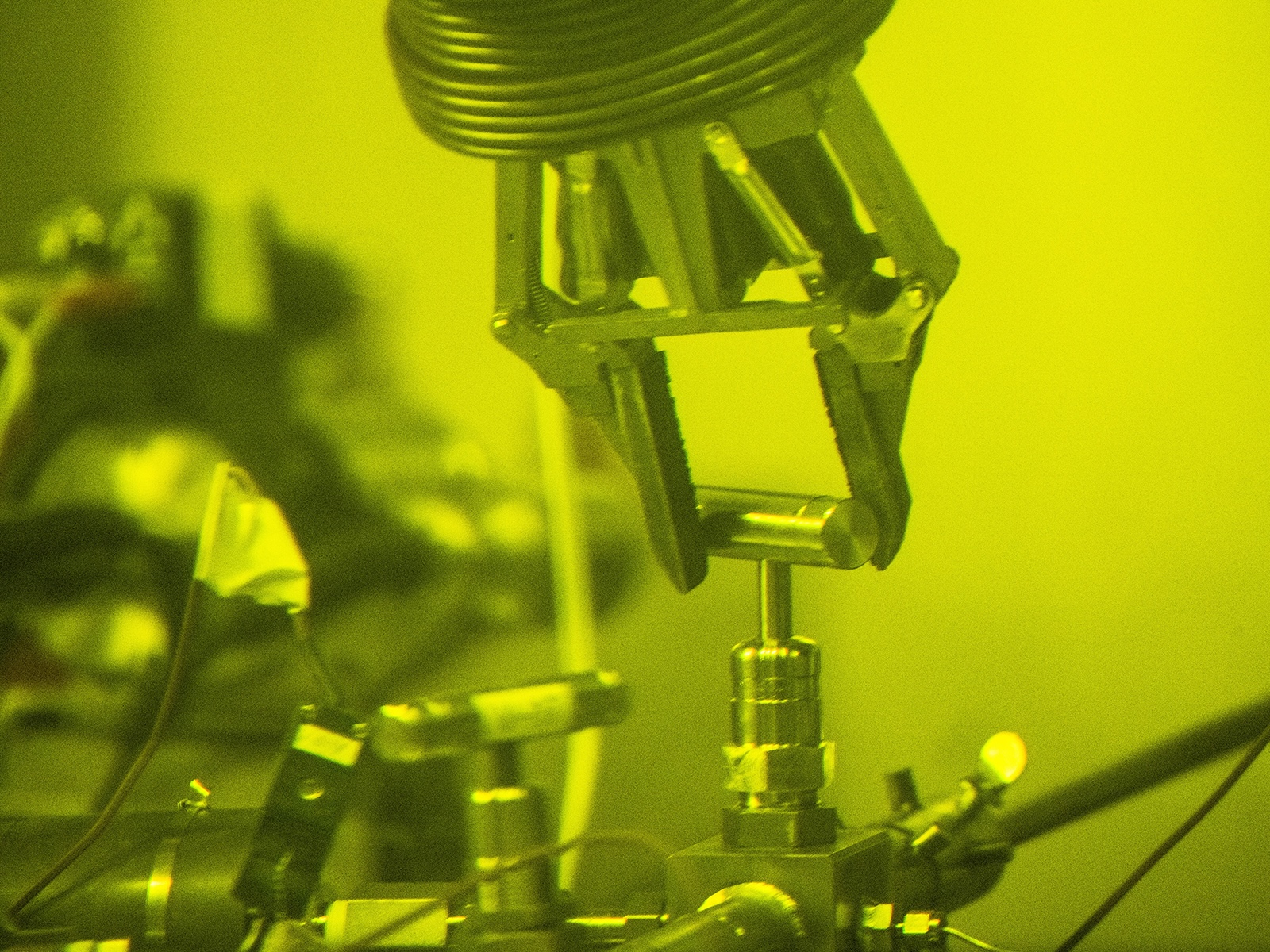
Inside a hot cell in PNNL's Radiochemical Processing Laboratory, a manipulator grasps and twists the tool to puncture the metal cladding of a spent fuel rod. The cladding surrounds the uranium pellets, allowing researchers to measure the amount of xenon and krypton gases released. (Photo by Andrea Starr | Pacific Northwest National Laboratory)

Focus Area Lead: Brady Hanson

The United States has 94 operating commercial nuclear reactors—all light-water reactors (LWRs) and almost all have had their original 40-year operating licenses extended by 20 years. A majority of the currently proposed small modular reactor (SMR) designs are LWR-based.

These bring technical challenges associated with fuels and materials. With the currently proposed LWR-based reactor designs the structures, systems, and components (SSCs) of the nuclear power plants need to serve longer service lifetimes, higher power output, and increased neutron and radiation damage. All SSCs, from the reactor pressure vessels to the reactor core and primary systems (such as steam generator tubes), plus the concrete, cables, fuel, and cladding either need new designs, improved materials, or innovative repair and mitigation technologies.

The Light-Water Reactor Materials focus area concentrates on pioneering transformative R&D to develop, characterize, and qualify advanced materials for existing and advanced LWRs. Pacific Northwest National Laboratory (PNNL) supports the nuclear industry in efficiently and rapidly deploying cutting-edge nuclear materials that enhance both safety and economic performance. At PNNL, we do this by combining premier capabilities with expertise in key areas including:

  • Post-irradiation examination (PIE), microstructural and mechanical characterization of fuels and structural materials.
  • Innovative testing and characterization methods—from atomic- to engineering‑scale—to accelerate qualification of materials prior to irradiation.
  • Advanced materials development, leveraging capabilities from traditionally non‑nuclear mission areas.
  • Advanced modeling and computational tools to assess ideas, prioritize approaches, and analyze prospective solutions.

CINEMa Page Break

Advanced Reactor Materials

Advanced Reactor Materials
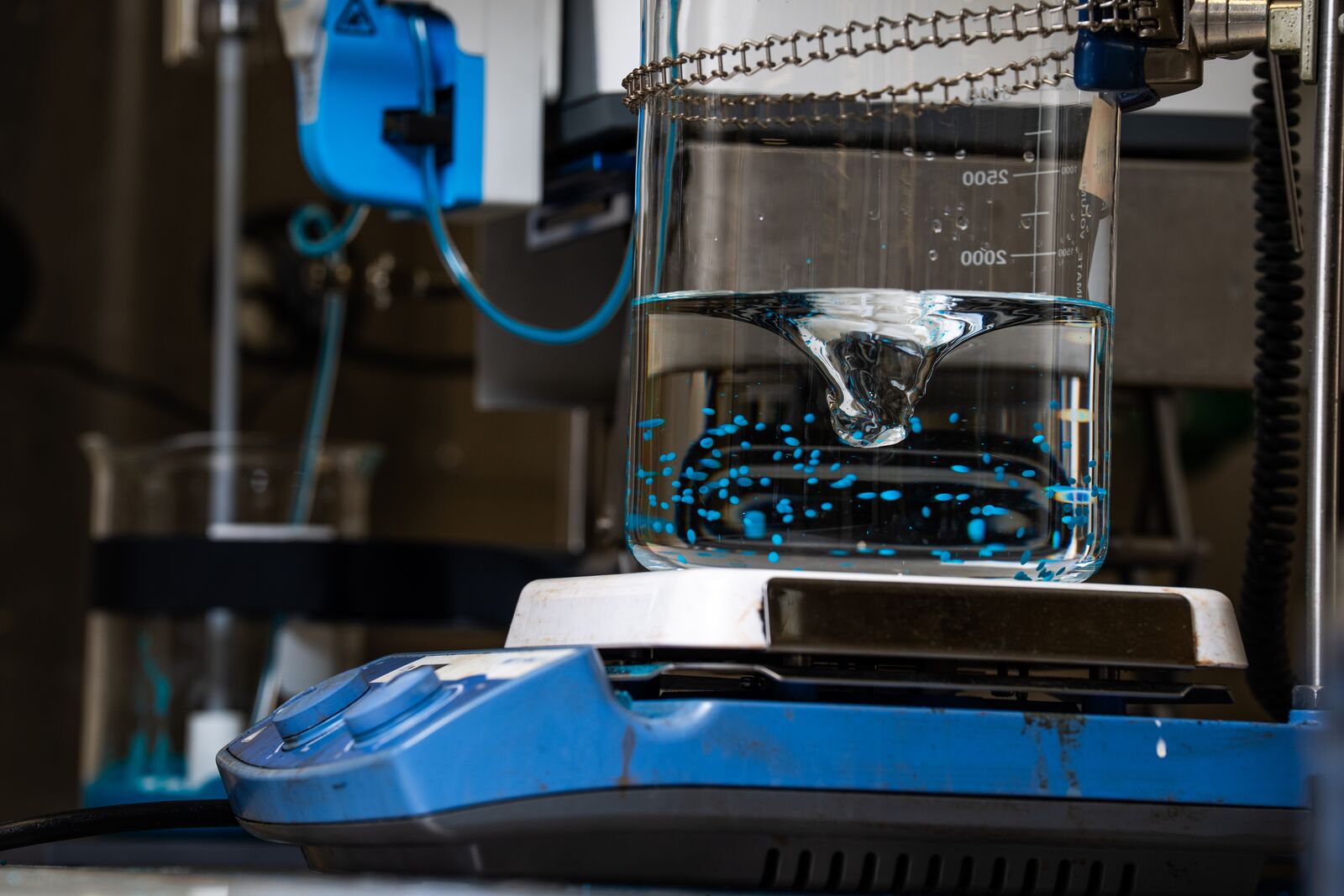
Metal Organic Frameworks (MOFs) are used for nuclear energy applications, including molten salt reactors and capturing noble gases like xenon for commercial applications. (Photo by Andrea Starr | Pacific Northwest National Laboratory)

Focus Area Lead: Stuart Maloy

The Advanced Reactor Materials focus area develops innovative and impactful research for the identification, characterization, and qualification of materials for advanced non-light water reactors.

This focus area supports the nuclear industry by providing PNNL's expertise in nuclear materials development, coupled with advanced characterization facilities to develop and test improved radiation tolerant materials for these extreme environments. By developing materials with improved performance in extreme environments, we aim to advance the deployment of non-light-water reactors such as molten salt, sodium, lead, and high-temperature gas.

R&D focus areas for fission and fusion reactors include:

  • material identification and design
  • material development
  • component design
  • material characterization
  • material qualification

CINEMa Page Break

Integrated Nuclear Energy Materials Manufacturing 
Integrated Nuclear Energy Materials Manufacturing
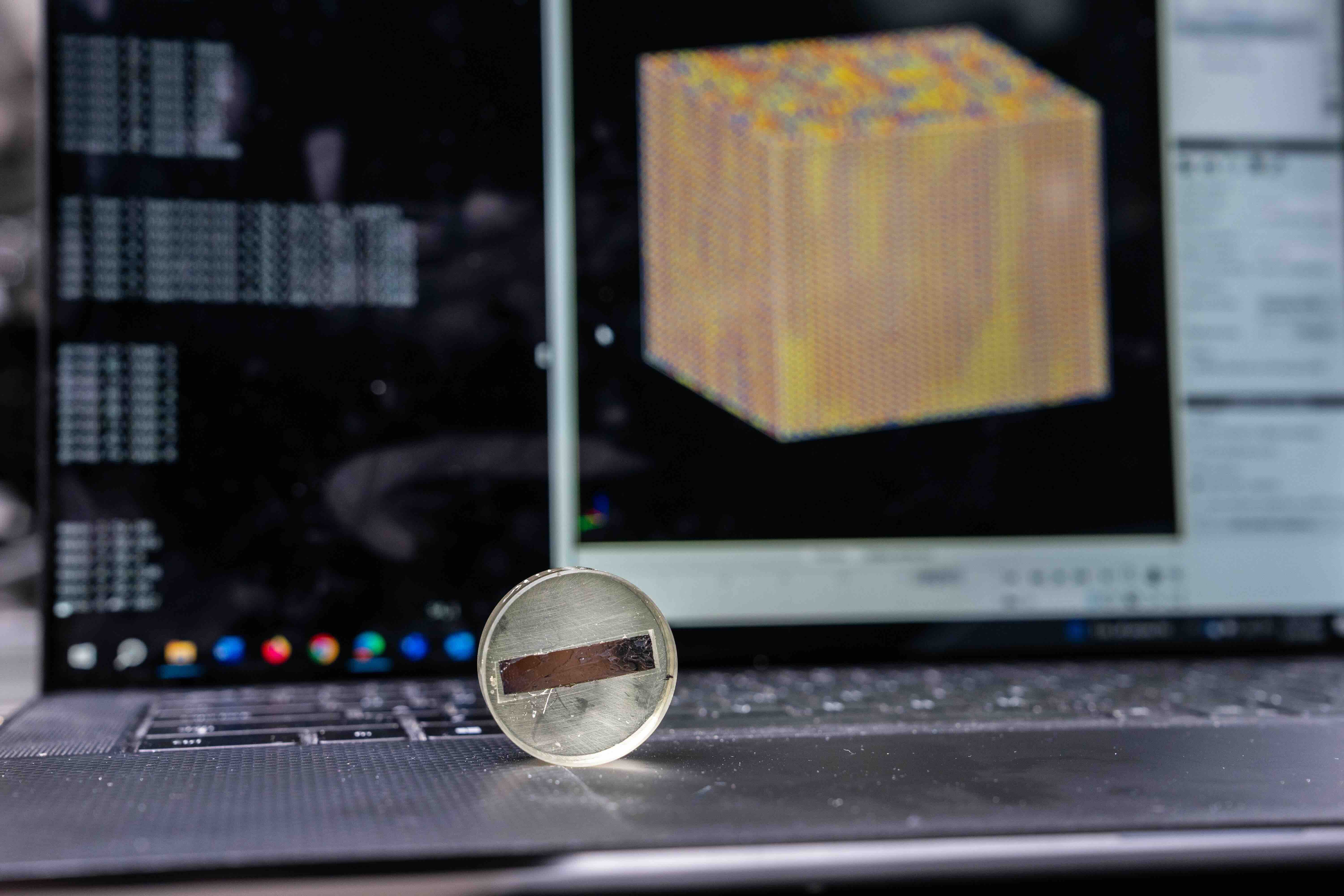
PNNL researchers modeled different combinations of the elements in an alloy used in nuclear reactors to narrow in on a composition that might offer the same benefits while reducing dependence on the critical material cobalt. The researchers then produced the modified alloy and used experimental validation to test its performance. (Photo by Andrea Starr | Pacific Northwest National Laboratory)

Focus Area Lead: Isabella van Rooyen

The Integrated Nuclear Energy Materials Manufacturing focus area is pioneering methods to leverage integrated material and component design for enhanced properties, through enabling multi-scale techniques to accelerate adoption within the full nuclear product lifecycle. Our objectives are to accelerate qualification of new material systems to meet the stringent demands of the nuclear energy industry, decrease the nation’s reliance on internationally sourced critical materials, and increase efficiency throughout the product and manufacturing lifecycle.

Our multi-disciplinary teams have customized solutions by integrating comprehensive material science expertise, proven applied experience in multiple manufacturing technologies, and tailored characterization with testing requirements through machine learning (ML) and modeling. By implementing smart methods of in-situ monitoring, streamlining inspection techniques, and applying new hybrid manufacturing techniques we help accelerate the development and testing process to enable rapid, relevant, and efficient decision-making and readiness for scale-up to deployment.

Unique to PNNL's advanced materials and manufacturing capabilities is the solid phase processing, wherein raw material product form and morphology are considered advantages for achieving performance due to the adaptability and reimagination through specialized sequenced or hybrid processes. Therefore, current supply chain constraints can be minimized through adaptability and flexibility of solutions.

The R&D focus areas which are leveraging artificial intelligence (Al)/ML include:

  • material and method identification and design
  • integrated material development
  • multi-scale modeling and testing
  • manufacturing, from lab-scale proof-of-concept to upscaling
  • qualification processes

CINEMa Page Break

Fusion Energy Sciences

Fusion Energy Services
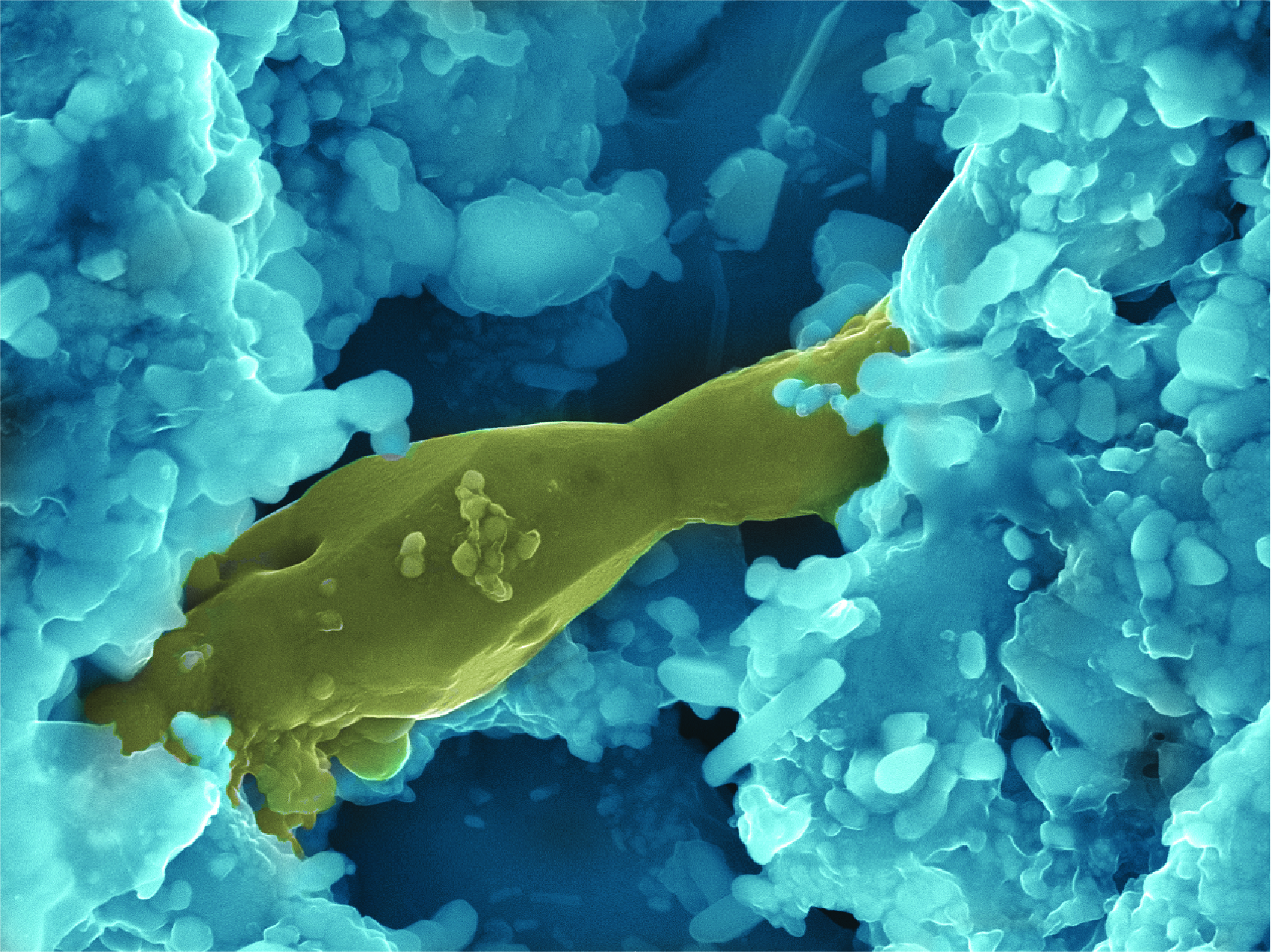
PNNL researchers study tungsten-copper composites as a model material for use in a futuristic clean energy source—nuclear fusion reactors. This image, captured with a field emission scanning electron microscopy, demonstrates how the copper (green feature in image) acts as a bridge—helping to hold the tungsten (blue objects) together and prevent cracking. (Image by Nicole Overman | Pacific Northwest National Laboratory)

Focus Area Lead: Maria Sushko

Fusion energy occurs when two nuclei combine in plasma, forming an entirely new atom in the process. Scientists at PNNL are working to harness the energy produced by fusion as an alternative form of power generation to produce electricity. Fusion reactors are limited by materials that can withstand the extreme conditions fusion creates.

PNNL’s unique scientific capabilities are helping advance fusion energy in several areas, including materials design for harsh environments, mechanical testing under realistic conditions, irradiated material handling and characterization, microscopy and microanalysis, tritium science, advanced manufacturing, high-performance computing, and machine learning.

PNNL’s research, which is supported by the Department of Energy, Office of Science, Fusion Energy Sciences Program, focuses on developing durable fusion energy reactor materials. PNNL is advancing the field of fusion reactor materials research through new techniques to develop materials that can withstand extreme operating conditions.

PNNL’s approach relies on a tight coupling between theory, experiments, and computation that leads to deeper insights into the performance of materials. PNNL leverages its solid phase processing capabilities to enable scalable, cost-effective fabrication of fusion reactor materials such as tungsten alloys and composites, oxide dispersion strengthened steel, vanadium alloys, nickel, and palladium coating. Each of these materials play a central role in fusion reactor design because they can resist radiation damage, erosion, and thermal shock.

CINEMa Page Break

Contact Us

Connect with us at cinema@pnnl.gov to explore potential research partnerships.

Contact

Andy Casella
Nuclear Engineer; Director, CINEMa/Advanced Nuclear Materials Directorate Objective
andrew.casella@pnnl.gov
(509) 375-5110

PNNL

  • Get in Touch
    • Contact
    • Careers
    • Doing Business
    • Environmental Reports
    • Security & Privacy
    • Vulnerability Disclosure Policy
    • Notice to Applicants
  • Research
    • Scientific Discovery
    • Energy Resiliency
    • National Security
Subscribe to PNNL News
Department of Energy Logo Battelle Logo
Pacific Northwest National Laboratory (PNNL) is managed and operated by Battelle for the Department of Energy
  • YouTube
  • Facebook
  • X (formerly Twitter)
  • Instagram
  • LinkedIn