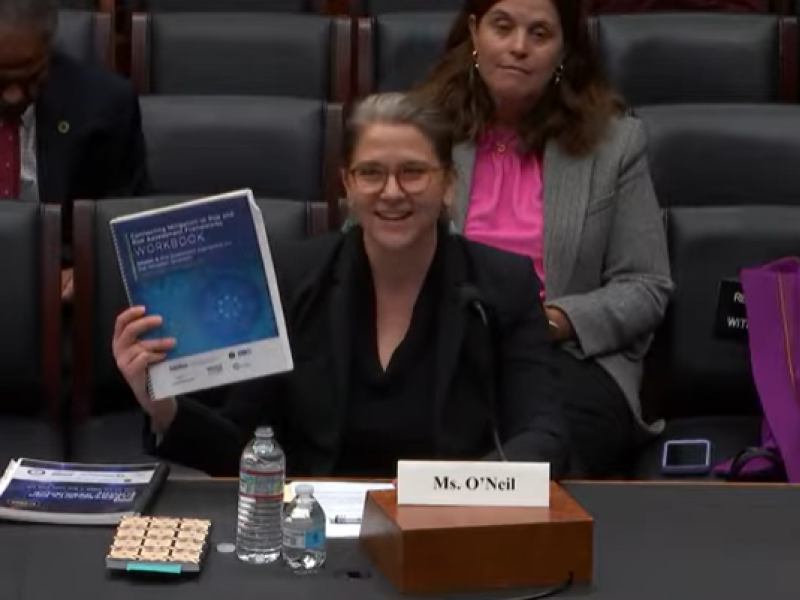
Rebecca O’Neil, a research principal in the Energy and Environment Directorate at PNNL, was invited to testify before the House Committee on Energy and Commerce’s Subcommittee on Energy.
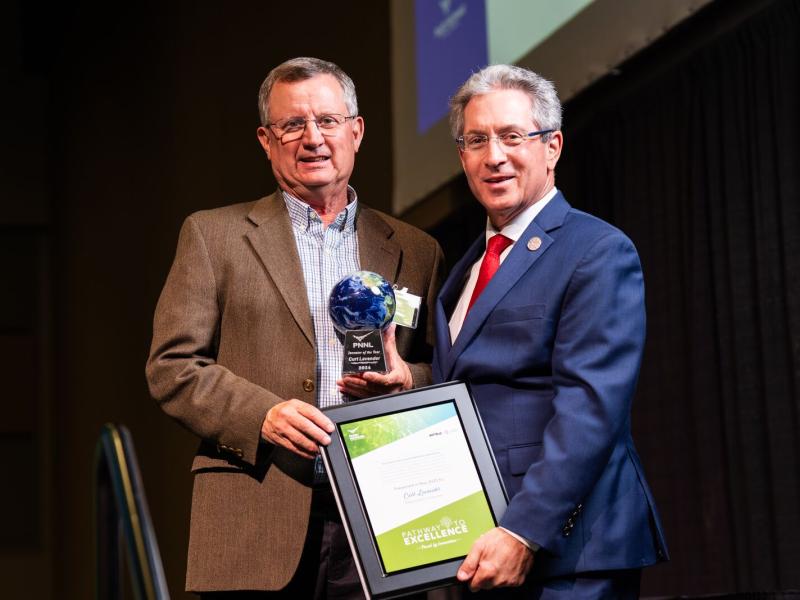
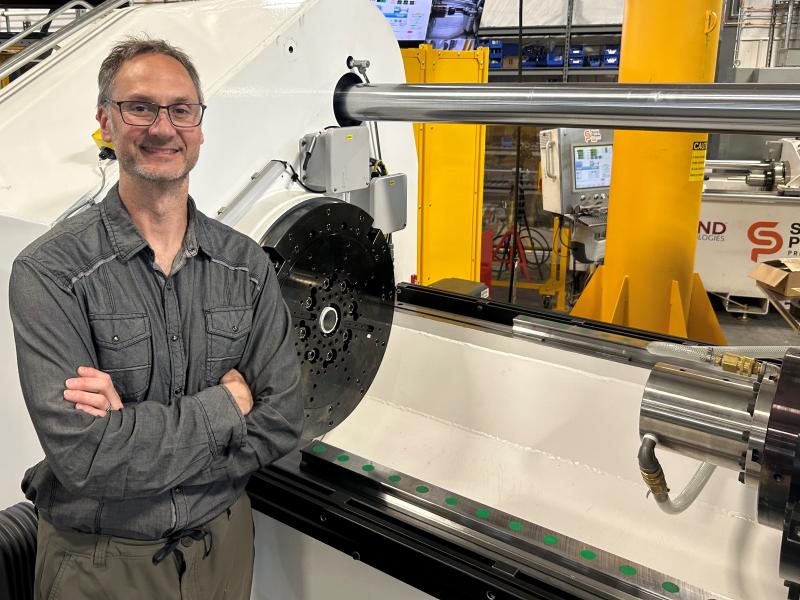
From vehicles and airplanes to solid-phase processing of metals—how Curt Lavender and his team at PNNL solve industry problems with practical ingenuity.
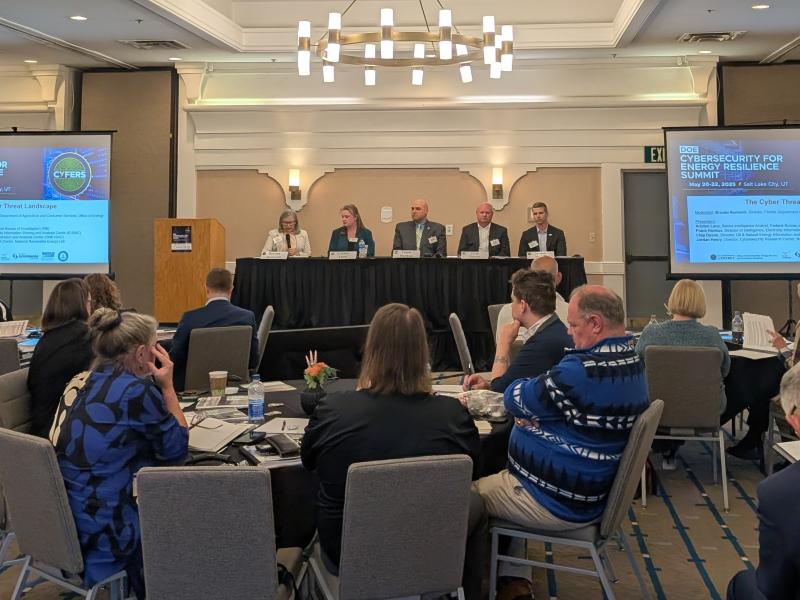
CESER and PNNL convened a three-day summit with more than 100 state officials, cybersecurity experts, and industry leaders across 35 states to advance energy security planning, cyber risk assessment, and fortify protections against attacks.
Danny Herrera, a systems engineer and leader in the National Security Directorate at PNNL, has been named the new co-director of the Institute for Cybersecurity and Resilient Infrastructure Studies.
PNNL’s patented Shear Assisted Processing and Extrusion (ShAPE™) technique is an advanced manufacturing technology that enables better-performing materials and components while offering opportunities to reduce costs and energy consumption.
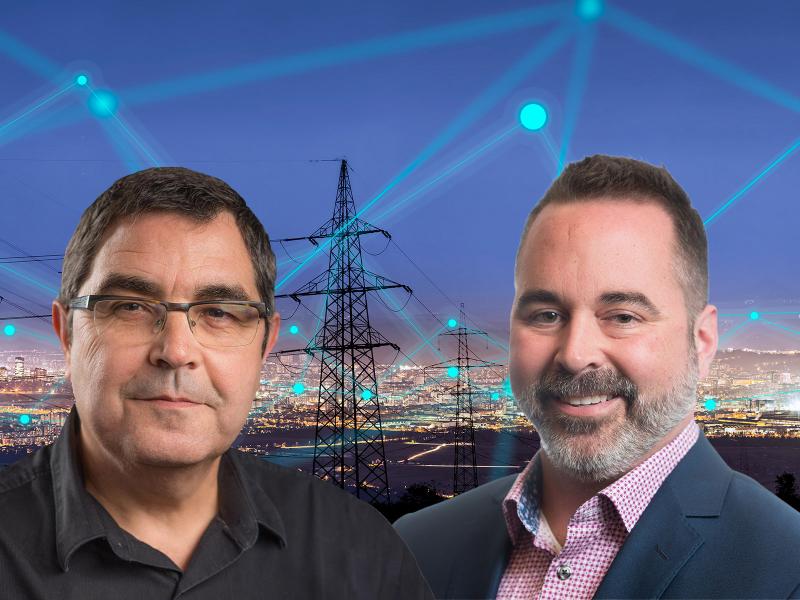
PNNL computing experts Robert Rallo and Court Corley contribute their knowledge to a recent DOE report on applications of AI to energy, materials, and the power grid.
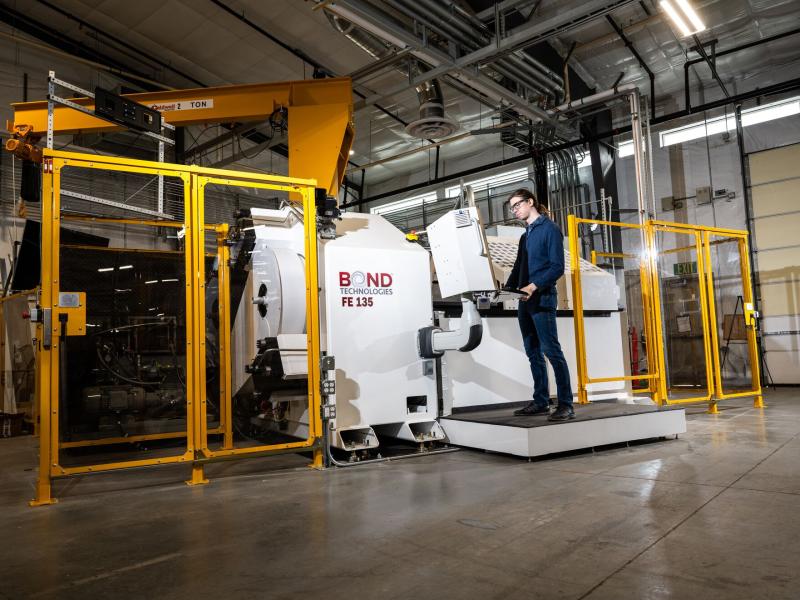
The next-generation ShAPE machine has arrived at PNNL, where it will help prove the mettle of the ShAPE extrusion technique. ShAPE 2 is designed to allow researchers to produce larger, more complex extrusions.
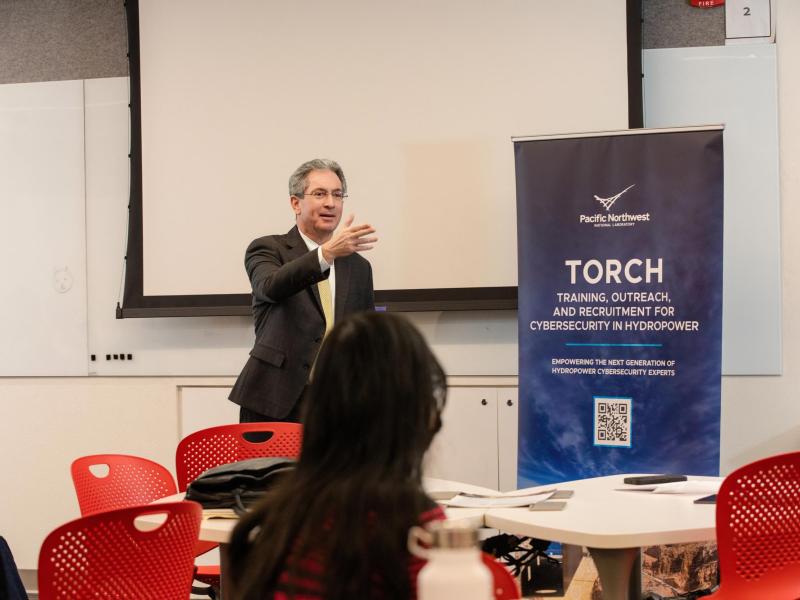
Pacific Northwest National Laboratory launches the Training Outreach and Recruitment for Cybersecurity Hydropower program at the University of Texas at El Paso.
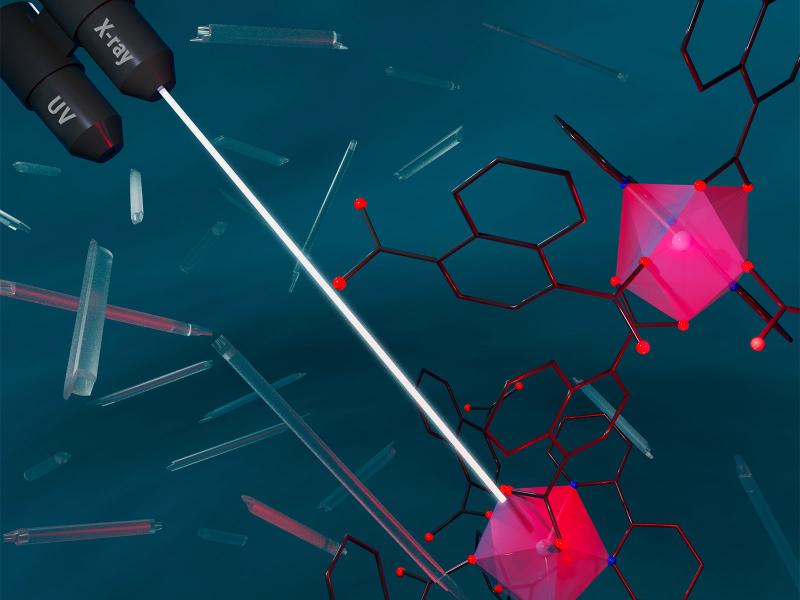
Making it on CrystEngComm’s HOT list, the article, “Designing scintillating coordination polymers using a dual-ligand synthetic approach,” highlights research on existing materials that are non-traditional scintillators.