Researchers at PNNL share a research- and practitioner-informed approach to assess the threat landscape, elicit and integrate feedback into solutions, and ultimately share outcomes with the emergency response and public safety community.
From developing new energy storage materials to revealing patterns of Earth’s complex systems, studies led by PNNL researchers are recognized for their innovation and influence.
A breakthrough at PNNL could free friction stir from current constraints—and open the door for increased use of the advanced manufacturing technique on commercial assembly lines.
The ability of a storm-resolving weather model to predict the growth of storms over central Argentina was evaluated with data from the Clouds, Aerosols, and Complex Terrain Interactions (CACTI) field campaign in central Argentina.
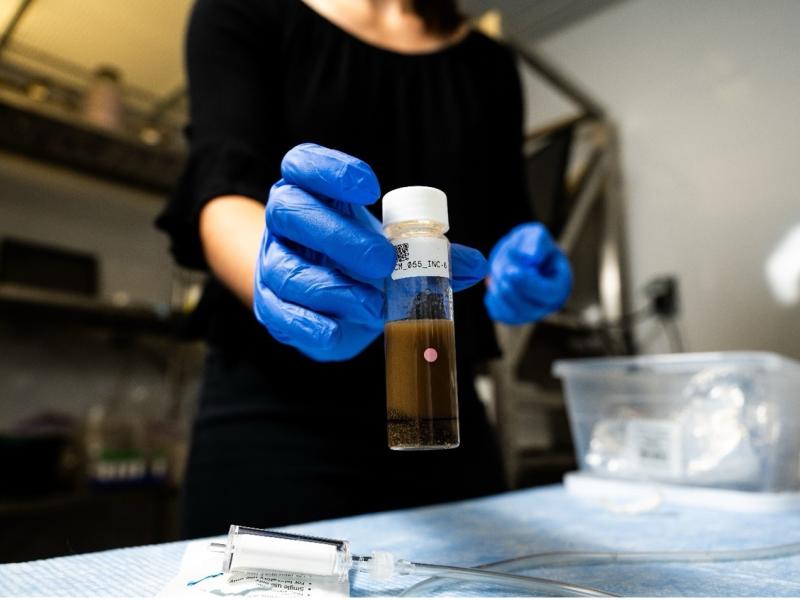
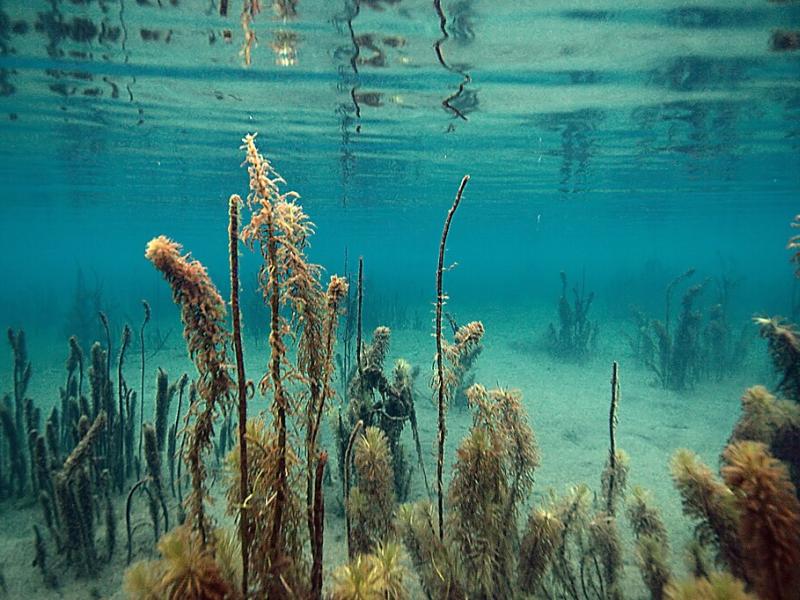
Researchers from PNNL and Parallel Works, Inc., applied machine learning methods to predict how much oxygen and nutrients are used by microorganisms in river sediments.
The rate of conversion of cloud droplets to precipitation, known as the autoconversion rate, remains a major source of uncertainty in characterizing aerosol’s cloud lifetime effects and precipitation in global and regional models.
Two new publications provide emergency response agencies with critical insights into commercially available unmanned ground vehicles used for hazardous materials response.
To assess the impact of observation period and gauge location, model parameters were learned on scenarios using different chunks of streamflow observations.
PNNL's E-COMP initiative is helping unleash American energy innovation with advanced theories, models, and software tools to better operate power systems that rely heavily on high-speed power electronic control.
This study presents an automated method to detect and classify open- and closed-cell mesoscale cellular convection (MCC) using long-term ground-based radar observations.
By combining computational modeling with experimental research, scientists identified a promising composition that reduces the need for a critical material in an alloy that can withstand extreme environments.
A team from PNNL contributed several articles to the Domestic Preparedness Journal showcasing recent efforts to explore the emergency management and artificial intelligence research and development landscape.
A team of researchers recently coordinated a series of international workshops aimed at enhancing chemical research security and fostering collaboration among scientists and academic researchers from both countries.
Over the past three years, PNNL’s Know Your Collaborator (KYC) workshop series has engaged hundreds of academic partners and institutional researchers internationally on the topic of research security.
PNNL researchers have developed a new, physics-informed machine learning model that accurately predicts how heat accumulates and dissipates during friction stir processing.