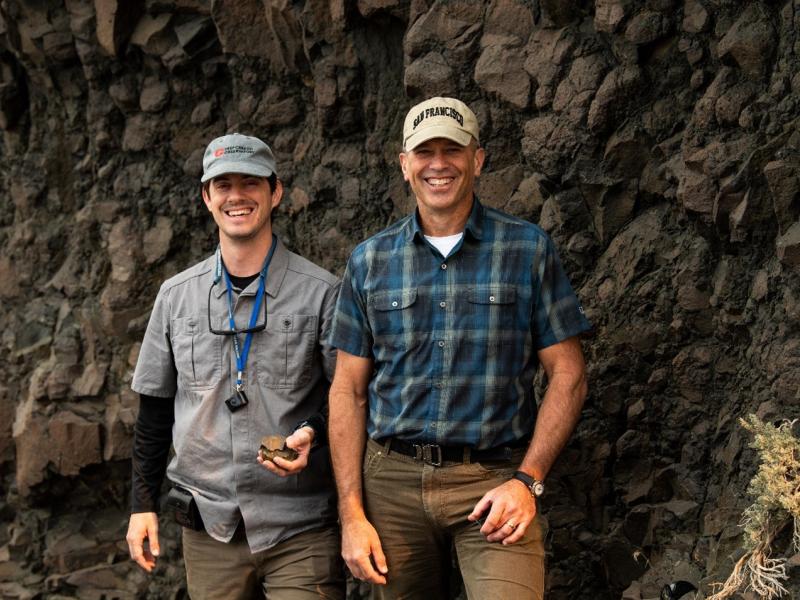
A decade after working as a post-bachelor’s researcher at PNNL, chemist Quin Miller is helping develop the workforce for the critical minerals-focused mines of the future.
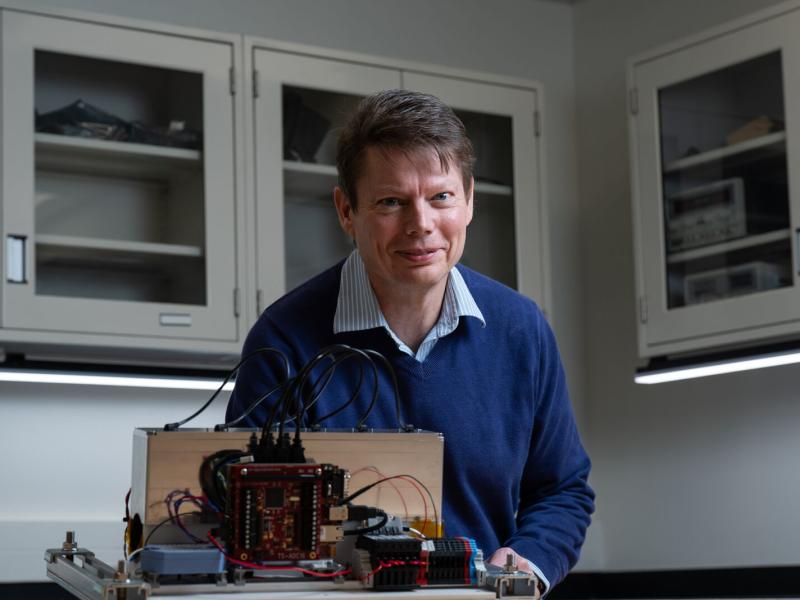
The PNNL-developed UF6 Gas Enrichment Sensor (UGES) prototype is the next generation of a previous enrichment monitoring device—namely the Online Enrichment Monitor. UGES will increase the accuracy of uranium measurements.
Researchers at PNNL share a research- and practitioner-informed approach to assess the threat landscape, elicit and integrate feedback into solutions, and ultimately share outcomes with the emergency response and public safety community.
Peter Heine, senior advisor in the Strategic Threat Analysis group at PNNL, recently travelled to Brussels, Belgium, to support the World Customs Organization's Operation Stingray.
A team of researchers at PNNL has received the 2025 National Nuclear Security Administration CIO Award for developing an innovative solution to enhance secure communications.
David Heldebrant was selected for the 2025 Distinguished Service Award from the American Chemical Society Division of Energy & Fuels, recognizing his impact to energy and fuels chemistry.
Through an unprecedented collaboration with Idaho, Savannah River, and Argonne national laboratories, the Athena Project has built a network of nearly 150 scientists.
Aaron Luttman and Jonathan Forman represented PNNL at the high-profile "Risk and Reduction Science and Policy Forum" organized by Johns Hopkins University and supported by the Defense Threat Reduction Agency.
Two new publications provide emergency response agencies with critical insights into commercially available unmanned ground vehicles used for hazardous materials response.
PNNL's E-COMP initiative is helping unleash American energy innovation with advanced theories, models, and software tools to better operate power systems that rely heavily on high-speed power electronic control.
CO2 separation is key for natural gas purification, but conventional techniques are high-emission processes. New research reveals a novel, doubly segmented, CO2-selective membrane that increases CO2 permeability and reduces emissions.