The Hanford Site is now immobilizing radioactive waste in glass: a process known as vitrification. PNNL contributed 60 years of materials science expertise—and is providing operational support—to help the nation meet this cleanup milestone.
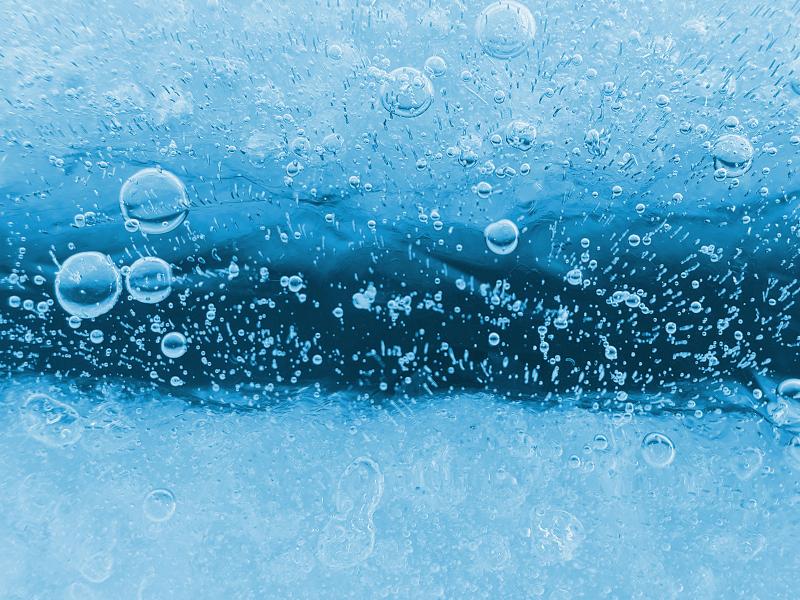
Ice crystals are surprisingly tolerant of defects in their structure. The findings come from the first-ever molecular-resolution observations of nanoscale samples of ice frozen from liquid water.
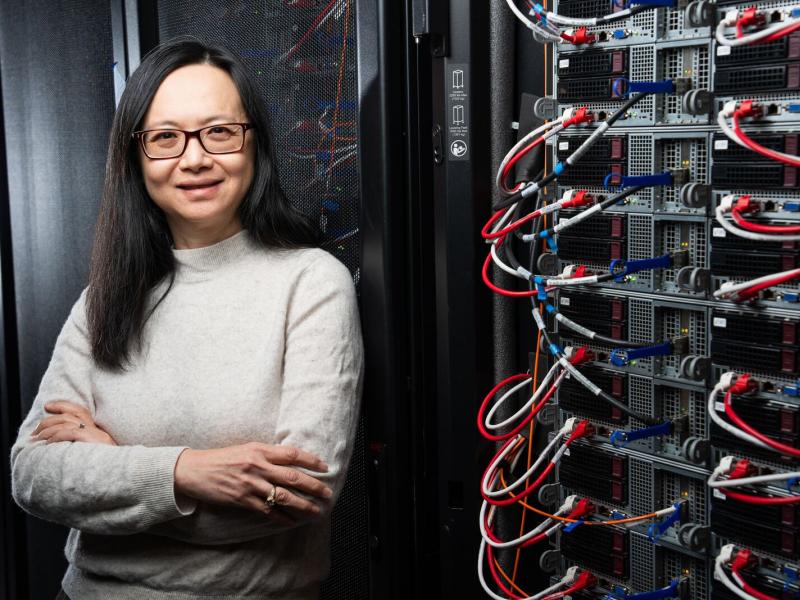
Chemist Wendy Shaw, a nationally recognized scientific leader, has been chosen to serve as the associate laboratory director for PNNL's Physical and Computational Sciences Directorate.
Chemist Zheming Wang is the newest AAAS Fellow, joining the ranks of astronaut Mae Jemison, and Steven Chu, 1997 Nobel laureate in physics who served as the 12th U.S. Secretary of Energy.
PNNL and one of the world’s largest tire makers will work to develop a commercially viable process that converts ethanol derived from sustainable sources or waste, like recycled tires, to butadiene, synthetic rubber’s main ingredient.
Rechargeable battery performance could be improved by a new understanding of how batteries work at the molecular level. Researchers at PNNL upend what's known about how rechargeable batteries function.
PNNL scientists carve a path to profit from carbon capture by creating a system that efficiently captures CO2 and converts it into one of the world’s most widely used chemicals: methanol.