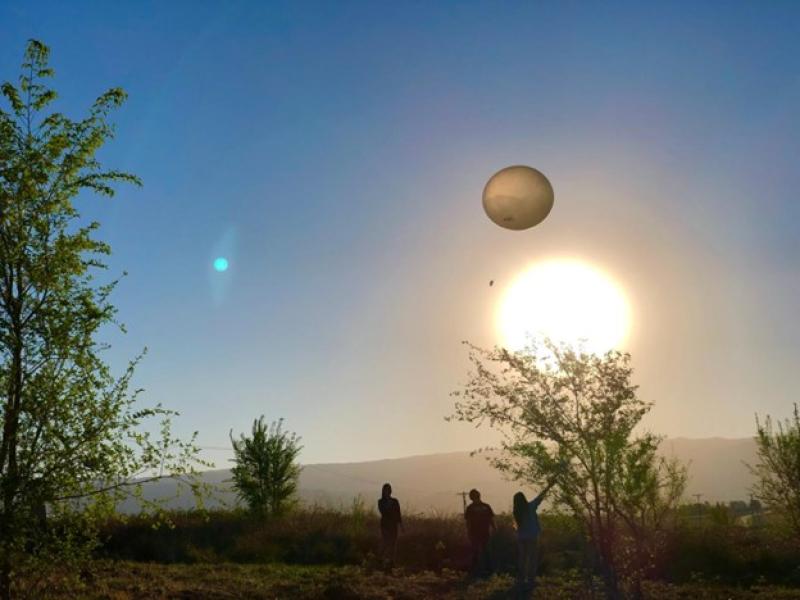
Partitioning measured ice nucleating particle concentrations into individual particle types leads to a better understanding of the sources and model representations of these particles.
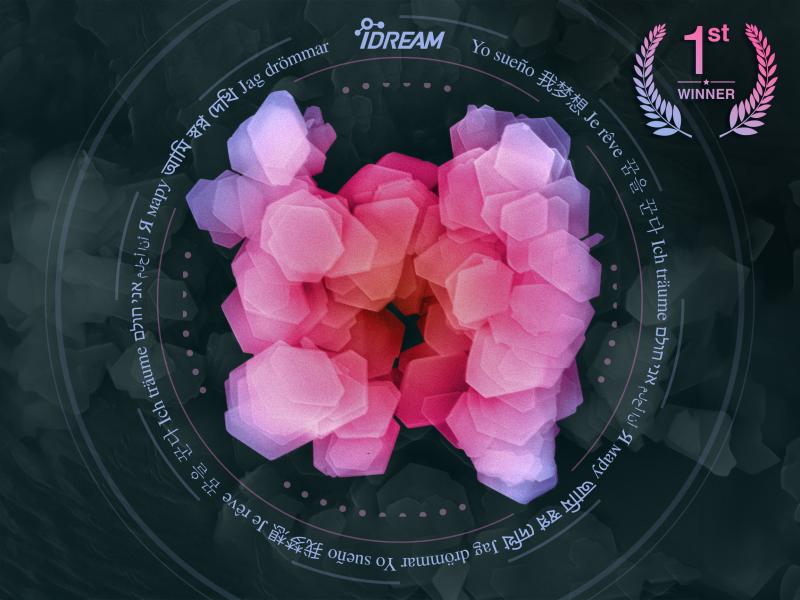
A poem inspired by radioactive tank waste—“Can a Scientist Dream it Alone?”—was awarded first place in the Department of Energy’s Poetry of Science Art Contest.
Researchers from Pacific Northwest National Laboratory created and embedded a physics-informed deep neural network that can learn as it processes data.
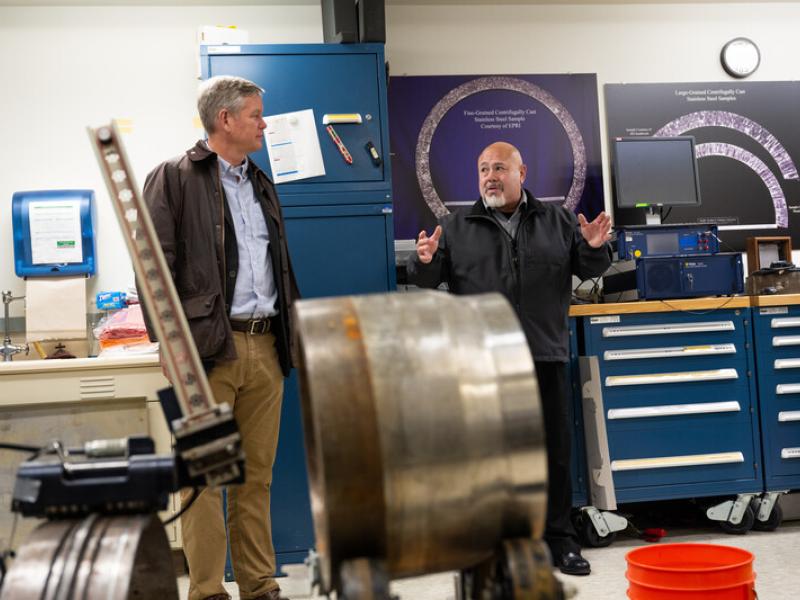
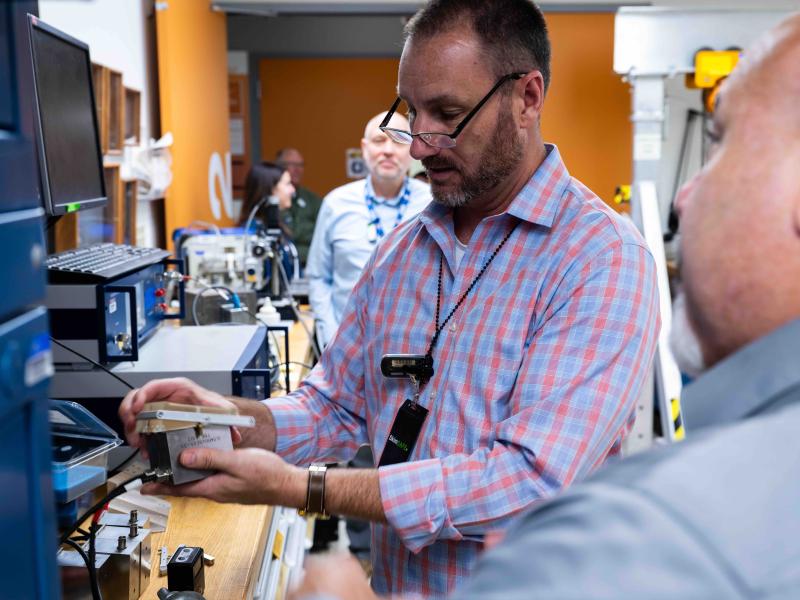
Bradley Crowell with the U.S. Nuclear Regulatory Commission sees advanced materials integrity, radiological measurement, and environmental capabilities on his first visit to PNNL.
Randomly constructed neural networks can learn how to represent light interacting with atmospheric aerosols accurately at a low computational cost and improve climate modeling capabilities.
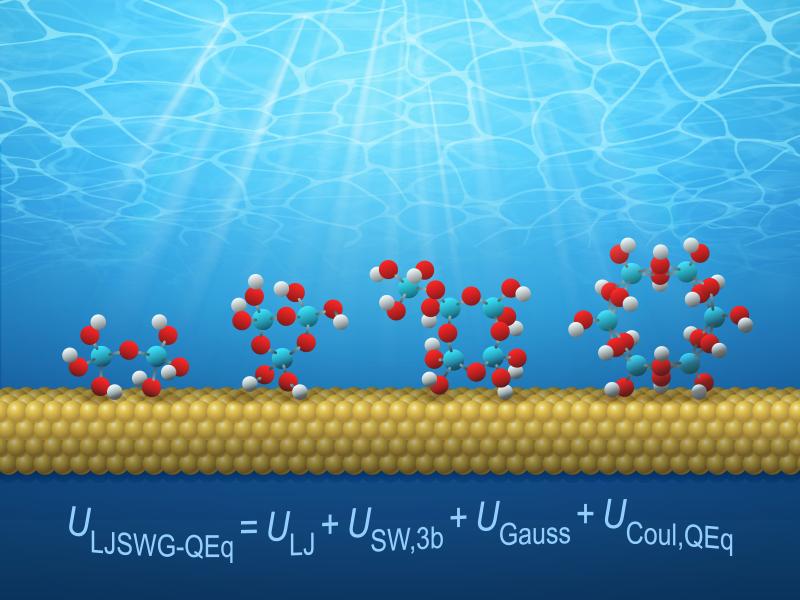
IDREAM research shows that keeping only the most important two- and three-body terms in reactive force fields can decrease computational cost by one order of magnitude, while preserving satisfactory accuracy.
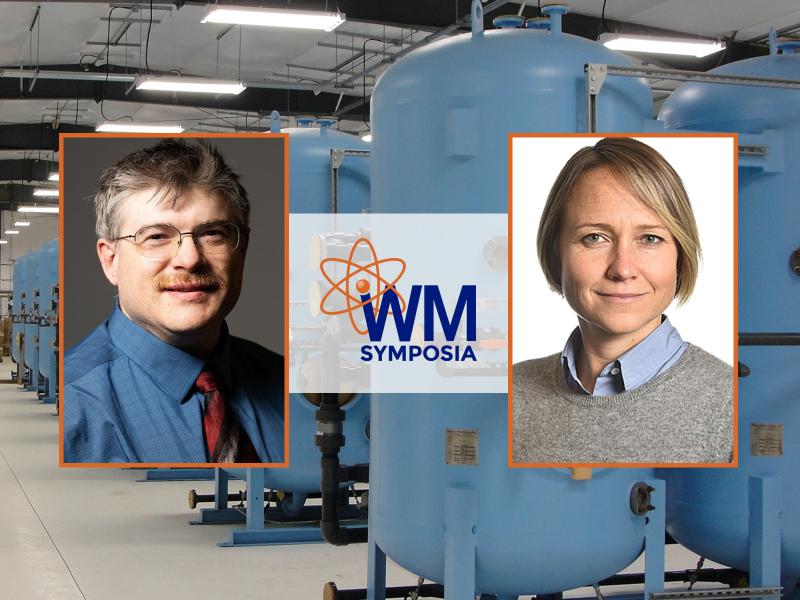
Waste Management Symposia ‘Paper of Note’ and ‘Superior Paper’ awards recognize PNNL contributions to advancing radioactive waste and materials management.
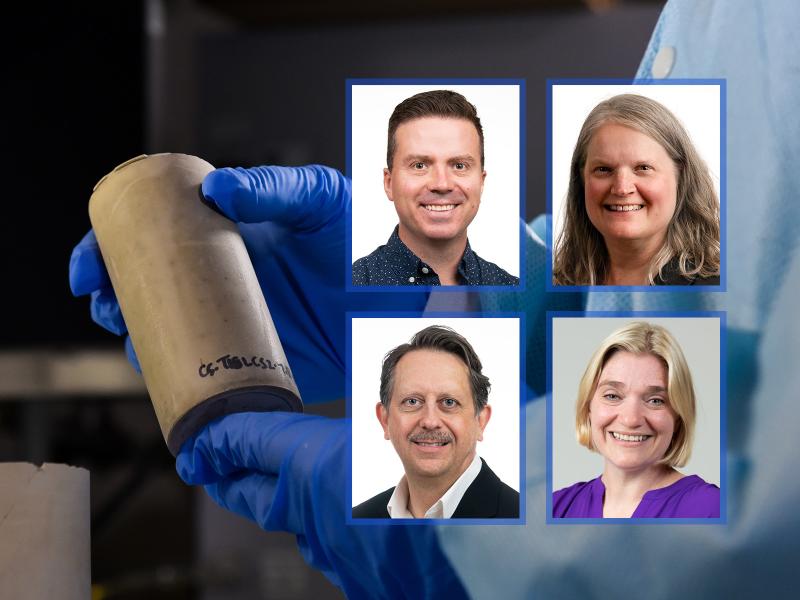
Team brought experience in nuclear waste forms and regulatory policies to the Federally Funded Research and Development Center’s report, which was reviewed by a National Academies’ committee.
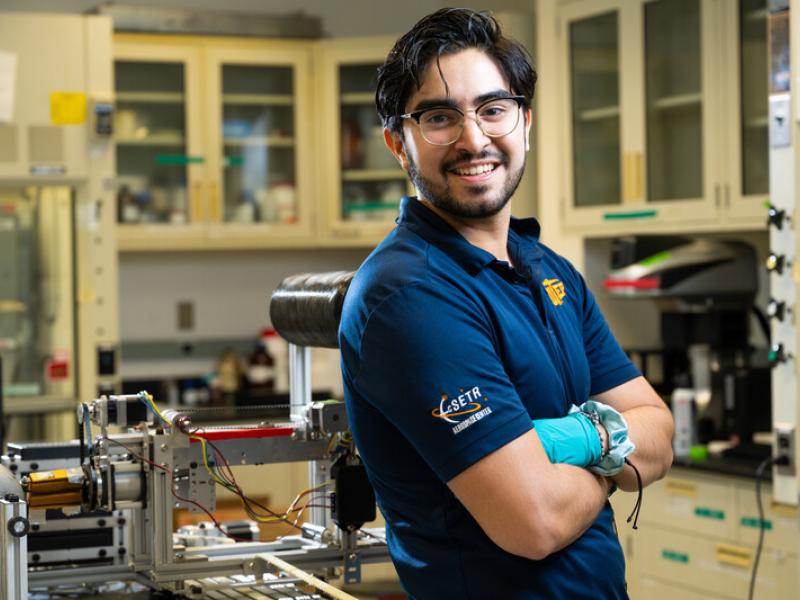
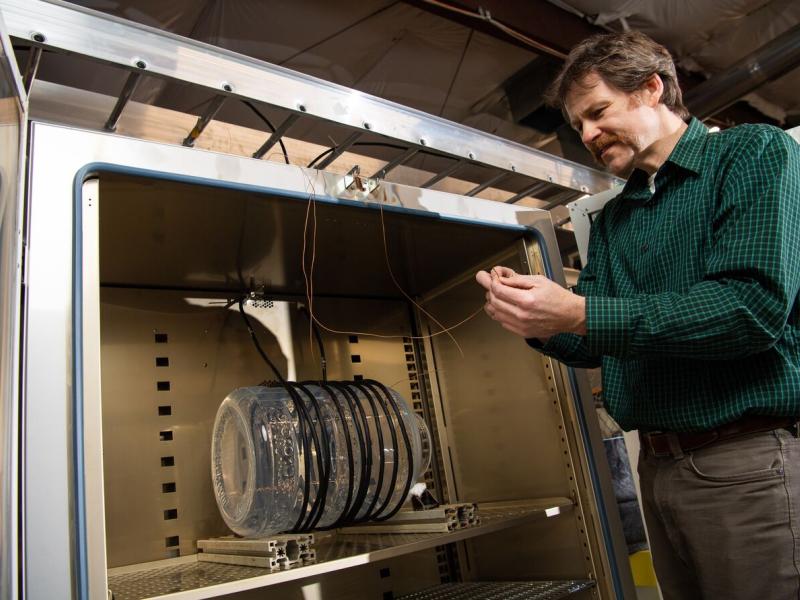
PNNL’s ARENA test bed analyzes how electrical cables degrade in extreme environments and how nondestructive examination inspection technologies can detect and locate damage.
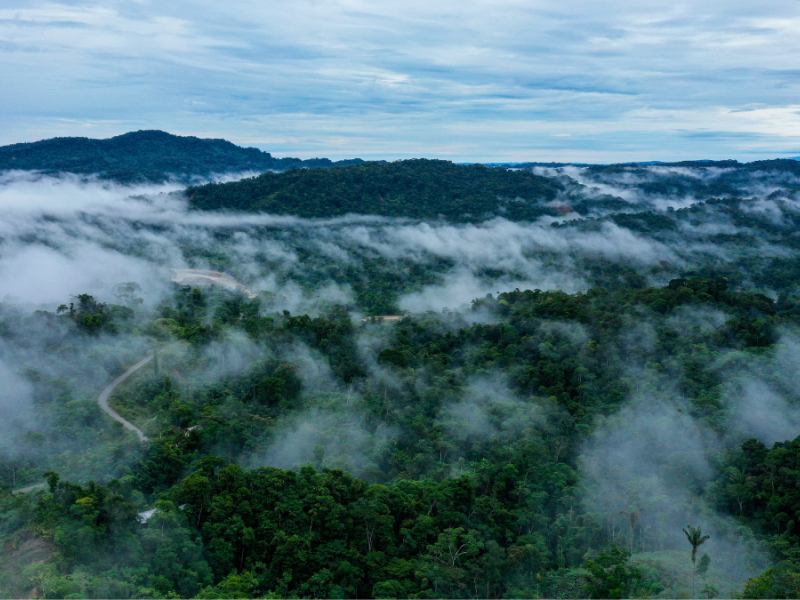
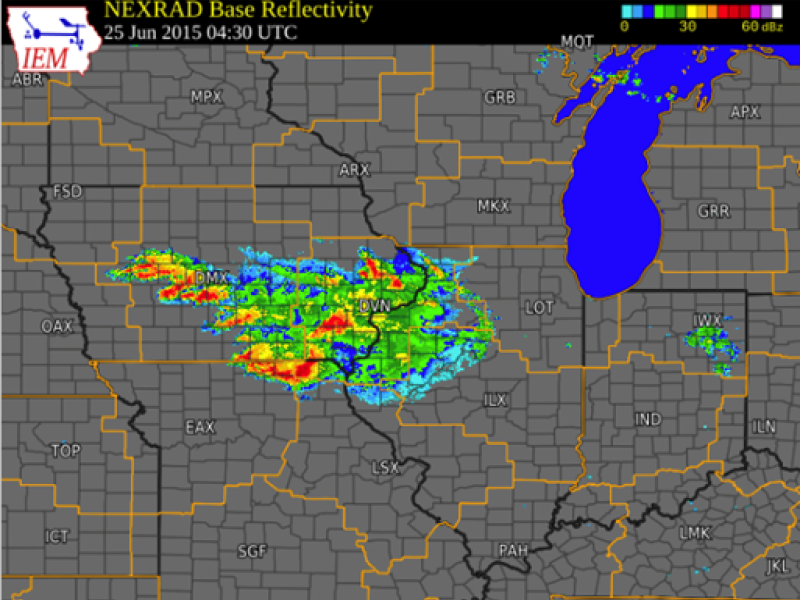
Assessing observed weather conditions that support or suppress the growth of clouds into deep precipitating storms during the Cloud, Aerosol, and Complex Terrain Interactions experiment.