Controlling the nanostructure of silk fibroin—a protein found in silk—is a key step toward designing and fabricating electronics that leverage the material’s promising mechanical, optical and biocompatible properties.
The Pacific Northwest Association of Toxicologists (PANWAT) presented its annual Toxicology Achievement Award to Katrina Waters at the Society of Toxicology Pacific Northwest Chapter Meeting, held in Lynnwood, Washington, on September 30th.
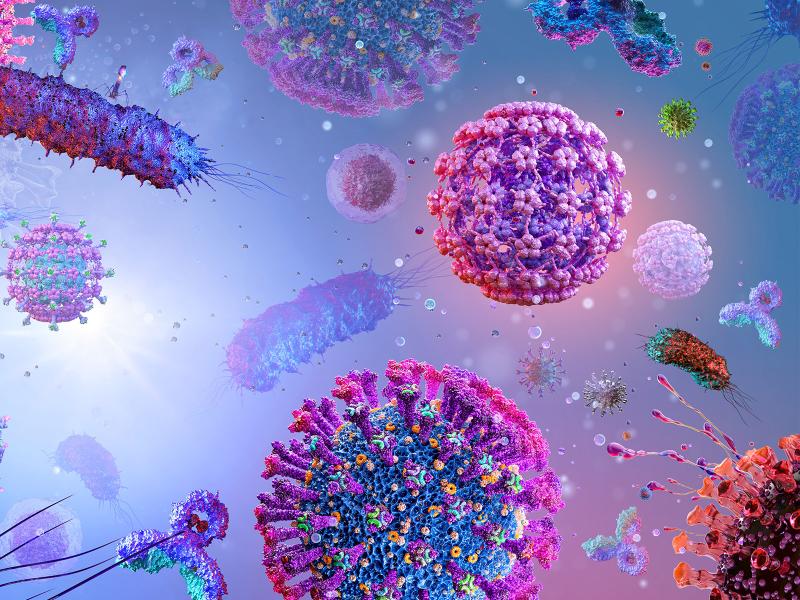
PNNL biodefense experts seek to identify, understand and mitigate the risks of biological pathogens—whether naturally occurring or intentionally created—so steps can be taken to prepare and respond.
Neeraj Kumar discusses how AI can transform scientific research at the Platform for Advanced Scientific Computing Conference and Trillion Parameter Consortium European Workshop.
Early life exposure to polycyclic aromatic hydrocarbons (PAHs), found in smoke, has been linked to developmental problems. To study the impacts of these pollutants, PAH metabolism in infants and adults were compared.
Discovering and measuring the spatial organization of proteins within cells allows scientists to map complex proteoforms across tissues with near-cellular resolution.
Tennessee State University received Department of Energy funding to establish an academy focused on preparing students and professionals to work in an emerging field: clean energy systems. PNNL is helping with that effort and others.
The Health Physics Society has selected Jonathan Napier, a PNNL environmental health physicist, to serve as a delegate to the International Radiation Protection Association’s General Assembly.
PNNL helps deliver efficiency-related rules and requirements that steadily improve performance of America’s buildings, saving energy and costs and reducing carbon emissions.