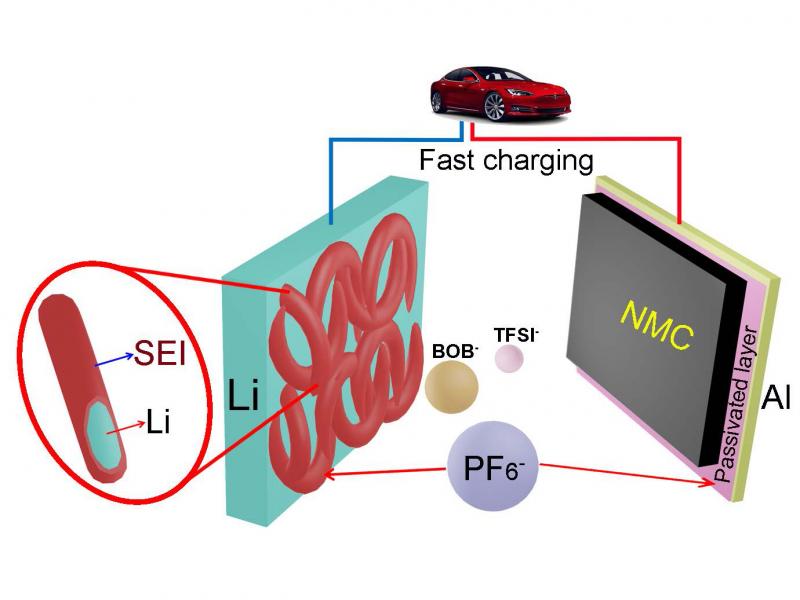
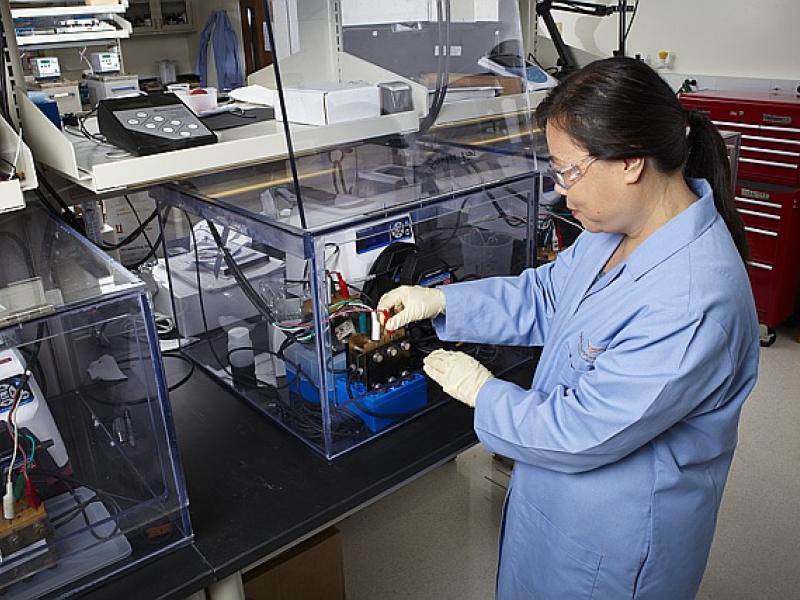
New research shows adding a pinch of chemical additive to a lithium-metal battery's electrolyte helps make rechargeable batteries that are stable, charge quickly, and go longer in between charges.
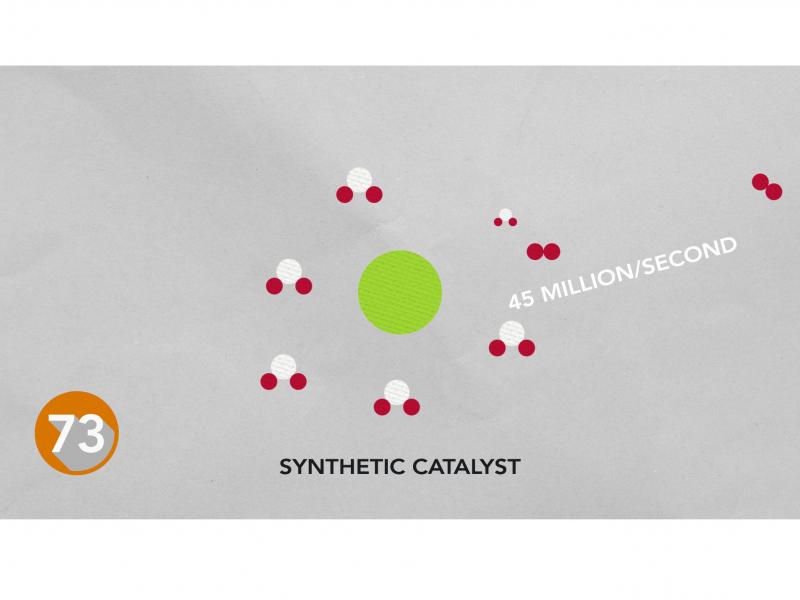
Using a natural catalyst from bacteria for inspiration, researchers have now reported the fastest synthetic catalysts to date for hydrogen production-- producing 45 million hydrogen molecules per second.
In fast-neutron reactors, fuel is sealed in ~7 millimeter diameter steel tubes called cladding. When a high-energy "fast" neutron strikes an atom in the steel, it can knock the atom out of place, like a cue ball striking another billiard ball. This leaves two types of damage in the metal: an empty spot where the atom was, and the displaced atom wedged between other atoms. Over time, these defects typically drive undesirable rearrangement of the microstructure, potentially reducing the life of the cladding.
Steve Jobs said, "Innovation distinguishes between a leader and a follower." That is especially true in research and development. New technologies and creative solutions do not materialize overnight or on their own.
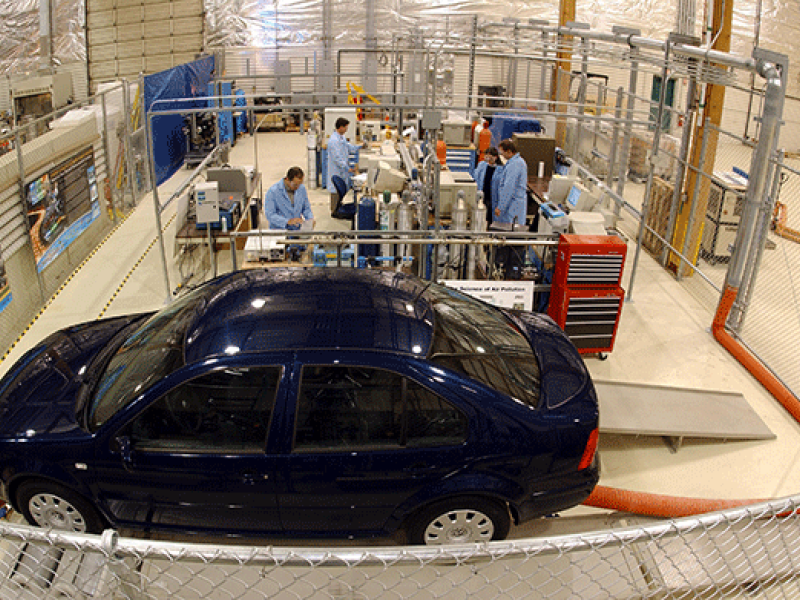
As Tri-Citians, we're fortunate that we don't have the frustrating traffic and long commutes that our friends in Seattle and Portland endure. And with lower prices at the pump, we don't think much about fuel efficiency.
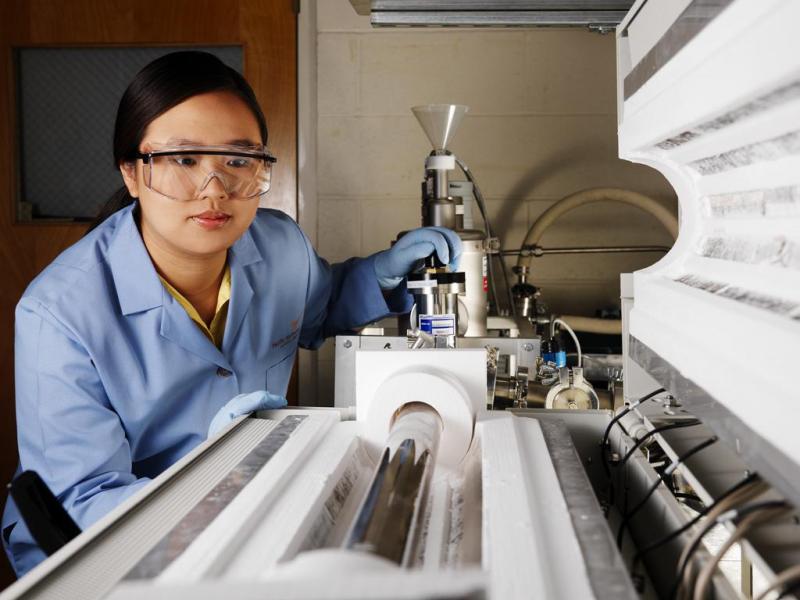
School's out, which means a new group of interns is settling into summer research assignments with mentors at the Department of Energy's Pacific Northwest National Laboratory in Richland.