The Genesis Mission will mobilize the Department of Energy’s 17 National Laboratories, industry, and academia to build an integrated discovery platform.
Ice crystals are surprisingly tolerant of defects in their structure. The findings come from the first-ever molecular-resolution observations of nanoscale samples of ice frozen from liquid water.
PNNL's “co-scientist” serves as a one-stop AI shop for accelerating scientific discovery. By leveraging AI agents, researchers can explore scientific databases, conduct analyses and request step-by-step plans for testing their hypotheses.
Chemist Wendy Shaw, a nationally recognized scientific leader, has been chosen to serve as the associate laboratory director for PNNL's Physical and Computational Sciences Directorate.
PNNL’s year in review includes highlights ranging from advancing soil science to understanding Earth systems, expanding electricity transmission, detecting fentanyl, and applying artificial intelligence to aid scientific discovery.
PNNL biodefense experts seek to identify, understand and mitigate the risks of biological pathogens—whether naturally occurring or intentionally created—so steps can be taken to prepare and respond.
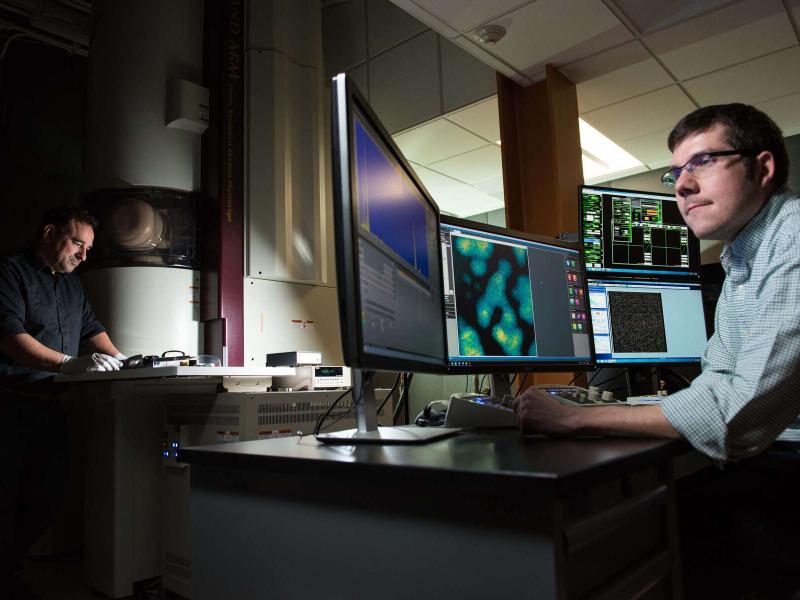
A breakthrough in electron microscopy based on deep learning can automatically visualize and identify areas of interest, helping to speed advances in materials science.
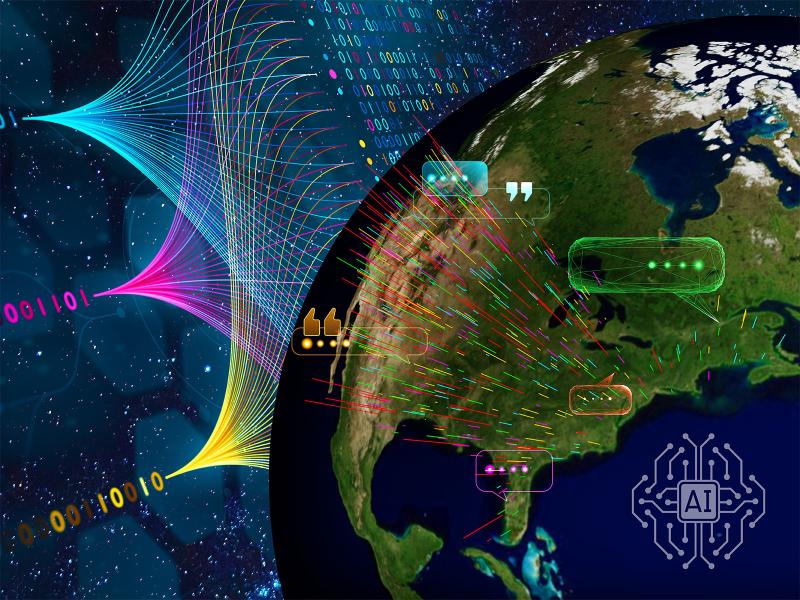
ChatGrid™ is a practical application of the Department of Energy’s exascale computing efforts and offers a new experience in easy, intuitive, and interactive data interaction.