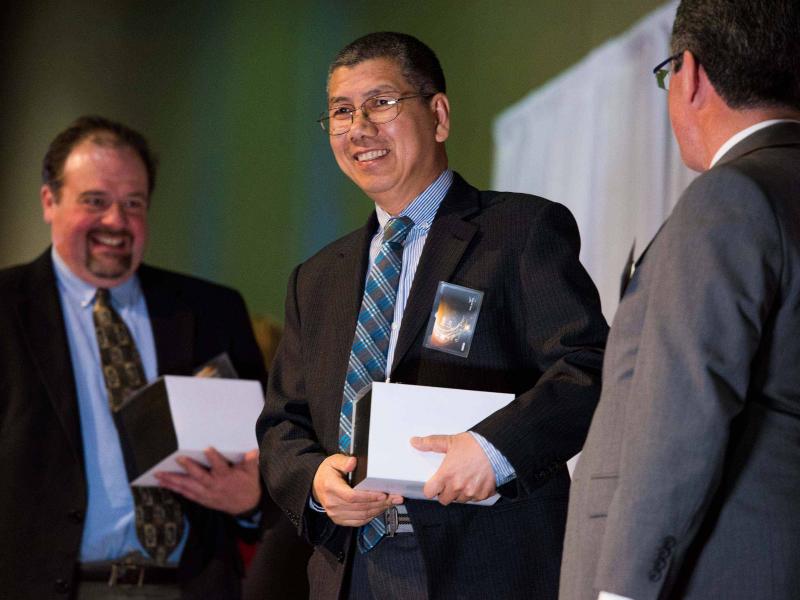
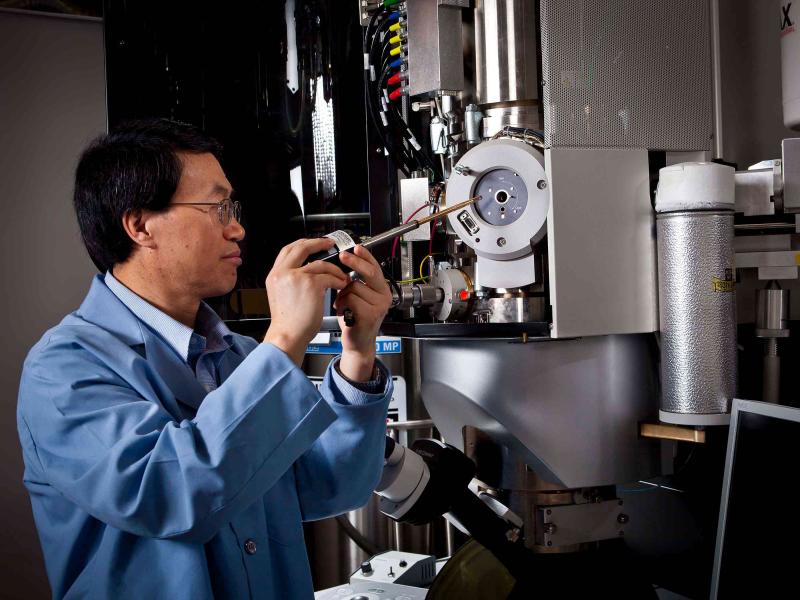
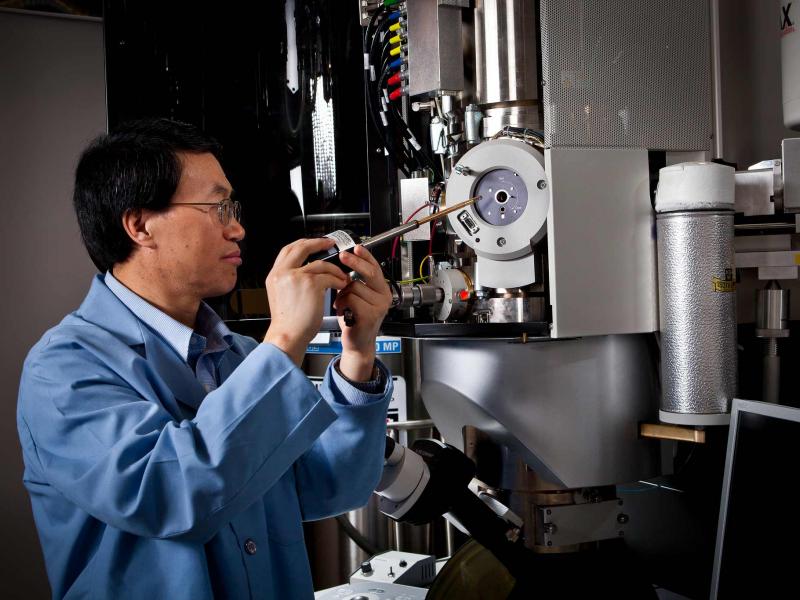
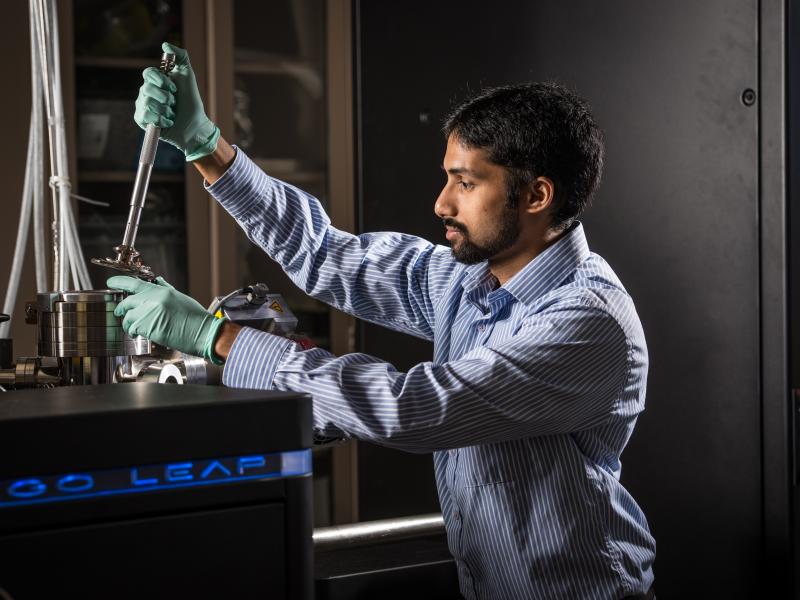
PNNL researcher Jun Liu was named PNNL Inventor of the Year and Vincent Sprenkle became PNNL's newest Distinguished Inventor of Battelle at an April 28 awards ceremony.
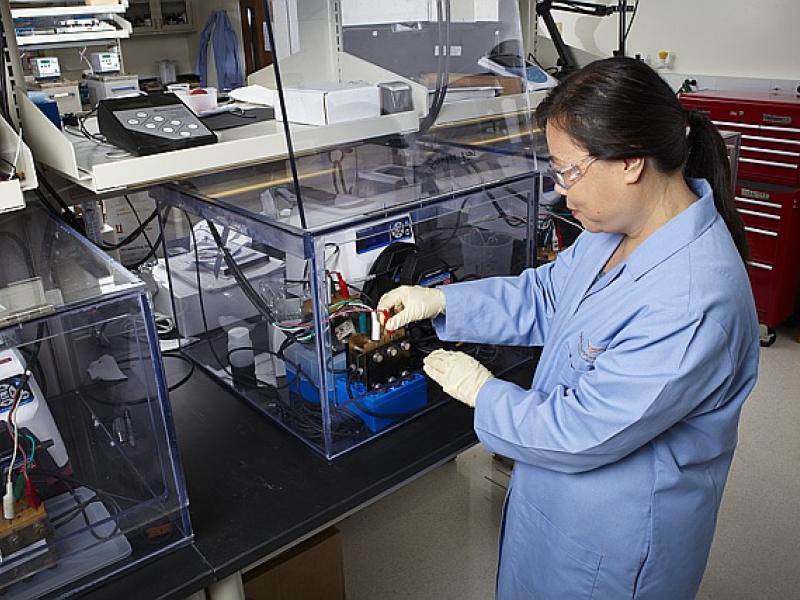
PNNL research has created a unique video that shows oxygen bubbles inflating and later deflating inside a tiny lithium-air battery. The knowledge gained from the video could help make lithium-air batteries that are more compact, stable and
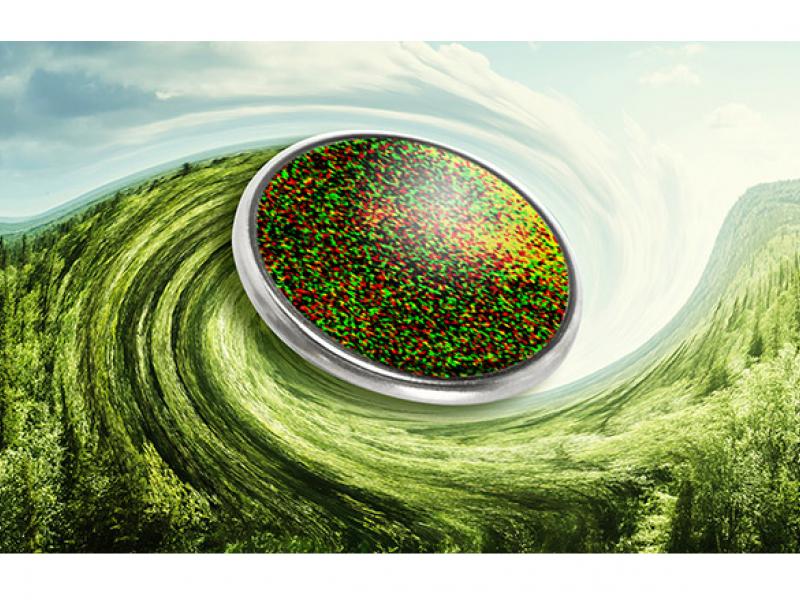
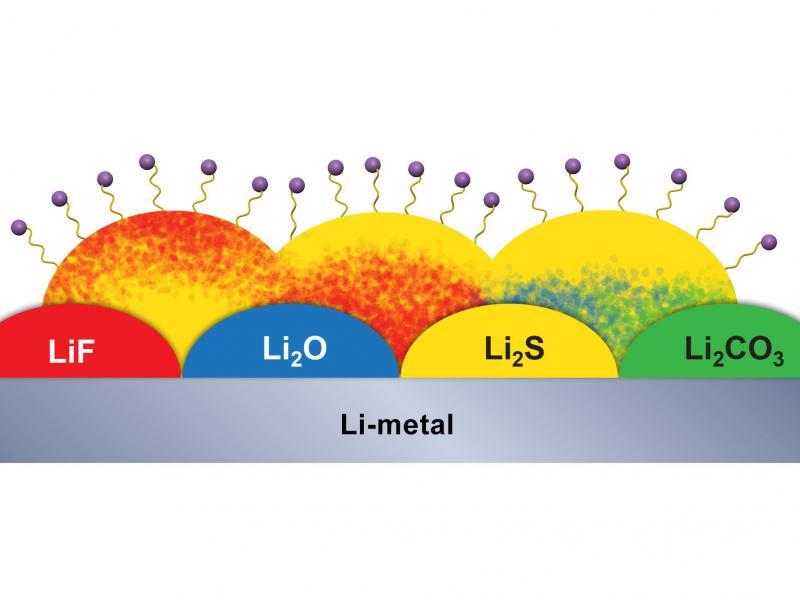
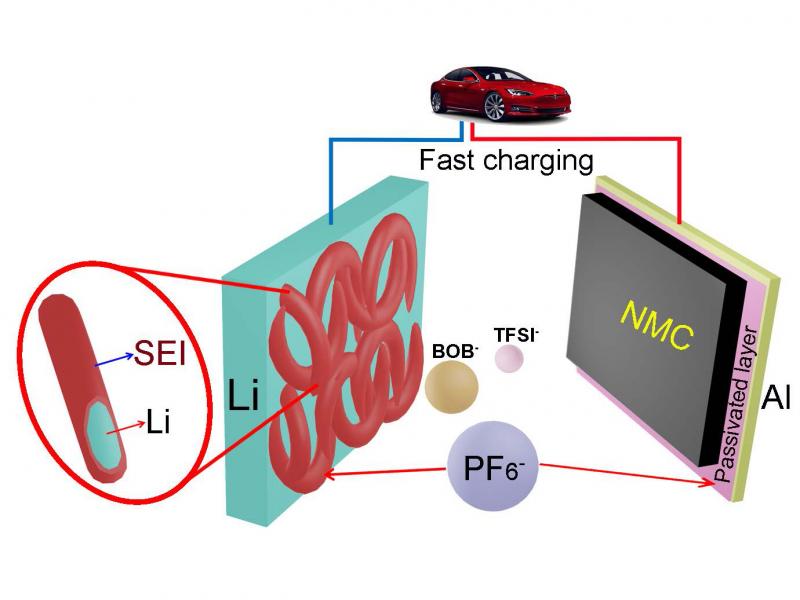
New research shows adding a pinch of chemical additive to a lithium-metal battery's electrolyte helps make rechargeable batteries that are stable, charge quickly, and go longer in between charges.
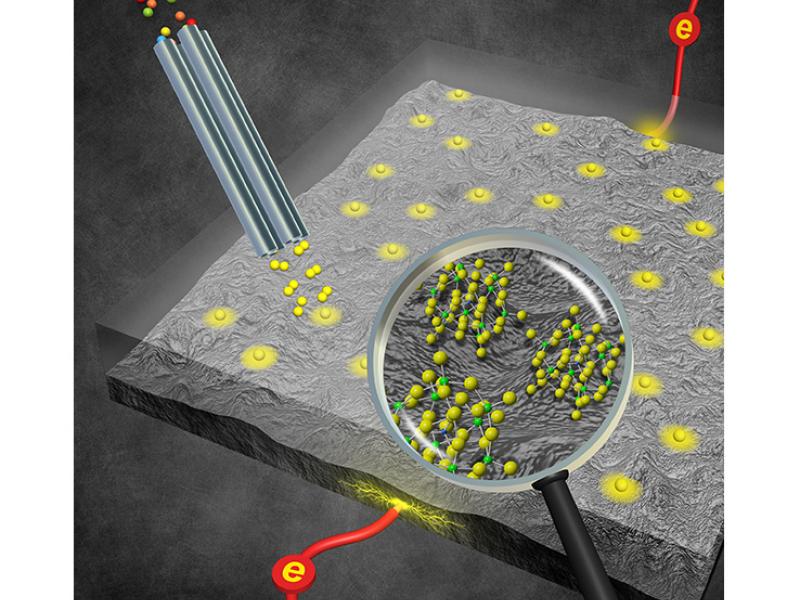
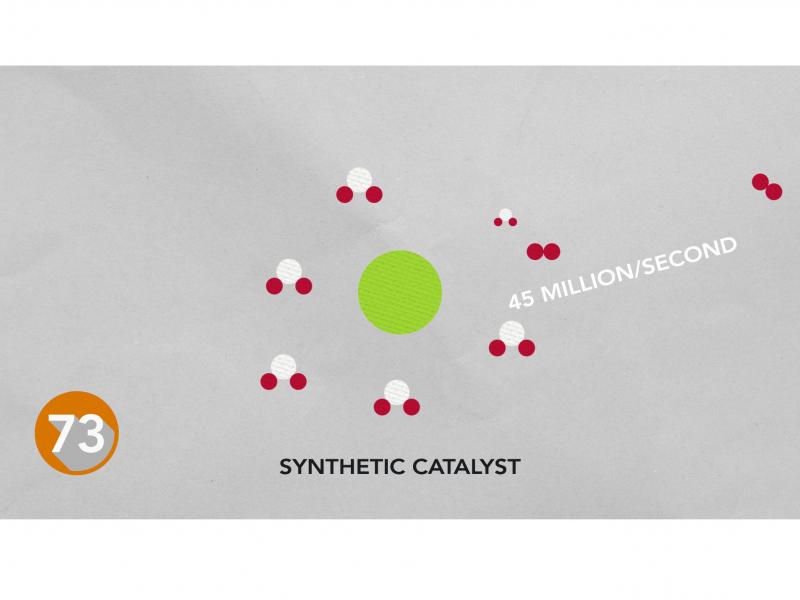
Using a natural catalyst from bacteria for inspiration, researchers have now reported the fastest synthetic catalysts to date for hydrogen production-- producing 45 million hydrogen molecules per second.
Steve Jobs said, "Innovation distinguishes between a leader and a follower." That is especially true in research and development. New technologies and creative solutions do not materialize overnight or on their own.
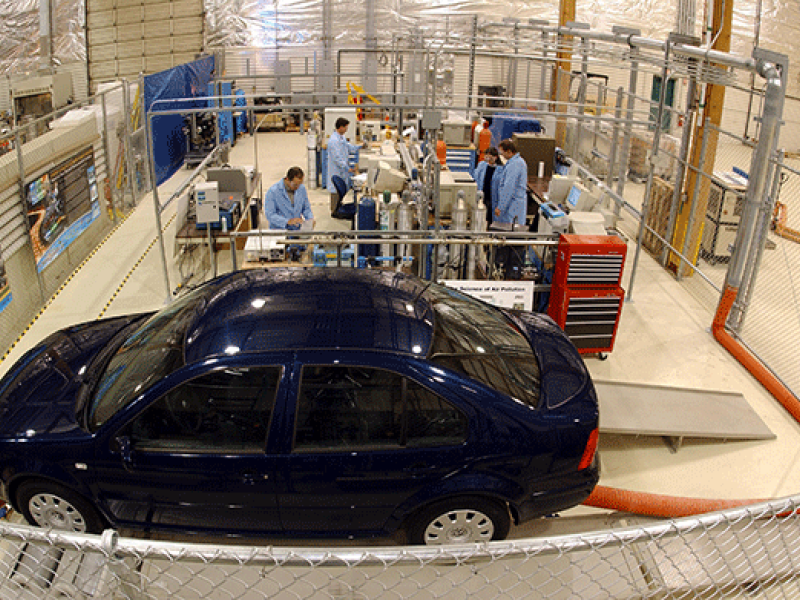
As Tri-Citians, we're fortunate that we don't have the frustrating traffic and long commutes that our friends in Seattle and Portland endure. And with lower prices at the pump, we don't think much about fuel efficiency.
On October 22, the U.S. Nuclear Regulatory Commission (NRC)granted Tennessee Valley Authority's (TVA's) Watts Bar Nuclear Generating Station a 40-year operating license for its new Unit 2 reactor. This is the first nuclear reactor to be granted an operating license by the NRC in two decades.
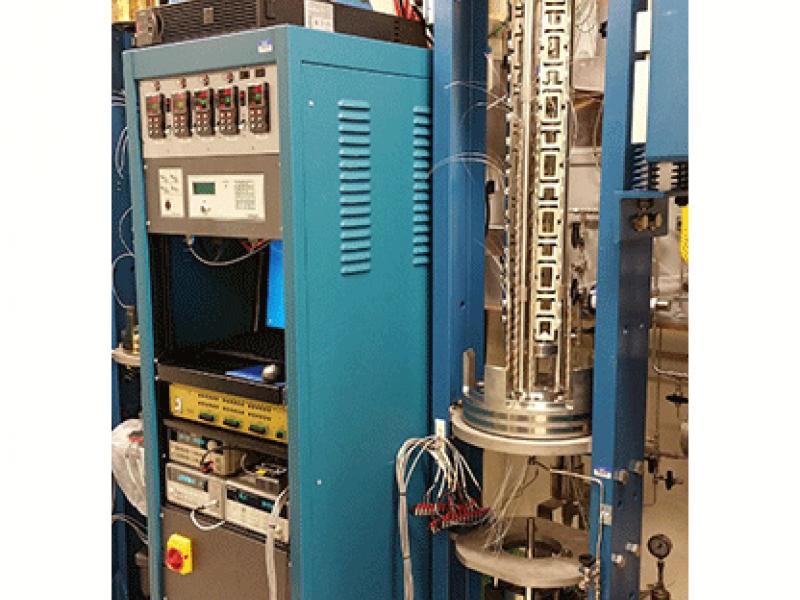
Pressurized water nuclear reactors in the United States generate about 13 percent of U.S. electricity. Though efficient, these reactors face a unique challenge with stress corrosion cracking (SCC). This type of corrosion is one of the primary life-limiting degradation mechanisms of nickel-base alloy pressure boundary components, such as instrumentation and control rod nozzles, the welds that attach these nozzles to the reactor vessel, and welds that connect feedwater piping to the reactor vessel. As interest grows in a more sustainable and efficient fleet of nuclear reactors across the world, there is increasing interest in characterizing SCC initiation response.