This study shows that dry dynamics alone is not enough to understand jet stream persistence. Instead, clouds and precipitation are more important contributors than internal “dry” mechanisms to this memory of the Southern Hemisphere jet.
Pyrocumulonimbus clouds are increasing in frequency as large wildfires become more prevalent in a warming climate. These clouds can inject smoke particles into the atmosphere, where they can remain suspended for several months.
This study provides a comprehensive analysis of isolated deep convection & mesoscale convective systems using self-organizing maps to categorize large-scale meteorological patterns and a tracking algorithm to monitor their life cycle.
Three PNNL-supported projects are at the forefront of developing advanced data analytics technologies to enhance the U.S. power grid’s reliability, resilience, and affordability.
This study explored the future effects of climate change and low-carbon energy transition (i.e., emission reduction) on Arctic offshore oil and gas production.
Using numerical simulations to reproduce the laboratory experiments, this study reveals that liquid droplets are present near the bottom surface, which warms and moistens the air in the chamber.
This work shows that linear pattern scaling is an effective means of obtaining global-to-local relationships for CMIP6 models, as it has been in past model eras.
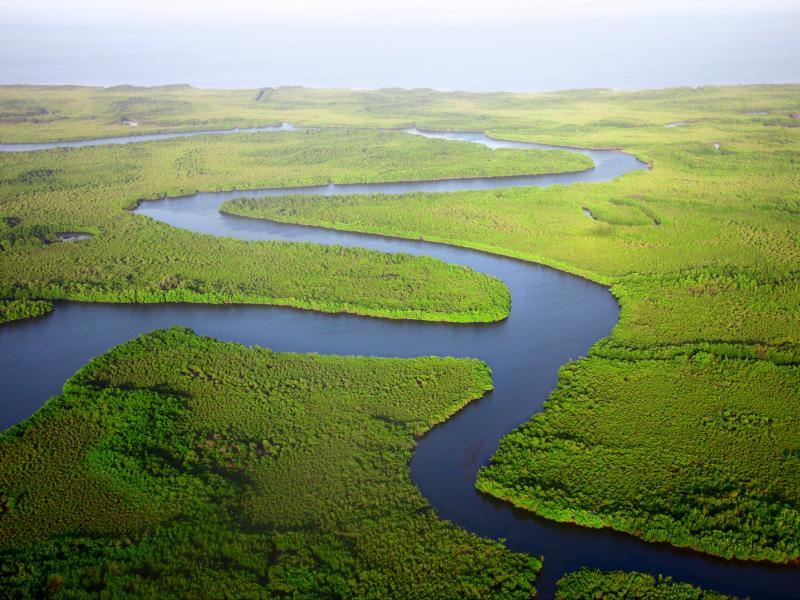
This study examined the role of river sinuosity using computer models to understand what drives hyporheic exchange, a process that significantly affects water quality and ecosystem health.
The first tidal turbine deployed in the Pacific Northwest at PNNL-Sequim showcases the Lab’s growing role as a regional center for marine energy research.
Skillful predictions of tropical cyclone activity on subseasonal time scales may help mitigate their destructive impacts. This study investigates the combined impacts of atmospheric phenomena to better understand cyclone activity.
Topographic variations have substantial impacts on surface hydrologic processes. This study introduced a new subgrid structure and methods to increase model accuracy for snow water equivalent predictions.
To gain a mechanistic understanding of the physical processes responsible for the enhanced hurricane cold wakes near the Southeast United States, investigators used ocean reanalysis datasets.
Cloud and its radiative effect are among the determining processes for the energy balance of the global climate; they are also the most challenging processes for the climate models to simulate.
The results of this study reveal that the degree of Arctic amplification, despite being controlled by complicated interactions among multiple factors, can be analytically understood.