
Highlights
Latest Highlights
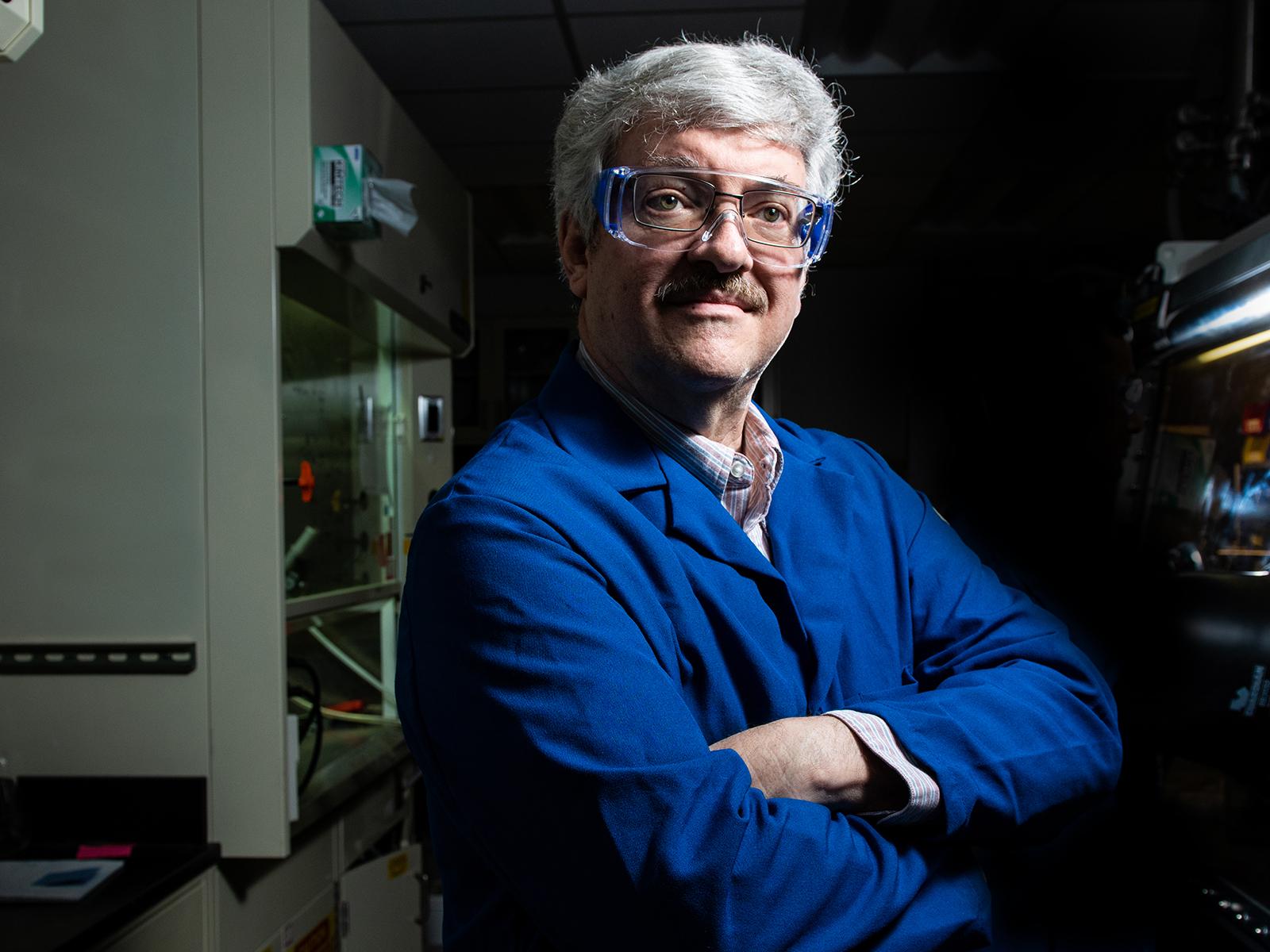
Morris Bullock Co-Chairs Hydrogen Roundtable
Discussion helps identify opportunities in hydrogen researchNovember 2021
Laboratory Fellow Morris Bullock, a chemist at Pacific Northwest National Laboratory, co-chaired a roundtable discussion on carbon-neutral hydrogen convened by the Department of Energy's Office of Basic Energy Sciences. Scientists and engineers from academia, industry, and national laboratories participated in the roundtable, "Foundational Science for Carbon-Neutral Hydrogen Technologies."
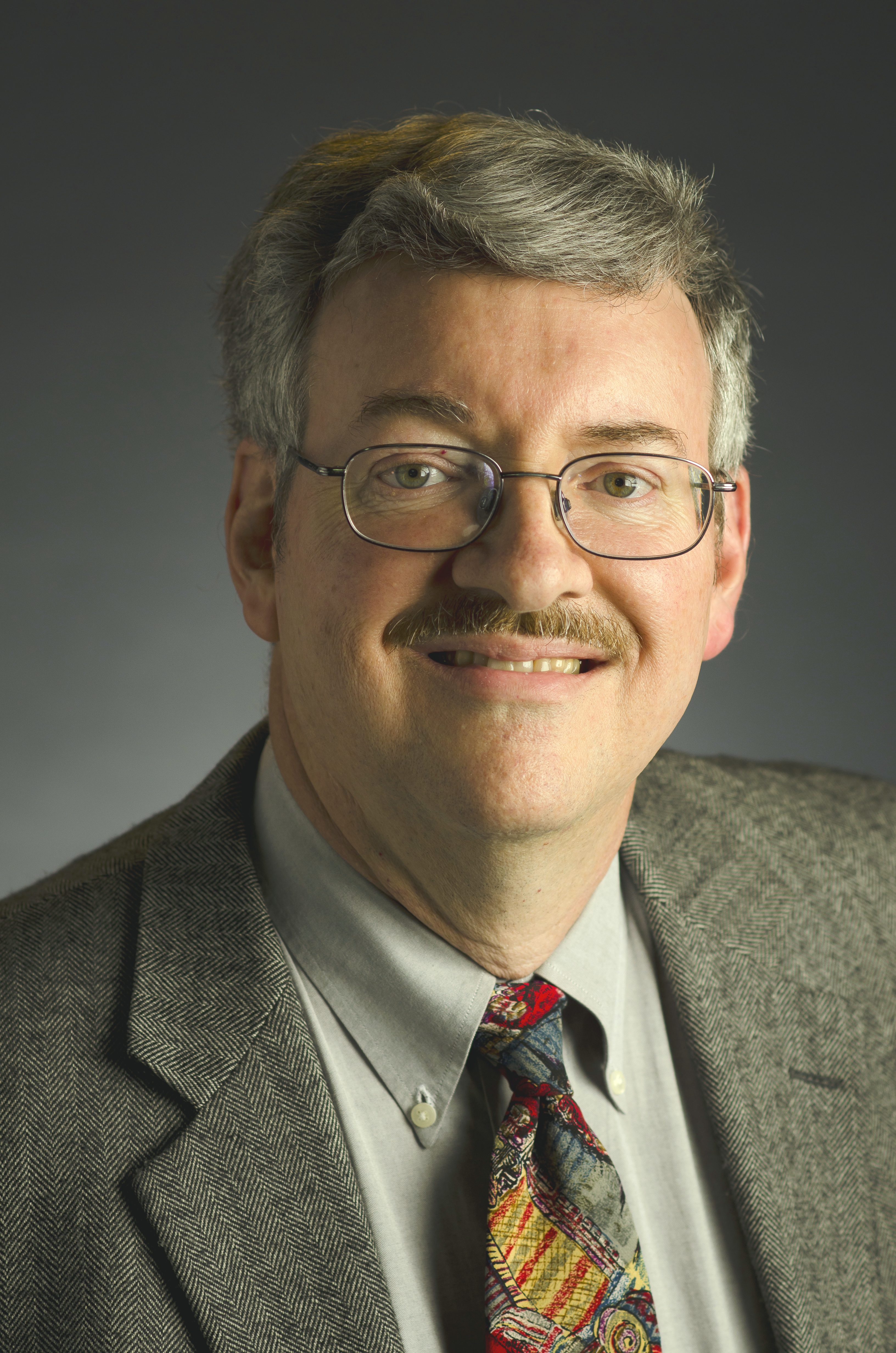 Bullock to be honored with 2022 ACS Award after more than 35 years of research
September 2021
The American Chemical Society (ACS) will honor Morris Bullock with the coveted 2022 ACS Award in Organometallic Chemistry as the first national laboratory employee to receive the award. Bullock is a Laboratory Fellow and chemist in the Physical Sciences Division at Pacific Northwest National Laboratory (PNNL), the director of the Center for Molecular Electrocatalysis, an Energy Frontier Research Center led by PNNL, and associate director of PNNL's Institute for Integrated Catalysis.
- CME's Brandi Cossairt Elected to the Washington State Academy of Sciences
August 2021 - Karthish Manthiram Receives Two Early Career Awards
June 2021 - Perspective on Oxidation of Ammonia
November 2020 - CME's Mayer Elected to American Academy of Arts and Sciences
May 2020 - Professor Shannon Stahl wins the 2020 American Chemical Society Catalysis Lectureship
March 2020 - Sue Clark receives ACS Glenn T. Seaborg Award
January 2020 - WSU's Clark Earns AAAS Fellow Designation
IDREAM deputy director cited for computational and solution chemistry advancesDecember 2019 - Chicken Fat for Catalysis
December 2019 - Radiation Triggers Complex Chemical Transformations at Alumina/Water Interface
Researchers explore radiation effects at interfaces and learn fundamentals of hydrogen formationDecember 2019 - Strange water behavior on aluminum oxide
Not all surfaces are created equallyNovember 2019 - IDREAM's Kevin Rosso elected to Washington State Academy of Sciences
Geochemist selected for his research leadership on reactivity and electron exchange at the mineral-water interfaceNovember 2019 - AJ Krzysko Receives DOE Graduate Student Award
His research furthers the study of complex fluid suspensions using x-ray scatteringOctober 2019 - PNNL Solves Decade-Old Mystery in Chemical Transformations
Findings could help researchers develop more energy-efficient industrial processesSeptember 2019 - Getting Clear about Clean Air
PNNL researchers identified the molecular structure that breaks down an important component of smogAugust 2019 - Setting the Stage for Fuel-Efficient Fertilizer
Researchers identify the structure of the Janus intermediate - a principal actor in the enzymatic conversion of nitrogen into ammoniaAugust 2019 - Making Every Atom Count to Reduce Auto Emissions
New approach enables lower temperature chemical reactionsApril 2019 - The Rational Design of More Active Catalysts: Kelsey Stoerzinger
To increase the efficiency of fuel cells and other electrochemical devices, mix materials science with surface physics, then add spectroscopic approachesApril 2019 - Mechanism of Iron-based Hydrogen Bond Cleavage Revealed
A first look at hydrogen cleavage by a new route February 2019 - Scientists Design Fast, Reversible Bio-inspired Catalysts
New synthetic catalysts mimic desirable enzyme behavior February 2019 - Harnessing New Computing Tools to Solve Big Physics Problems
New $10 million collaborative grant to boost deep learning applicationsFebruary 2019 - Applying a New Multi-Scale Aerosol Model
Representing aerosols on 1-kilometer cloud scale within a multi-scale modeling framework yields simulation improvement.February 2019 - Organic Particles Modulate Soot Mixing in the Atmosphere
New research shows how the viscosity of organic particles affects the mixing state of soot and alters its warming or cooling potential.February 2019 - Max Planck Institute Names CME Researcher, Jim Mayer, 2019 Frontiers Award Recipient
February 2019 - Cooling Off Warming Trends in the Arctic
A new study shows that emissions from trans-Arctic shipping could increase clouds, cooling the atmosphere and surface.January 2019 - Illuminating how nitrogenase makes ammonia
PNNL researchers demystify the workings of this complex enzymeJanuary 2019 - Nanocrystal study provides insights on growth, assembly, and aggregation
Findings address challenges in developing synthesis strategies for nanostructured materialsJanuary 2019 - Aluminum Complexes Identified Via Vibrational Fingerprints
Findings will allow complex forms of aluminum to be distinguished during aluminum processingJanuary 2019 - Forces for Good
PNNL research reveals the interplay of attraction and repulsion between nanoparticles as they assembleJanuary 2019